Last updated November 23, 2026
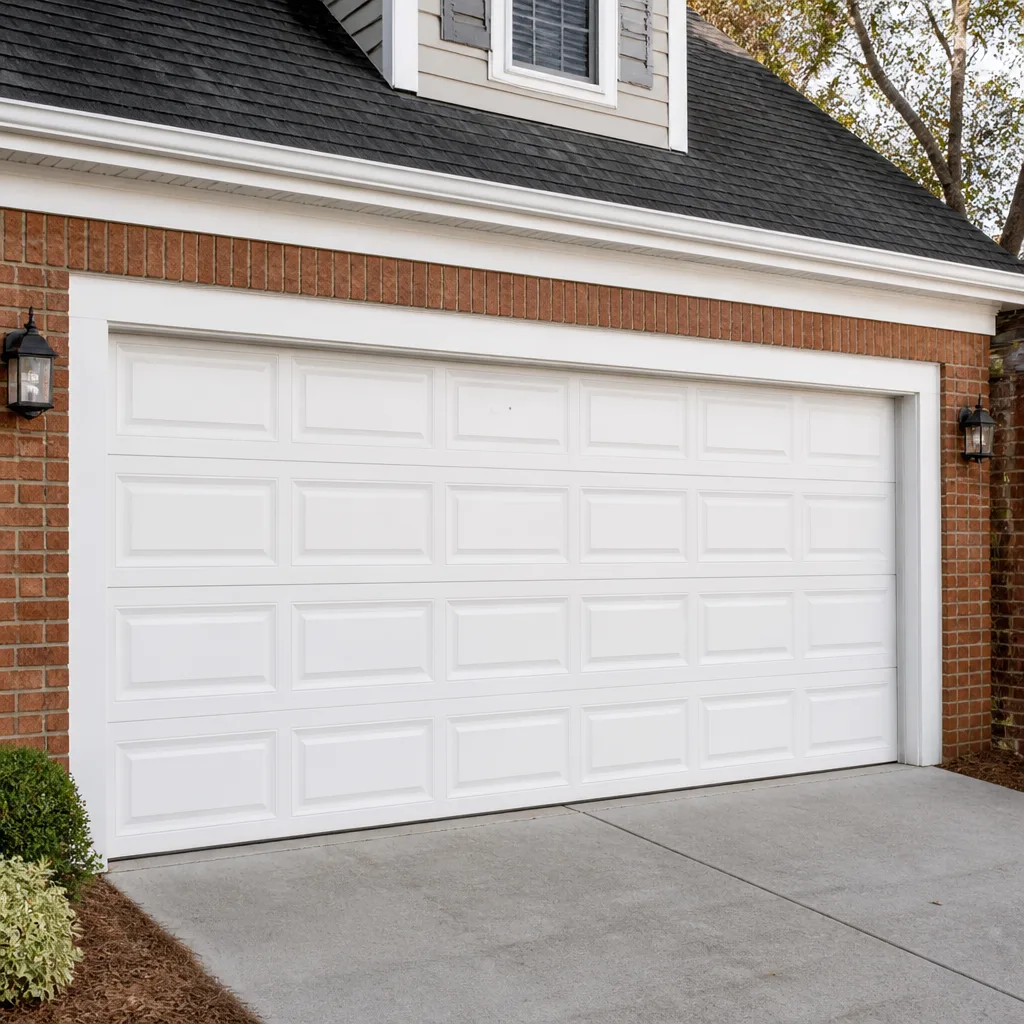 Raised-panel steel
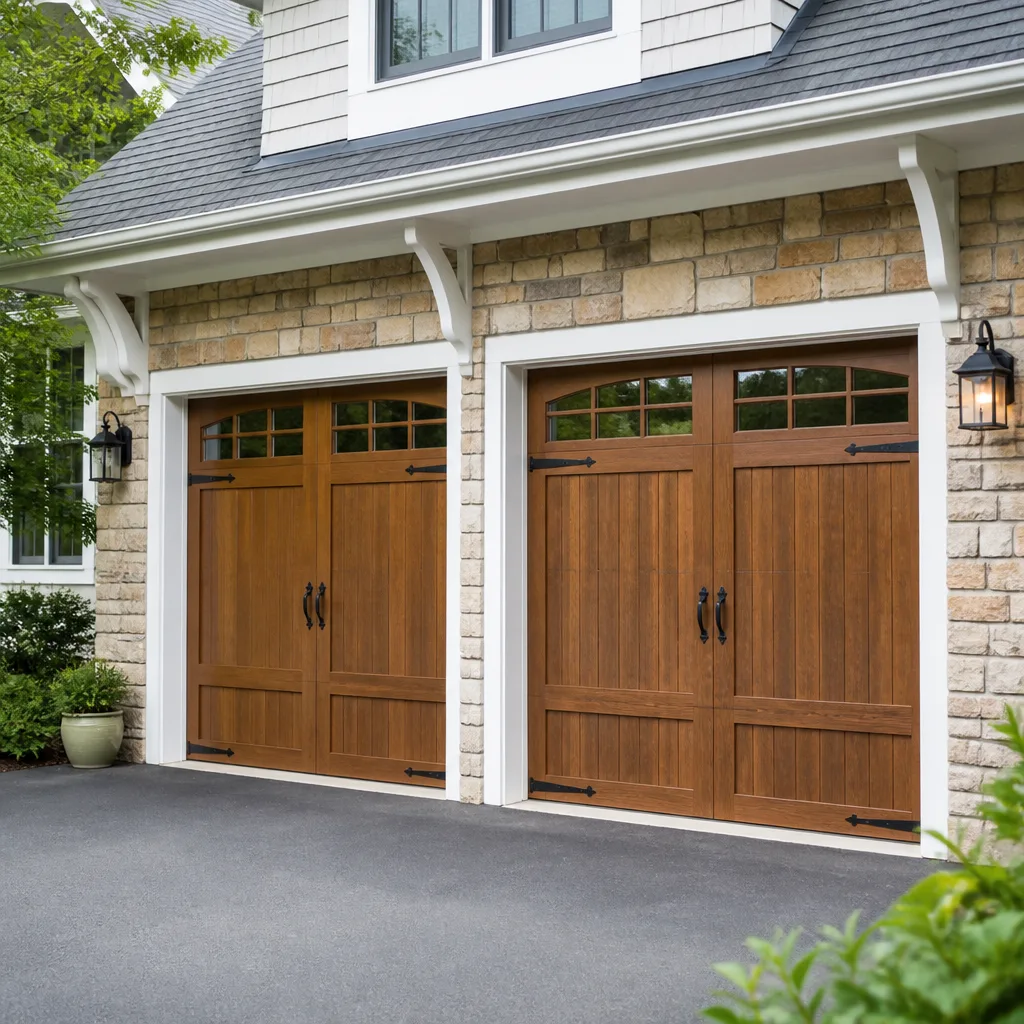 Carriage house
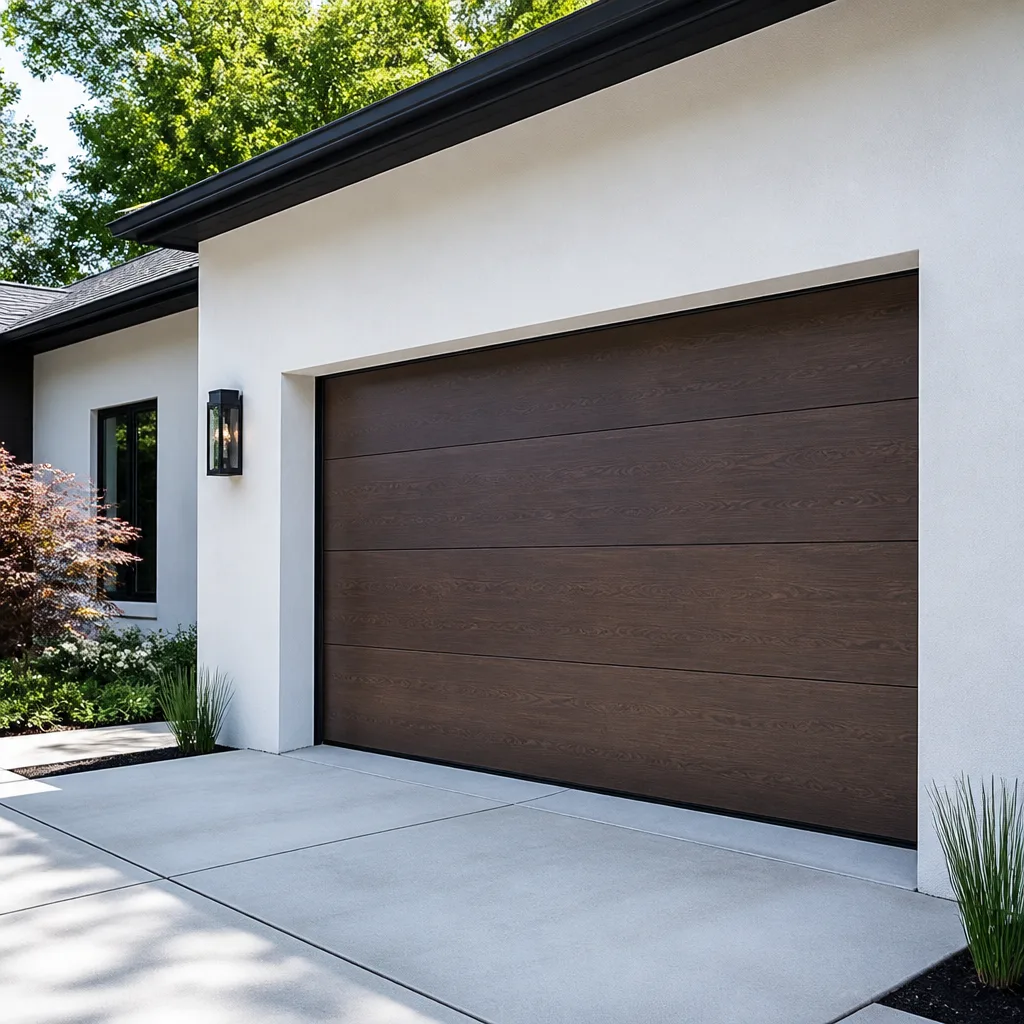 Modern flush
 Full-view glass
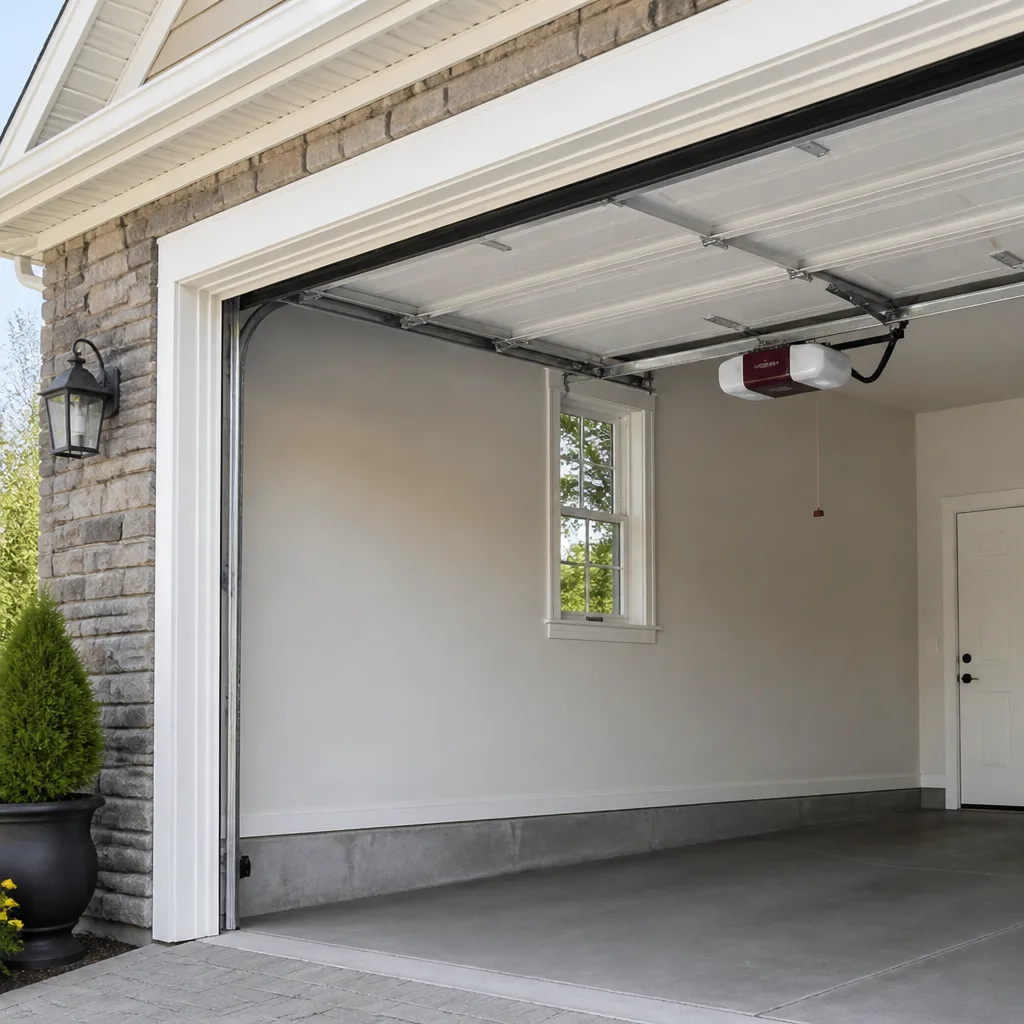 LiftMaster openers
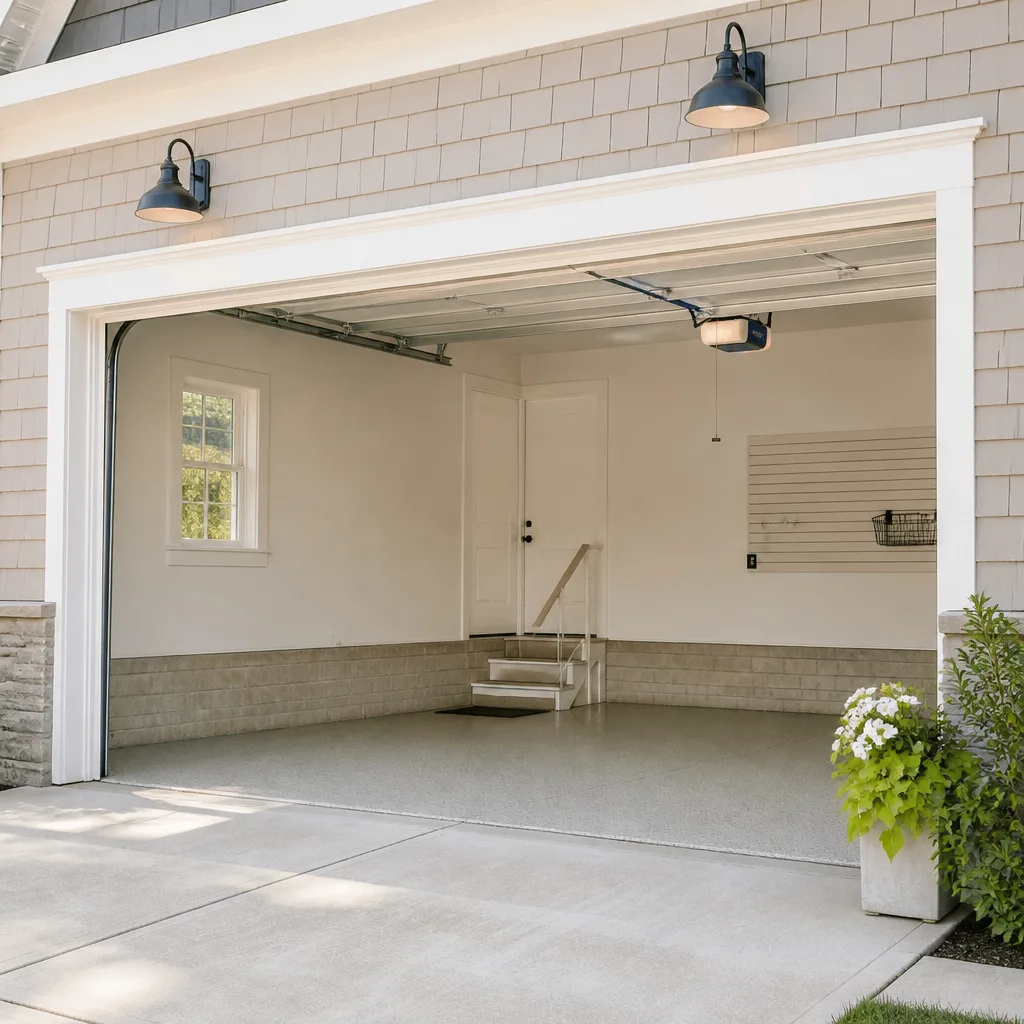 Chamberlain openers
Full 25-point door and opener safety check with every visit - springs, cables, rollers, tracks, and your LiftMaster or Chamberlain opener included
You get a price before we start. It does not change when the pro arrives.
Get your free estimateThe Complete Guide to Garage Doors in Manchester
Most people assume a garage door fails because something mechanical wore out. In Manchester, that’s often only half the story. A large share of the town’s homes went up between 1950 and 1985, and many garages were framed to rough-opening dimensions that don’t match the doors sold off a modern showroom floor. That mismatch sits underneath more service calls than any broken spring or dead opener. A door that was never properly fitted to its opening will wear out its tracks, chew through weatherseal, and fight the opener for years. This guide explains how Manchester’s climate, housing stock, and local code environment shape the way your door actually behaves – and what to check before you spend a dollar on parts.
Quick Answer
A garage door in Manchester needs three things to last: a door sized correctly to your garage’s rough opening, weatherseal and springs maintained around Connecticut’s freeze-thaw cycle, and hardware matched to your opener. The door panel, the opener, and the springs are one system. Fixing one while ignoring the other two is why so many doors come back to the same failure twice. If your door is off its tracks, has a snapped spring, or leaves the house unsecured, that’s an emergency call rather than a repair to sit on.
Styles & brands we work with
- Raised-panel steel
- Carriage house
- Modern flush
- Full-view glass
- LiftMaster openers
- Chamberlain openers
Table of Contents
- How Connecticut’s Freeze-Thaw Cycle Wears Down Garage Doors in Manchester
- Rough Opening Sizes in Manchester’s Mid-Century Homes
- Two-Car Garage Headroom and Track Clearance
- Big-Box Door Kits vs. a Complete Manchester Installation
- Why Springs Are the Highest-Risk Part of the System
- Matching an Opener to Your Door
- Old Door Disposal and Recycling in Hartford County
- A Maintenance Routine That Fits Manchester
How Connecticut’s Freeze-Thaw Cycle Wears Down Garage Doors in Manchester
Manchester sits in a climate with real winters and hot, humid summers, and the swing between them is what does the damage. The ground freezes and thaws repeatedly through late fall and early spring. So does the concrete your garage sits on. Every one of those cycles moves the door’s frame by a fraction of an inch, and over a season that adds up.
The parts that pay for it first are the weatherstripping and the bottom seal. A rubber bottom seal is meant to compress and spring back. After a winter of freeze-thaw, it hardens, flattens, and stops sealing. You’ll notice cold air under the door, water tracking in after rain, and occasionally a small animal finding the gap. Replace a bottom seal early and you protect the door’s lower panel from rust and rot.
Weatherstripping around the sides and top fails the same way. It’s cheap to replace and easy to ignore, which is why so many Manchester doors run a worn seal for years. A worn seal lets in drafts and moisture, and moisture is what kills steel door panels from the inside.
Springs take the other hit. A torsion spring is a calibrated piece of steel under constant tension. Cold makes steel brittle. The first genuinely cold snap of the season is when tired springs let go, and it’s why spring calls cluster in late fall and early winter around here. The national average service interval for a spring doesn’t account for a Connecticut winter. If your door has run four or five winters without a spring inspection, it’s worth having one.
None of this is exotic. It’s just the local pattern, and it’s why a Manchester maintenance routine looks different from one written for a mild climate.
Rough Opening Sizes in Manchester’s Mid-Century Homes
A rough opening is the framed hole in the wall where the door goes. When a home was built, that opening was cut to whatever standard the builder used at the time. In Manchester, homes from the 1950s through the early 1980s reflect a spread of those standards, and they don’t all match what’s sitting on a modern showroom floor.
A new door needs to fit the opening it’s going into, with proper clearance for the tracks and the door’s travel. A door ordered one size off can usually be made to work, but it takes shimming, adjusting the headroom, or a custom-sized panel. Skip that step and you get a door that rubs, binds, or never sits flush. Over a year or two that misalignment wears out rollers and track.
Here’s what a proper measure covers before any door is ordered:
- Measure the rough opening at the top, middle, and bottom, and use the smallest figure.
- Measure the headroom above the opening, the space the door needs to travel up and back.
- Check the side clearance on both jambs for the vertical tracks.
- Check the backroom – how far the door needs to travel horizontally into the garage.
- Confirm the floor is level and the opening is square, not just the right size.
That list is why a free measure matters. It’s not a formality. It’s where most installation problems are prevented, and it’s why we won’t quote a replacement door off a photo or a rough measurement.
For homes with an unusual opening, a custom-sized door from a maker like Clopay or Amarr solves the mismatch cleanly. The alternative – forcing a standard door into an opening it wasn’t built for – is exactly the kind of shortcut that leads to a callback.
Two-Car Garage Headroom and Track Clearance
Manchester’s ranch and colonial homes commonly have two-car garages, and the framing of those garages creates specific constraints. A ranch often has a lower ceiling than you’d expect once the opener rail and the door’s travel are accounted for. A colonial garage may be tucked under a floor above, which limits headroom from the start.
Headroom is the distance from the top of the door to the ceiling. It determines how the door travels. The two common setups are:
- Standard lift: the door travels straight back into the garage. It needs more backroom but works with a typical ceiling height.
- Low-headroom lift: the door hugs the ceiling on a tighter track radius. It fits short garages but needs a low-clearance kit and the right springs for the geometry.
A two-car garage also needs both doors fitted independently. Two doors in the same opening means two sets of tracks, two sets of springs, and two openers, or one opener driving both panels. Each of those configurations has a different headroom and clearance requirement. If one door binds and the other doesn’t, it’s often a frame that isn’t parallel, not a bad panel.
Know your headroom and backroom before you shop. That way you’re choosing a door and a lift type that fit your garage instead of discovering the constraint during install.
Big-Box Door Kits vs. a Complete Manchester Installation
A door kit from a big-box store looks like a bargain. What it usually includes is panels, tracks, and basic hardware – and not much else. What a complete installation includes is the whole system that makes those parts work safely and legally in a Manchester garage.
Here’s the comparison, part by part:
- Panels and sections: both a kit and a full install include these.
- Springs sized to the door: a kit ships generic springs; a proper install sizes them to the door’s exact weight.
- Track and lift type matched to the garage: a kit uses one standard track; a full install chooses standard or low-headroom to fit your actual clearance.
- Weatherseal, bottom seal, and thresholds: often missing or minimal from a kit. These are the parts that matter most in Connecticut’s freeze-thaw climate.
- Opener matched to the door’s weight and travel: a kit leaves you to figure that out.
- Proper anchoring into the framed opening: a kit doesn’t tell you what to anchor into.
- Disposal of the old door and hardware: a kit leaves a pile of steel in your driveway.
Connecticut towns set their own permit rules for structural changes, and garage door installation may or may not require a permit depending on the work involved. Our advice is simple: call your city’s building department and ask. It’s a five-minute call that saves a headache later. A door that wasn’t anchored correctly or wasn’t installed to your town’s requirements is a problem you inherit, not the retailer.
The point isn’t that a kit is always wrong. It’s that a door is a system, and a kit sells you the pieces of a system. From the spring to the opener to the panel, we handle all of it together.
Why Springs Are the Highest-Risk Part of the System
Torsion springs store enormous energy. When one breaks, that energy releases instantly – often with a loud snap – and the door comes down hard. This is why spring work is the one repair we tell people not to attempt themselves. The risk of serious injury is real, and it’s why so many generalists avoid the job and refer it out. Spring repair is a named specialty for us, and it’s a job we handle in-house.
A broken torsion spring on one side of a two-spring system usually means the matching spring is near the end of its life too. That’s why springs are commonly replaced as a matched pair rather than one at a time. If only one is swapped, the older spring often fails within a season, and you’re paying for a second call.
Signs your springs need attention:
- The door feels unusually heavy when you lift it by hand (with the opener disengaged).
- You hear a loud bang from the garage, and the door won’t open.
- The door opens a few inches and stops, or opens crookedly.
- You can see a gap in the spring coil on one side.
Springs are the part most closely tied to your door’s weight, so a proper replacement sizes the new springs to the door – not to whatever was there before. If a previous owner swapped in a spring that didn’t match the door’s weight, the door will have opened unevenly for years. Correcting that is part of doing the job right. If your door has snapped a spring or is stuck partway open, that’s a call for garage door spring repair rather than a wait-and-see.
Matching an Opener to Your Door
An opener’s job is to lift a door that’s already balanced by its springs. If the springs aren’t right, the opener works harder than it should and wears out faster. That’s why the opener and the spring are tied together, and why we diagnose them as one system.
Modern openers and older drives are different animals. A smart-home opener like a newer Chamberlain or a LiftMaster with built-in connectivity talks to your phone, uses a rolling security code, and has a battery backup that keeps the door working through a power cut. An older drive may use a fixed code or a simple chain-and-rail setup with no connectivity at all. Both work – they just need the right parts and the right troubleshooting.
When an opener fails, the fix depends on what’s actually wrong:
- Check that the door is balanced before blaming the opener. A binding door is often the real culprit.
- Check the safety sensors at the bottom of the tracks. A misaligned sensor stops the door as a safety feature, not a fault.
- Check the wall control and the remote separately – one can fail while the other works.
- Check the logic board and the drive gear for the specific opener model.
We work on LiftMaster, Chamberlain, Genie, and Craftsman openers regularly, along with the door brands that sit above them, so we can usually diagnose a legacy drive and a modern smart opener in the same visit. If your opener is struggling, garage door opener repair is the right call, and it’s faster than guessing at parts.
Old Door Disposal and Recycling in Hartford County
Old garage doors are bulky, heavy, and awkward. A steel door is mostly recyclable metal, but your regular curbside pickup won’t take it, and the springs, tracks, and opener need to be handled separately. This is one of the practical things people forget when they plan a replacement.
What usually has to happen to the old system:
- The panels come down and get broken into manageable sections.
- The steel goes to a scrap or metal recycler rather than the trash.
- The springs and tracks are separated out.
- The opener and any electronics are removed and disposed of properly.
- Any wood framing or trim is handled separately from the metal.
Hartford County has scrap metal recyclers that accept old door steel, and a complete installation includes hauling the old door away so you’re not left with a pile in the driveway. That’s part of what we mean when we say we handle the whole job, not just the part that bolts to the wall.
A Maintenance Routine That Fits Manchester
A little routine care goes further in Manchester than the generic advice suggests, because our seasons are the thing that wears doors out fastest. The goal is to catch a seal or a spring before the first cold snap, not after.
Here’s a routine that fits the local climate:
- Spring and fall: test the door’s balance by disengaging the opener and lifting it by hand. It should lift easily and stay put halfway up.
- Late summer: check the bottom seal and side weatherstripping for cracks, hardening, or gaps before winter.
- Before winter: lubricate rollers, hinges, and the spring with a garage-door lubricant – not grease, which attracts grit.
- After winter: check the floor seal and threshold for water intrusion, and look for rust along the bottom panel.
- Year-round: listen for new noises – a grinding, squealing, or uneven motion is your door telling you something’s off.
If anything feels wrong – the door is heavier than it used to be, it opens crooked, or the opener strains – stop and have it looked at. It’s usually cheaper to fix a worn part early than to replace a panel or an opener later.
Common Mistakes to Avoid
- Buying a door before measuring the opening. Ordering off the nominal size or a showroom sample is the most common reason a new door doesn’t fit a Manchester mid-century garage. Measure the actual rough opening first.
- Replacing one spring on a two-spring door. The matching spring is the same age and usually fails within a season. Replace them as a pair unless the other is genuinely new.
- Ignoring a worn bottom seal through the winter. A hard, flat seal lets cold air and moisture in, and moisture rusts the door from the bottom up. It’s a cheap part with an outsized effect here.
- Blaming the opener for a binding door. If the door isn’t balanced, a new opener will fail the same way. Fix the door first.
- Choosing track and lift type without checking headroom. A door that doesn’t clear the ceiling on a colonial garage needs a low-headroom setup, not a standard one.
- Skipping the building department question. Permit rules vary by town for structural work. Ask your city’s building department rather than assume.
- Leaving old door disposal to chance. A steel door won’t go in curbside pickup. Plan the haul-away before the new door arrives.
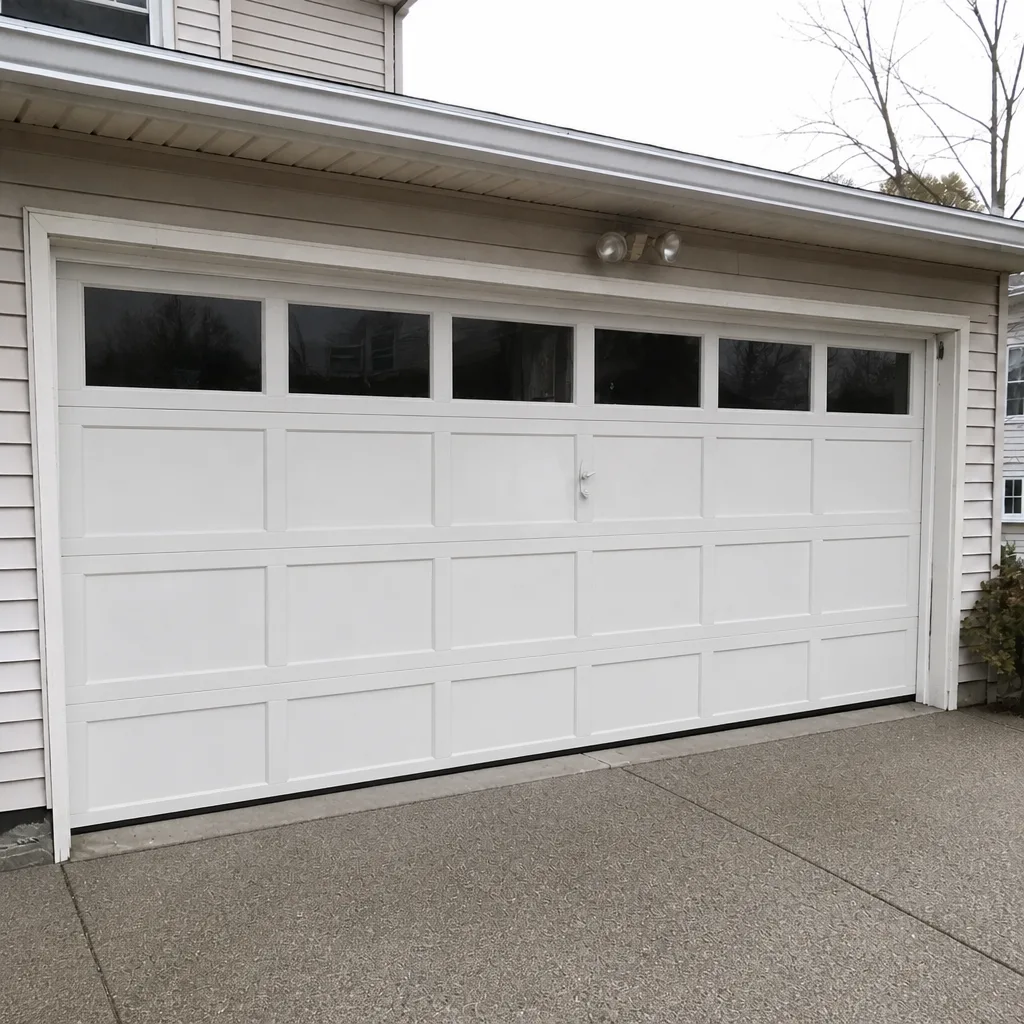
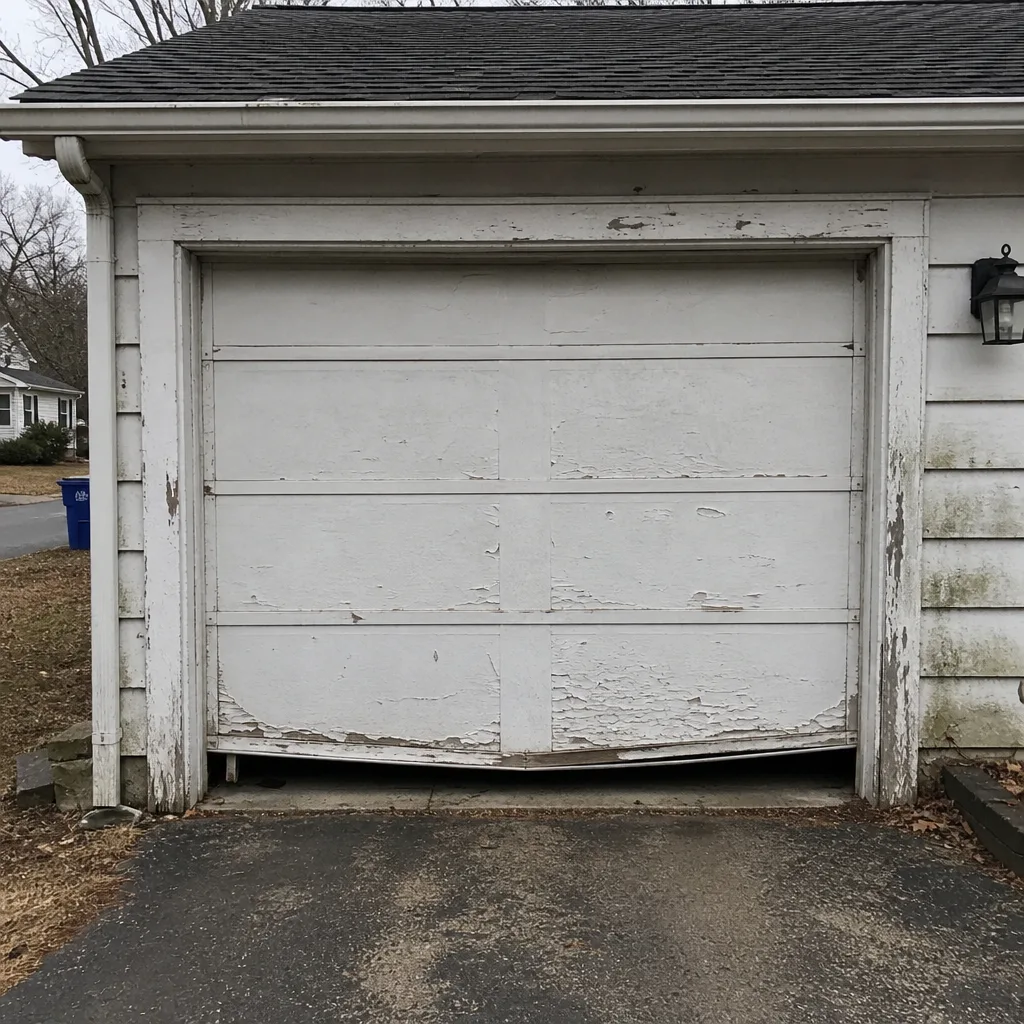
See the difference
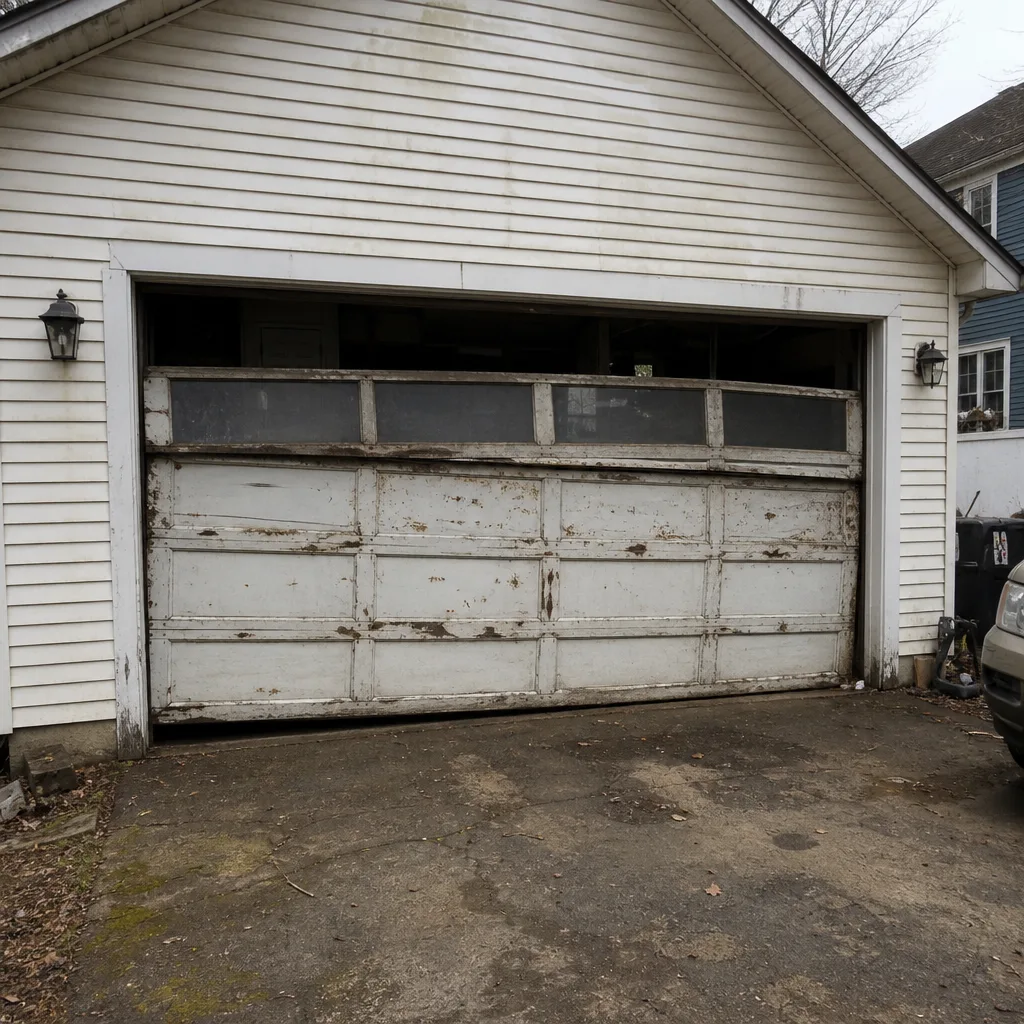 Before
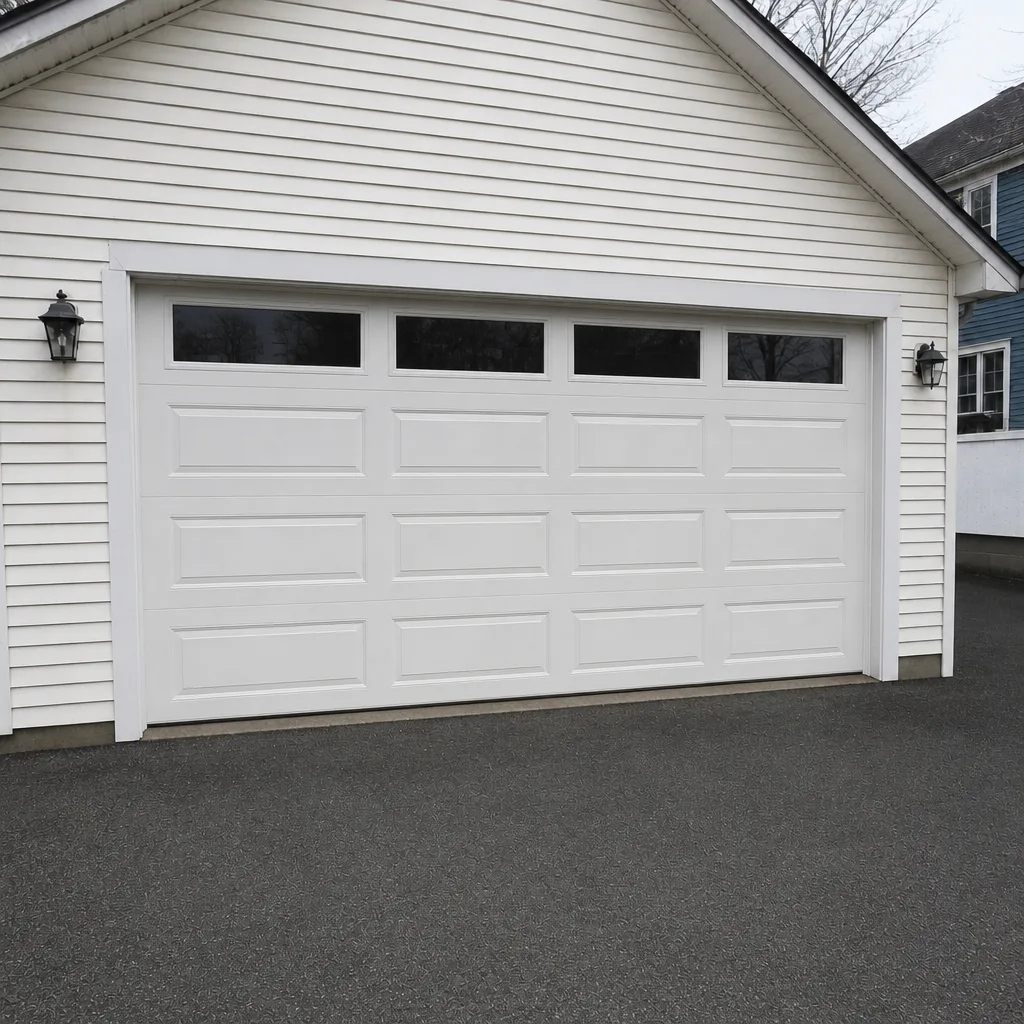 After
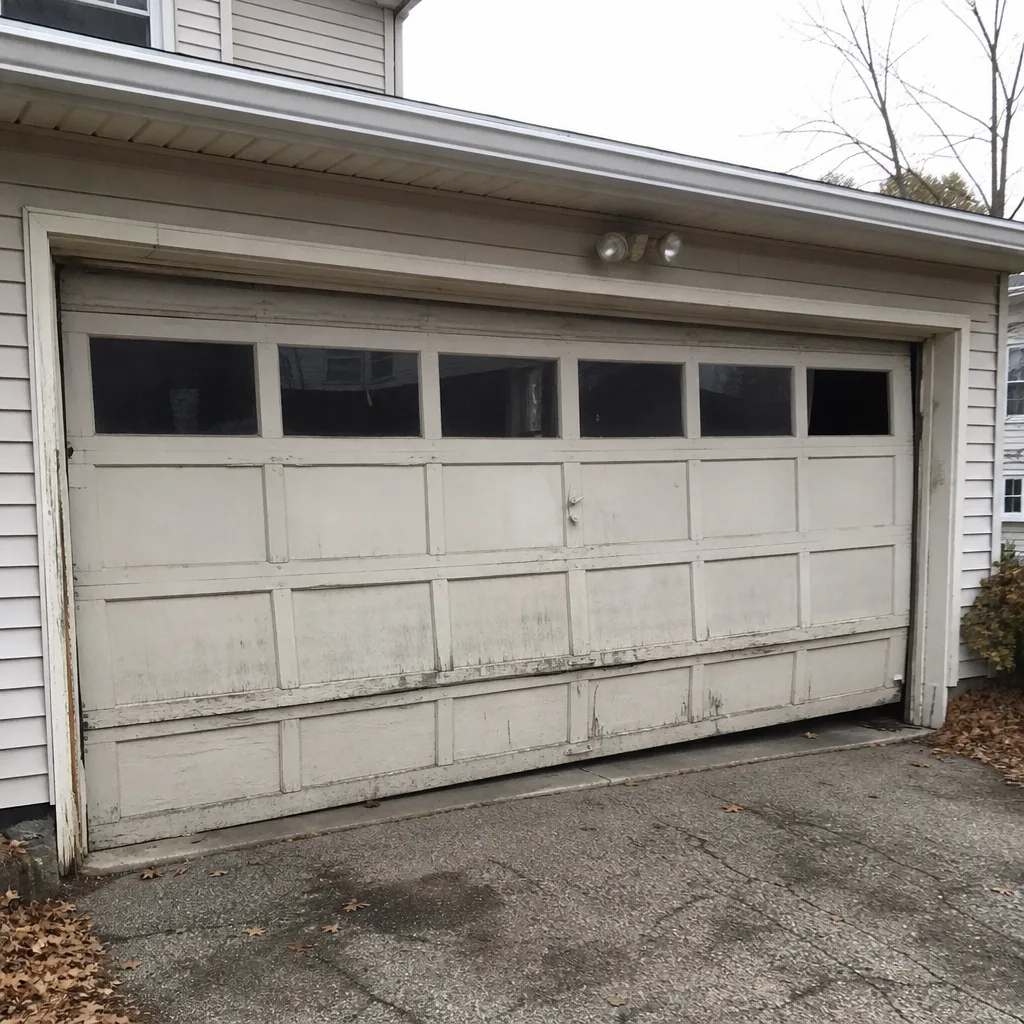 Before
 After
 Before
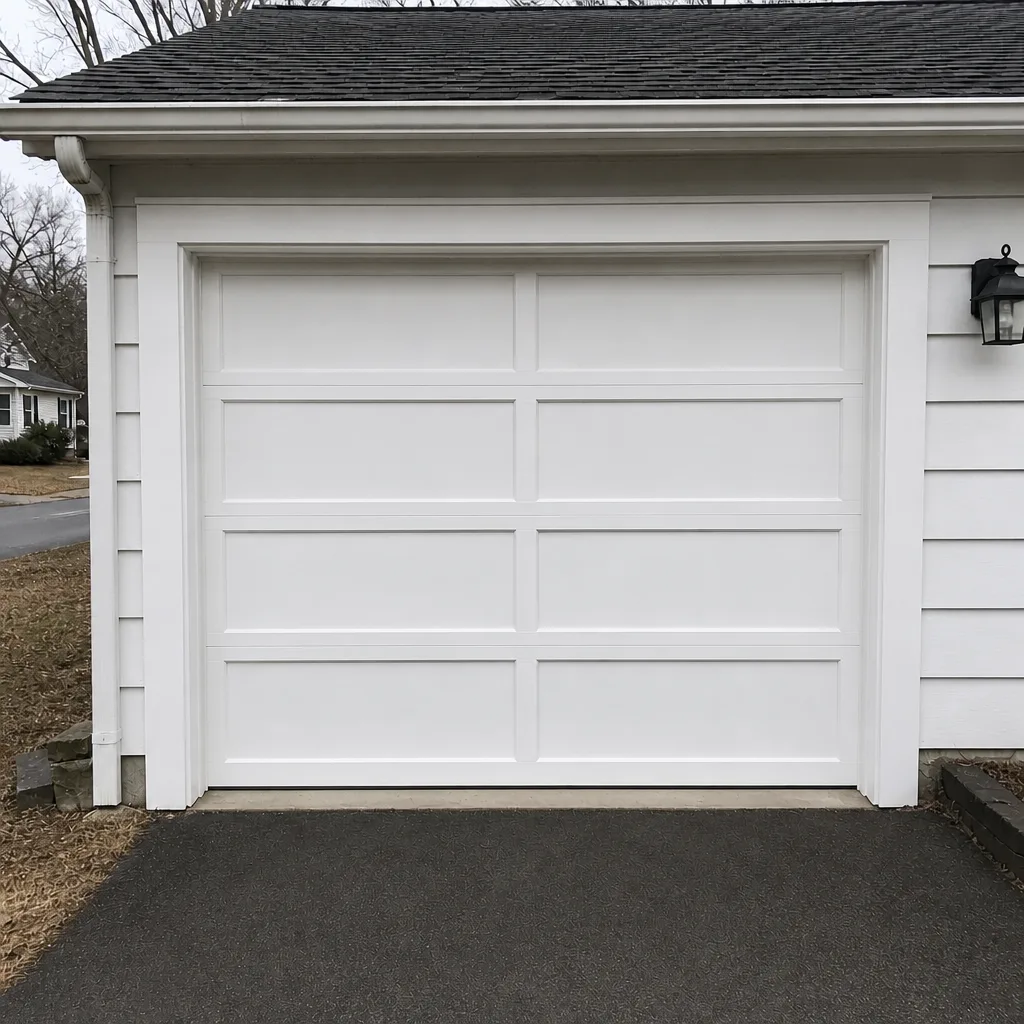 After
When to Call a Professional
Some jobs are DIY-friendly – lubricating rollers, replacing a bottom seal, changing a remote battery. Others aren’t. Call a professional if a spring has snapped, if the door is off its tracks, if the door won’t open or close at all, if it hangs crooked, or if the opener runs but the door doesn’t move. Spring work in particular is genuinely dangerous and should be left to someone trained for it. If a broken door leaves your home unsecured or your car trapped, that’s an emergency call, and emergency service is a real part of what we do. Manchester Garage Door Repair Pros offers free estimates in Manchester – call (833) 509-3052 and we’ll get you back in service. Our technicians have up to 11 years of experience, and we work on your brand, whether that’s Chamberlain, Genie, Clopay, Amarr, or the system already on your wall.
Frequently Asked Questions
Because Connecticut’s freeze-thaw cycle is harder on doors than the mild-climate averages most service intervals assume. Repeated freezing and thawing moves the door frame slightly each season, which wears down weatherseal and bottom seals faster, and cold makes steel springs brittle. The national interval doesn’t account for that, so local doors tend to need attention sooner. Call (833) 509-3052 if your door is showing signs of wear.
You have two main options: adjust the opening’s framing or order a custom-sized door. A custom door from a maker like Clopay or Amarr fits the opening you have without cutting into the structure. Either way, the right step is a proper measure of the rough opening first. Call (833) 509-3052 to book a free measure and a written quote.
Permit rules vary by town and depend on what the work involves, so the reliable answer is to call your city’s building department and ask. It’s a quick call and it settles the question for your specific project. We’ll work to your town’s requirements once you know them.
Usually, yes – spring repair is a core part of what we do and one of the most common emergency calls. A broken spring leaves the door stuck, so it gets priority. Call (833) 509-3052 and we’ll confirm what’s available. The price is quoted and agreed before any work starts, so there are no surprises when the invoice arrives.
It’s often the door, not the opener. A binding door or a snapped spring will stop a working opener dead, and replacing the opener without fixing the door just wears out the new one. The right call is to diagnose the door and the opener together. Call (833) 509-3052 for a free estimate.
No – the written estimate sets the price, and the price is quoted and agreed before any work starts. We measure and check the system first so the quote is accurate, and if anything unexpected turns up, we tell you before doing the work rather than after. Call (833) 509-3052 for an exact quote – estimates are free.
The Bottom Line
Garage doors in Manchester behave the way they do because of three local factors: the freeze-thaw cycle that wears out seals and springs faster than generic advice suggests, the mid-century rough openings that trip up modern door sizes, and the headroom limits in ranch and colonial two-car garages. Get the measure right, keep the weatherseal and springs in good shape, and match the opener to the door, and your system will last. When something goes wrong – especially a spring or a door off its tracks – call a specialist rather than a generalist. From the spring to the opener to the panel, we handle the whole system at Manchester Garage Door Repair Pros, and we’re ready when your door isn’t.
If your garage door is failing, stuck, or due for replacement, call (833) 509-3052 for a free estimate. We’ll diagnose the whole system, quote the price up front, and get you back in service. Whether you need straightforward garage door repair or a full replacement, we’re the garage door specialists, not generalists.
Written by the team at Manchester Garage Door Repair Pros.