Last updated November 23, 2026
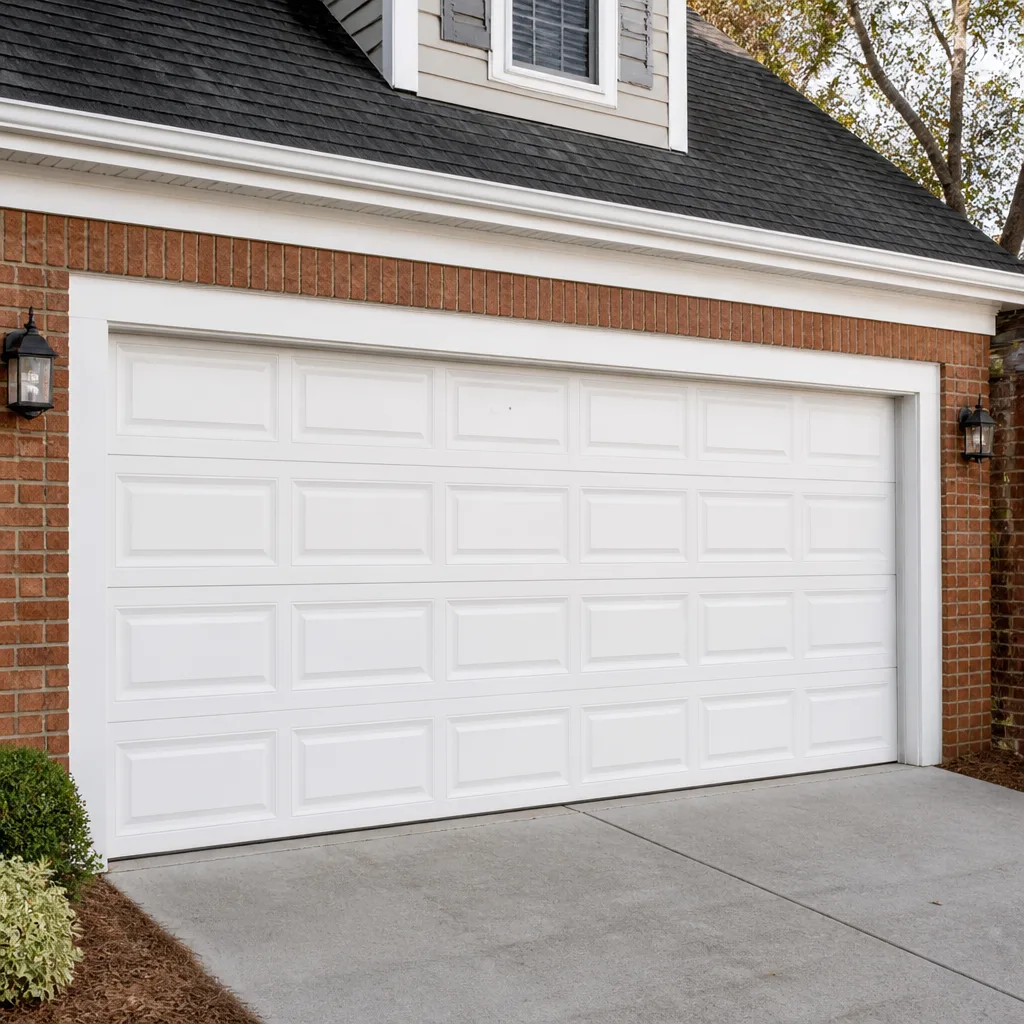 Raised-panel steel
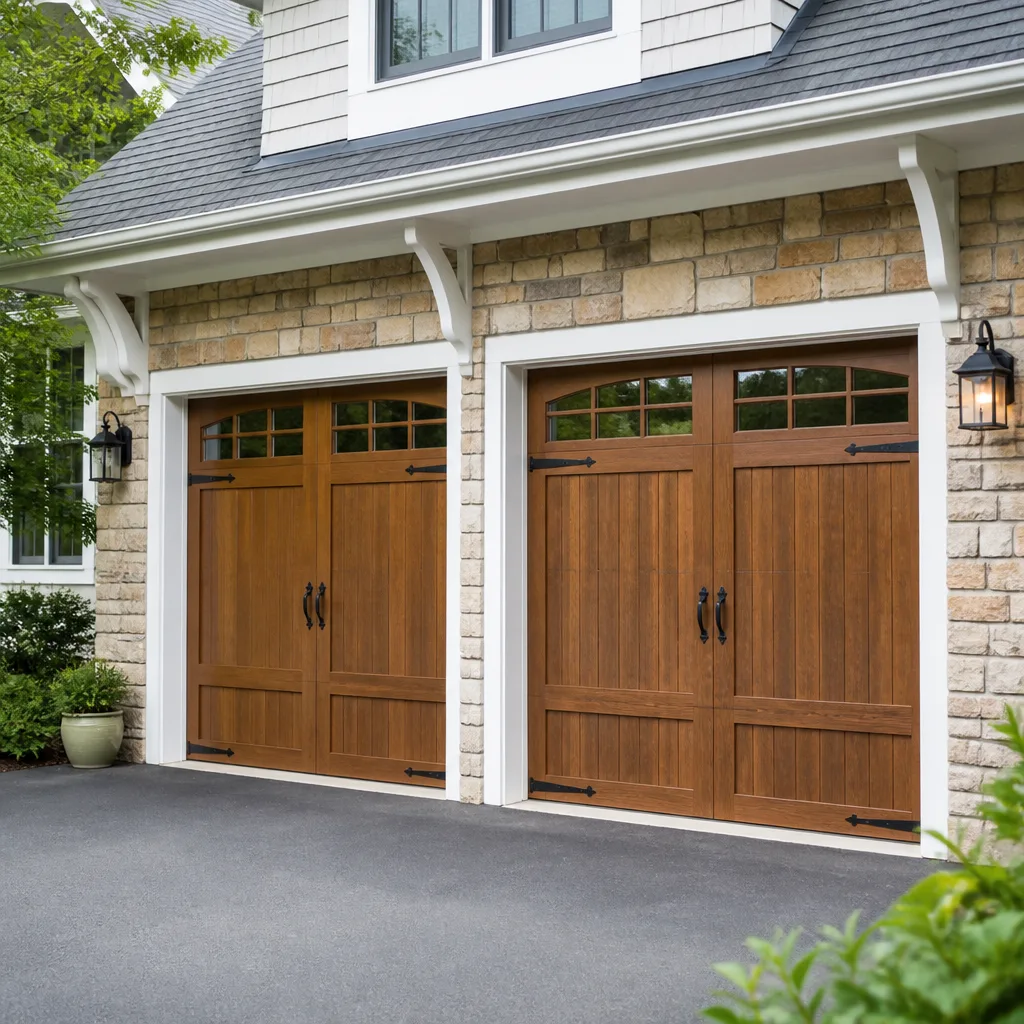 Carriage house
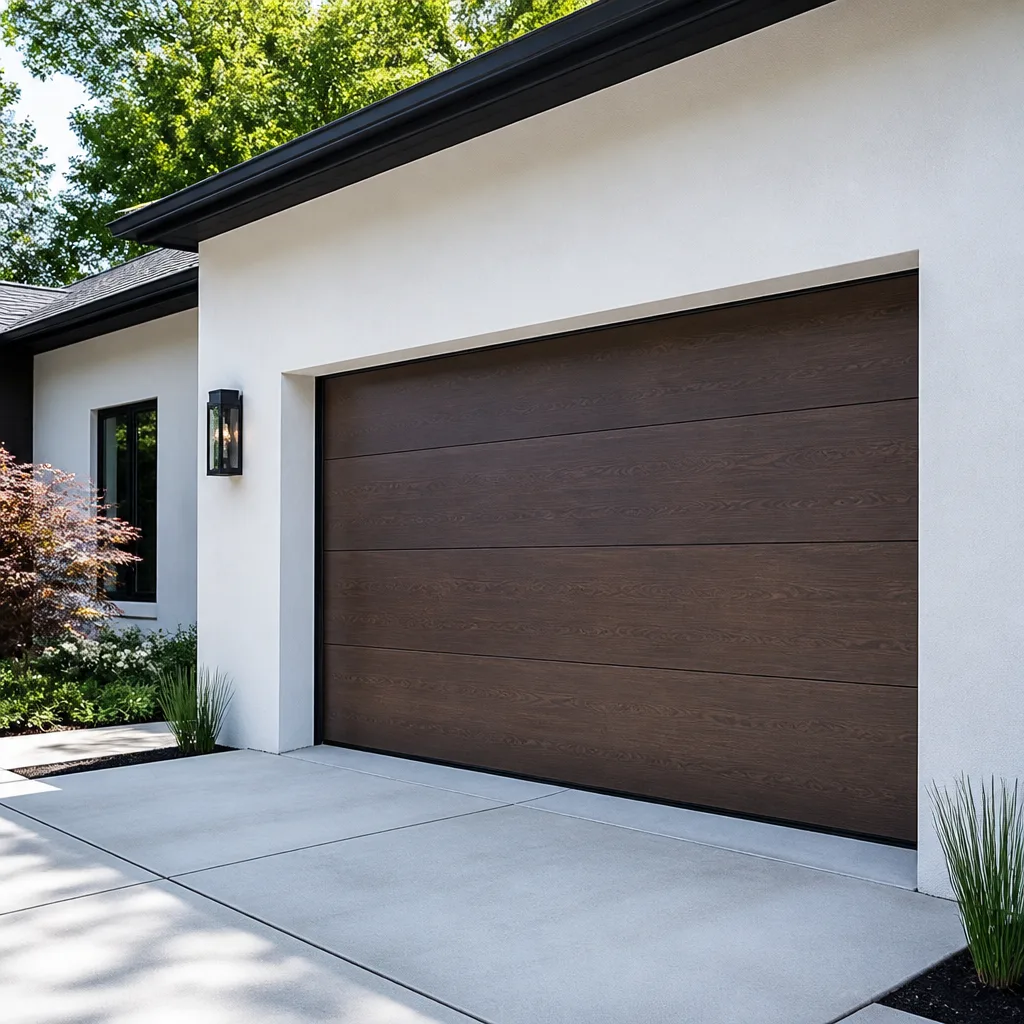 Modern flush
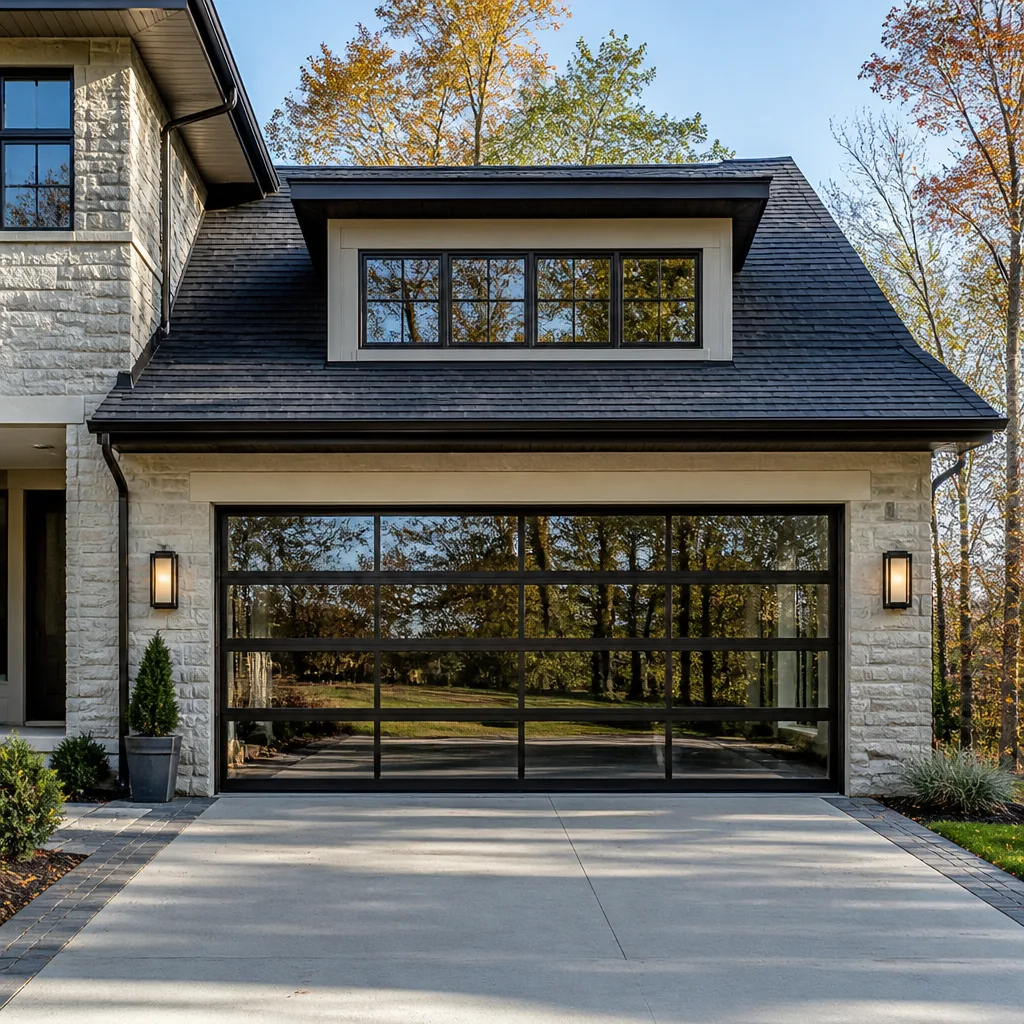 Full-view glass
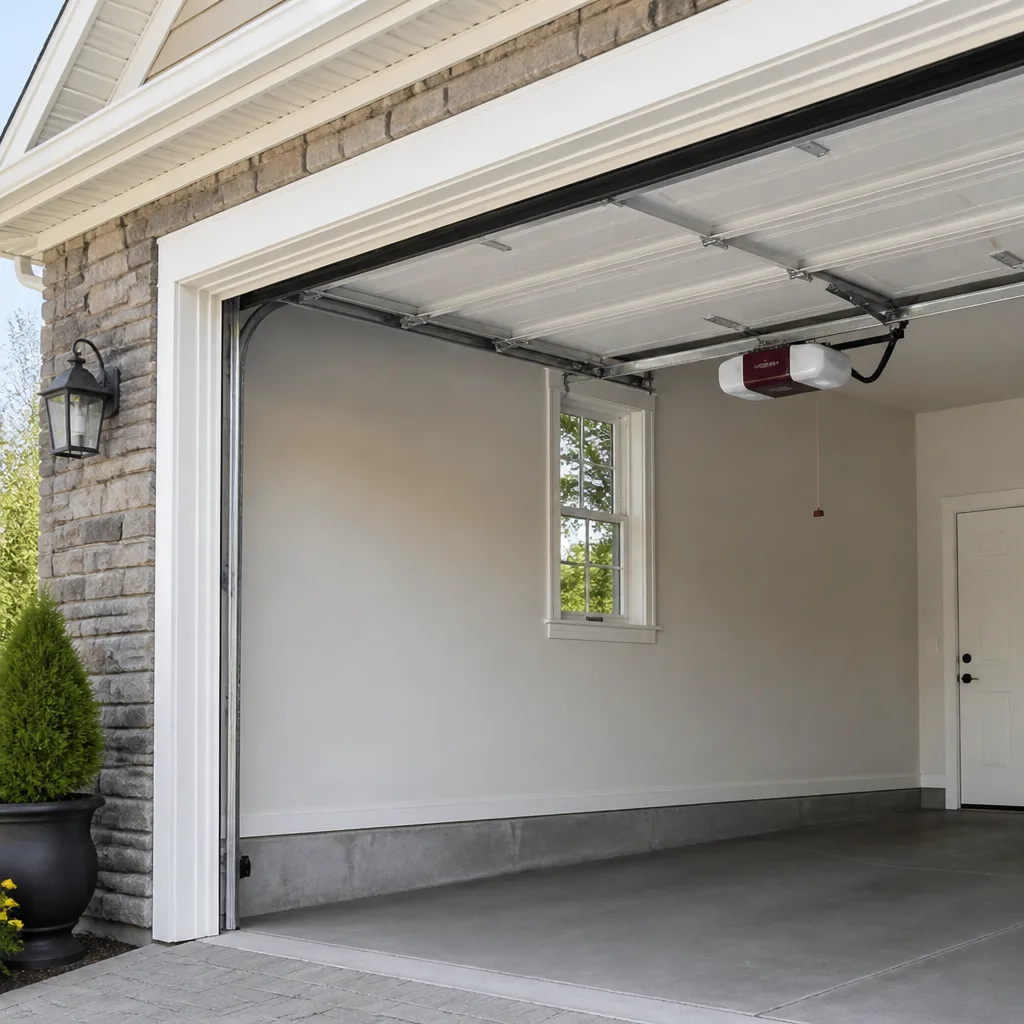 LiftMaster openers
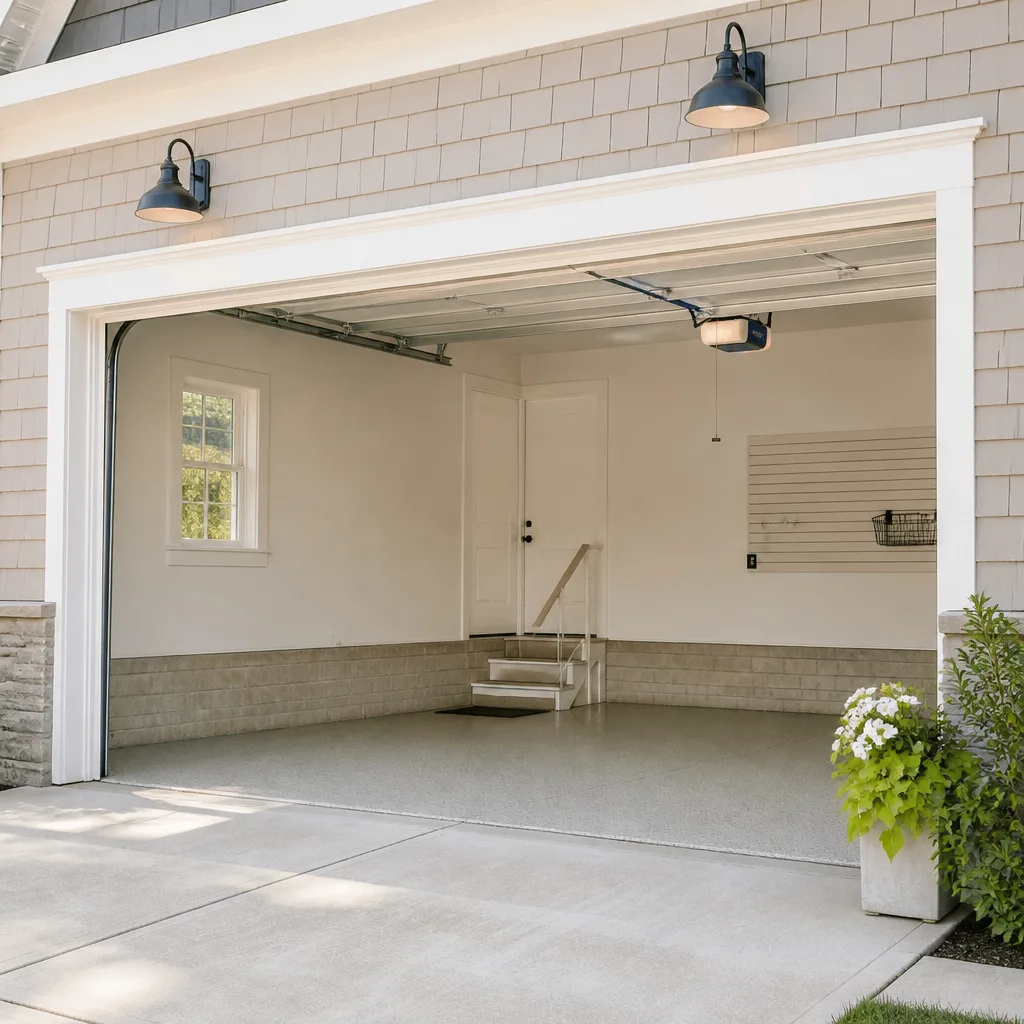 Chamberlain openers
Full 25-point door and opener safety check with every visit - springs, cables, rollers, tracks, and your LiftMaster or Chamberlain opener included
You get a price before we start. It does not change when the pro arrives.
Get your free estimateGarage Door Emergency Preparedness Guide for Manchester Homes
Most homeowners treat the garage door as an appliance that either works or needs a call. The reality is that it’s the largest moving part of your house, and when it fails during a storm, a power cut, or a cold snap, the consequences go well past inconvenience. We see this every winter around Manchester: ice storms knock out power, temperatures drop, and a door stuck half-open becomes the first thing a homeowner has to solve in the dark. What most people don’t realize is that the manual release cord has been sitting on the rail the whole time. This guide is about being ready before that moment, not after: how to release and re-engage your opener safely, what to do when a spring snaps, how to secure a damaged door, and the checks worth running before a nor’easter rolls in.
Quick Answer
Garage door emergency preparedness in Manchester comes down to three things: knowing where your manual release cord is and how to use it, knowing which failures you can safely handle yourself (stuck opener, dead remote, door locked out) versus which require a professional (broken spring, snapped cable, off-track door), and having a plan to secure the door if it won’t close. Never force a door with a broken spring or bent track. Call a specialist and keep people and vehicles clear of the door until they arrive.
Styles & brands we work with
- Raised-panel steel
- Carriage house
- Modern flush
- Full-view glass
- LiftMaster openers
- Chamberlain openers
Table of Contents
- How do you manually release a garage door opener?
- What to do when a spring breaks mid-cycle
- Storm damage protocol: is the door safe to operate?
- Emergency security when the door won’t close
- Pre-storm checks before a Connecticut nor’easter
- Power outage and opener failure protocols
- When to call a professional
- Frequently asked questions
How Do You Manually Release a Garage Door Opener?
You pull the emergency release cord hanging from the opener rail, then lift the door by hand. That’s the short version. The part that matters more is how you re-engage the trolley afterward, because doing it wrong is how people end up with a door that reconnects mid-travel or misaligns on the rail.
The release cord hangs from a lever on the opener’s trolley, the carriage that rides along the rail above the door. On nearly every chain- and belt-drive opener installed in Manchester homes, including older Craftsman and Genie units and modern LiftMaster and Chamberlain models, the mechanism is the same: pull the cord and the trolley disconnects from the door arm. The door is now free of the motor and moves by hand. With a standard torsion setup, lifting is manageable for one adult because the springs do the work.
Re-engaging is where the sequence matters. Follow these steps:
- Close the door fully by hand first. The trolley should still be at its closed position on the rail.
- Pull the cord toward the opener body (away from the door) until the lever clicks back into its slot. You should hear or feel it engage.
- Run the opener once through a full open and close cycle without stopping. Listen for the trolley catching the arm smoothly, no grinding or hesitation.
- Check the safety reverse. Place a piece of wood flat on the floor in the door’s path and cycle the door down. It should reverse on contact. If it doesn’t, stop using the opener and call for service.
Two things to avoid. Never pull the release cord while the door is open. The door will drop. And never pull it under load with the door halfway up and expect the trolley to sit where it was; the carriage stays where the motor last left it, and the door may not reconnect cleanly. If the door won’t re-engage, the trolley or the arm may be bent, and that’s a garage door opener repair call, not a weekend project.
What to Do When a Spring Breaks Mid-Cycle
Stop operating the door the moment you hear the bang. A snapped spring, whether torsion or extension, takes the door’s counterbalance with it, and the opener (or you) is now lifting the entire weight of the door on a track not designed to hold it there unassisted. In winter around Manchester, this is a common failure because cold makes the metal more brittle and the door heavier to lift.
The most dangerous scenario is a door stuck partially open. Three risks stack up:
- The weight of the door rests on the opener carriage or the cables, both of which can fail under load.
- A partially open door is an unsecured entry point for the whole house.
- If the door comes down while someone is under it, the door weighs far more than a person can support.
Here’s what to do:
- Don’t cycle the opener again. Don’t press the wall button, the remote, or the app. Every cycle puts more strain on the remaining spring and the cables.
- Keep people and pets out of the doorway. No walking under a suspended door.
- Disconnect the opener using the release cord if the trolley is under tension, but only if the door will not move under its own weight.
- Secure the door in its current position. Vise grips clamped on the vertical track just below a roller (on the closed side) hold the door in place without adding weight to the opener.
- Call for spring service. A broken spring is a garage door spring repair job, full stop. Torsion springs are wound under hundreds of pounds of tension. They are not a DIY repair.
If both springs were installed at the same time and one has failed, the other is usually on its way out. Replacing a matched pair together is standard practice; ask your technician whether both should go at once. Keeping the door operable in a Manchester winter depends on it.
Storm Damage Protocol: Is the Door Safe to Operate?
After a nor’easter, the door may look fine and still be unsafe to run. Ice, wind-blown debris, and impact damage can bend a panel a quarter-inch and throw the whole track out of alignment. The rule we give homeowners is simple: if any part of the door, track, or hardware is visibly bent, dented, or hanging loose, don’t operate it until someone qualified has looked at it.
Run this assessment from outside, with the door closed:
- Panels: Are any panels dented enough that the door no longer sits flush? A warped panel will bind on the track as it opens.
- Tracks: Look along both vertical and horizontal tracks. They should be straight and parallel. Any bend, kink, or section where the track has pulled away from the wall is a stop sign.
- Cables: Are they taut and running cleanly through their rollers? Fraying, loose cables, or a cable off its drum means the door is not safe to move.
- Rollers: Are all rollers inside the track? Any roller popped out is a track failure waiting to happen.
- Hinges and brackets: Any popped rivets, cracked hinges, or brackets pulled from the door?
If anything fails this check, close and secure the door, then call for service. If the door is jammed or you can’t fully close it, secure it in place with the door lock (if fitted), vise grips on the track, and a temporary brace across the inside of the door. Don’t try to run the opener to “see if it fixes itself.” That’s how a $200 tweak becomes a full garage door repair with a bent panel replacement.
Emergency Security When the Door Won’t Close
When the opener fails or the spring breaks with the door open, your house is open to the street until it’s fixed. The first instinct is to duct-tape something in place. Most of those fixes don’t hold. Here’s what actually works, from temporary to proper.
What works:
- Vise grips on the vertical track below a closed-side roller. This physically blocks the door from being lifted. It’s the fastest, most secure temporary hold for a door that’s already down.
- A manual lock or slide bolt through the vertical track if the door is fitted for one. Older doors in Manchester often have these, and they’re more reliable than you’d think.
- A brace across the inside of the door (2×4 against the door and a wall stud) when the door is closed but the opener is dead. This blocks it from being forced open.
- Park a vehicle against the door nose-in if you have no other option, especially overnight. It’s not elegant, but it’s a barrier.
What doesn’t work:
- Duct tape on the panel edges. Peels with the first gust of wind.
- Zip ties around the roller and track. Snap under load.
- Pushing the door down by hand and hoping it stays. If the spring is broken, the door wants to come back up.
- Relying on the opener’s “lock” function on the wall panel. It only locks out the remote; it doesn’t secure a door with a failed spring.
Once the door is secure, call for service. Emergency garage door service exists for exactly this scenario: an unsecured home or a trapped car. Our technicians have up to 11 years of experience handling these situations, and spring work is a named specialty, not something we send out.
Pre-Storm Checks Before a Connecticut Nor’easter
The hour before a storm hits is the wrong time to discover the door won’t close. The right time is a week before the forecast. Manchester sits in a stretch of Connecticut where nor’easters and ice storms are a regular seasonal event, and the door takes the worst of the wind load on the front of the house. Run these checks before the weather turns.
- Test the safety reverse. Lay a flat board in the door’s path and cycle it down. It should reverse on contact. If it doesn’t, the opener’s force setting or the sensors may be off, and you’ll find out during a storm.
- Check the photo-eye sensors. Wipe the lenses and confirm both LEDs are solid (not flickering). Align them if either is off. A misaligned sensor is the number-one reason a door won’t close when you need it to.
- Inspect the springs. Look for visible gaps in the coils of a torsion spring, or stretched, sagging extension springs on older doors. A spring near end-of-life should be replaced before a storm, not after.
- Lubricate the moving parts. A small amount of white lithium grease on the torsion spring, hinges, and rollers reduces strain on the opener in cold weather. Don’t use WD-40 as a lubricant; it attracts dirt.
- Balance the door. Pull the release cord with the door at waist height. It should stay put. If it drops or rises, the spring balance is off, and the opener is doing work it shouldn’t.
- Test the manual release. Confirm the cord is reachable and the trolley disengages cleanly. In an outage, this is your only way to move the door.
- Clear the track area. Move anything stored near the door’s path. Wind-blown debris in the track is a common reason a door jams mid-storm.
If you’re not confident running these checks yourself, a routine service visit before storm season is worth it. It’s a small cost compared to an emergency call with a bent panel in February.
Power Outage and Opener Failure Protocols
A dead opener during a power outage is not a garage door failure. It’s a power failure. The difference matters because the fix is completely different: pull the release cord and move on. The problems start when homeowners confuse the two and force the door.
How to tell them apart in ten seconds:
- Power outage: The wall opener light is off, the opener makes no sound when you press the button, and your neighbors’ lights are also out. Pull the cord and open manually.
- Opener failure: The opener light is on but the door doesn’t move, or the motor hums for a second and stops. This is a motor, logic board, or capacitor issue. Don’t keep cycling it.
- Remote failure (opener is fine): The wall button works but the remote doesn’t. Usually a battery or a remote-programming issue, not an emergency.
- Sensor failure: The door goes down a foot and reverses. Photo-eyes are misaligned or blocked. Usually a two-minute fix.
- Spring failure: The opener runs, the door doesn’t lift, or it lifts a few inches and stalls. The motor is fine; the spring is not. Call for service.
Battery-backup openers are the one exception. LiftMaster and Chamberlain both sell units with integrated battery backup, and if yours has one, the door will still cycle during an outage. If you’re replacing an older opener in a Manchester home, ask whether a battery-backup model makes sense; it removes the outage problem entirely. Modern smart openers (LiftMaster’s MyQ, Genie’s Aladdin Connect) also let you check door status remotely, which is useful when you’re not home and a storm rolls through.
For legacy systems on older homes, the diagnosis is often different from what the owner expects. A Craftsman opener from the 1990s or a Genie Chain Glide will usually fail on a worn drive gear or a failing capacitor, not on a logic board. Knowing the brand and the age of the opener before you call saves the technician time and you money. If you’re not sure which system you have, that’s a conversation worth having with a specialist.
See the difference
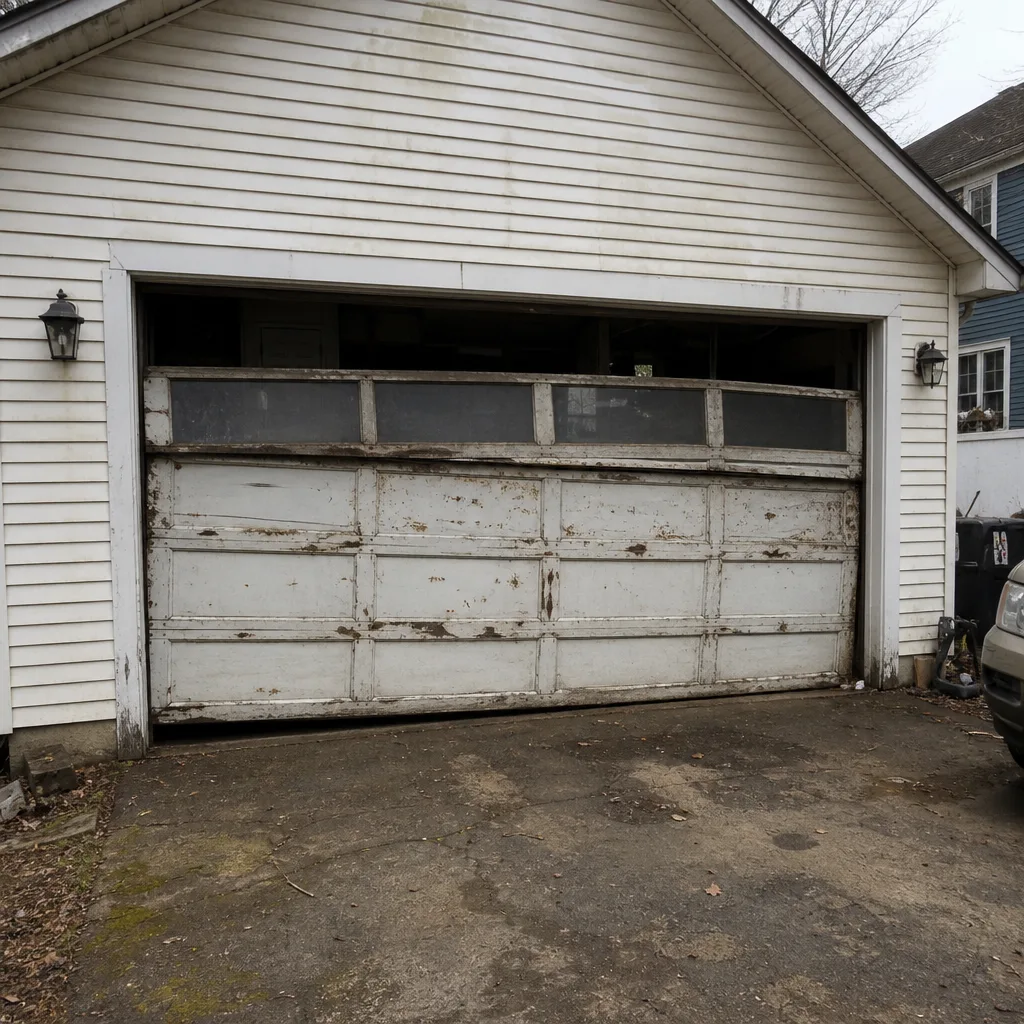 Before
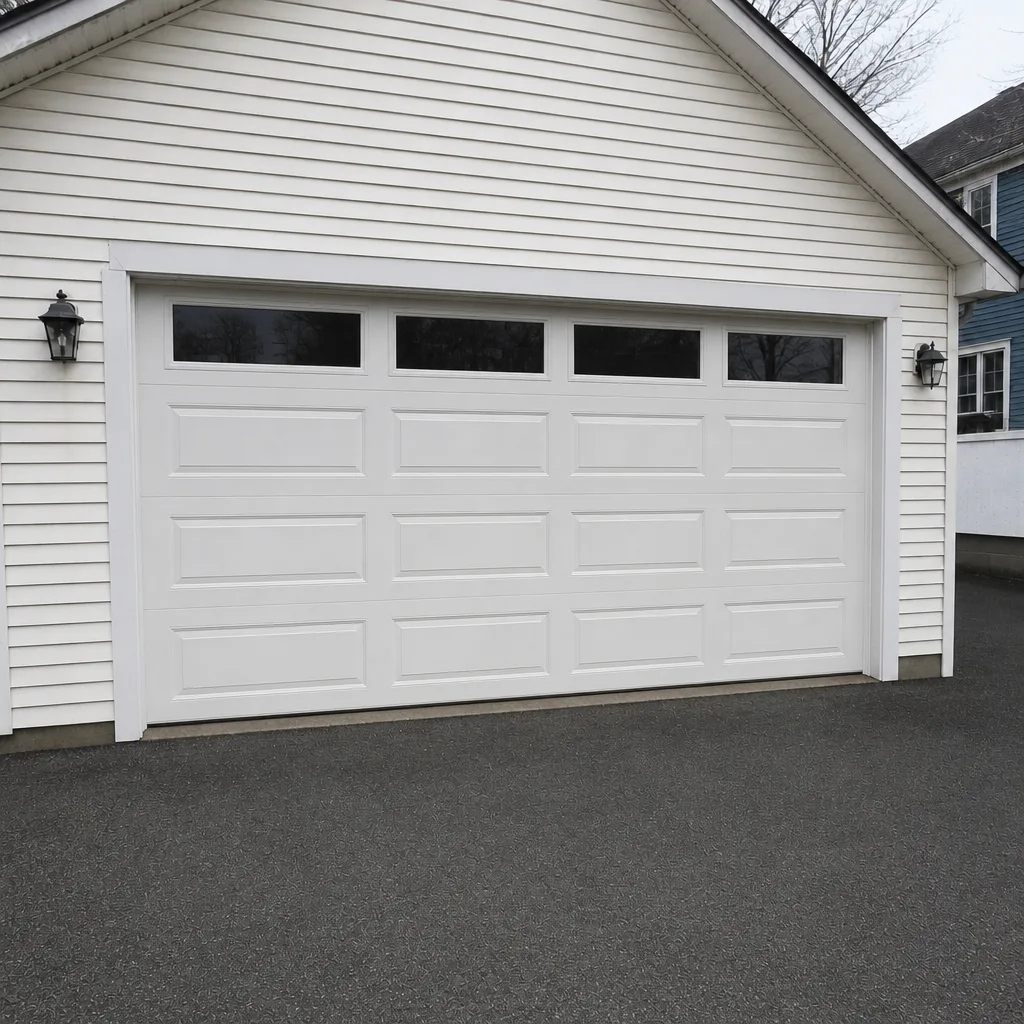 After
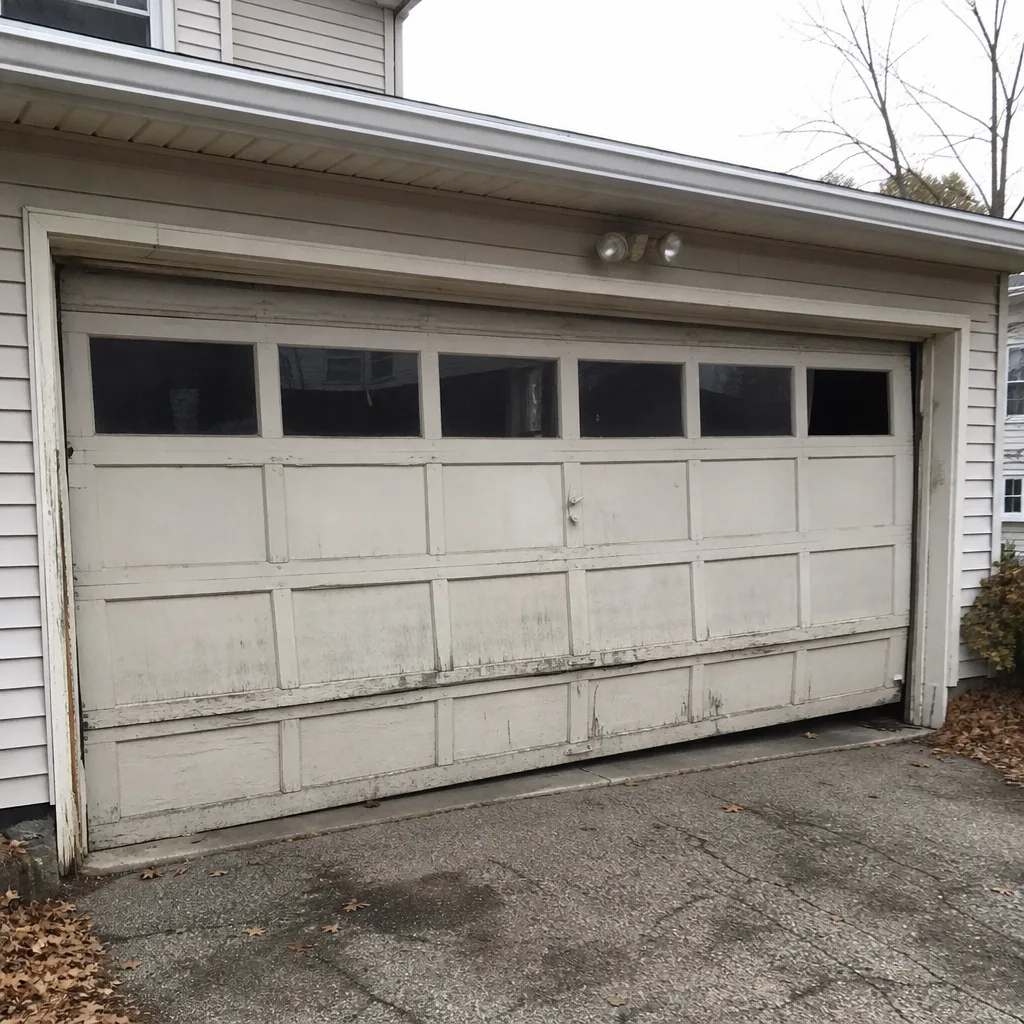 Before
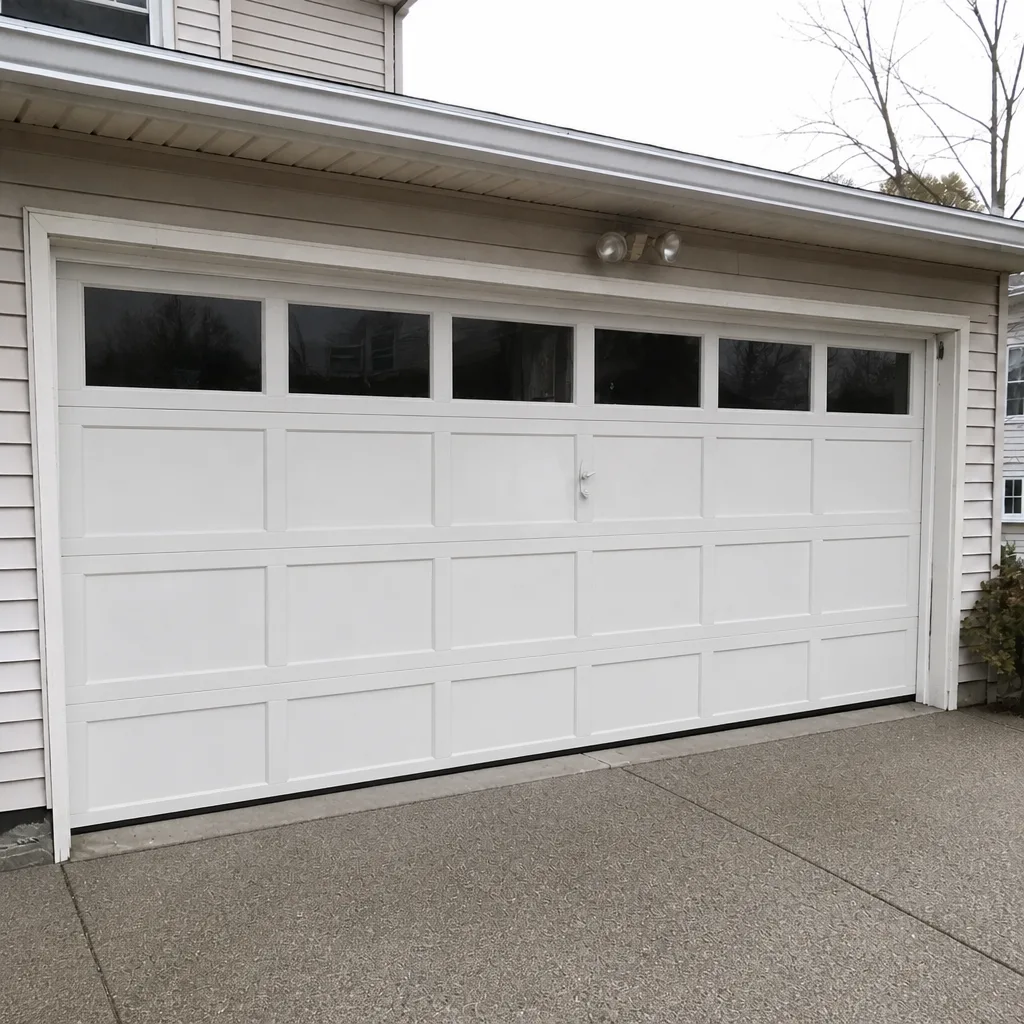 After
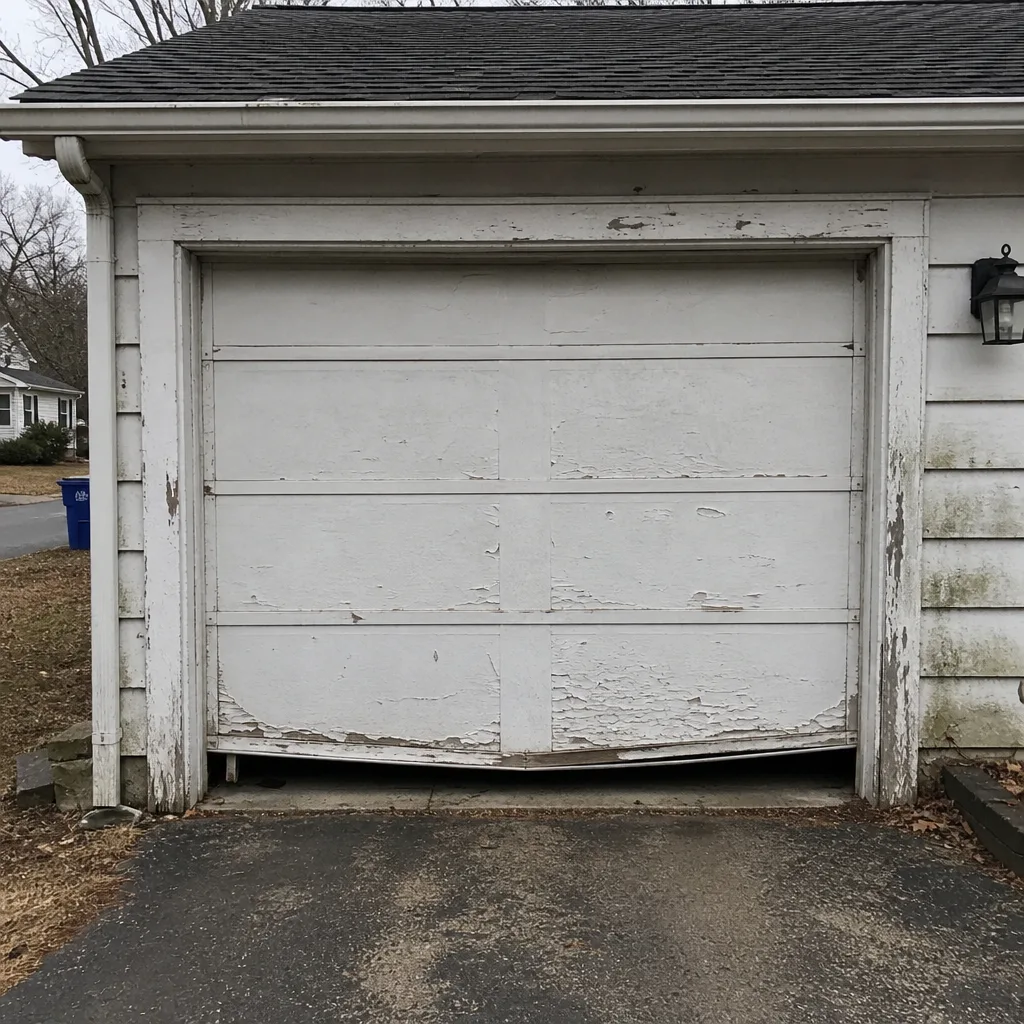 Before
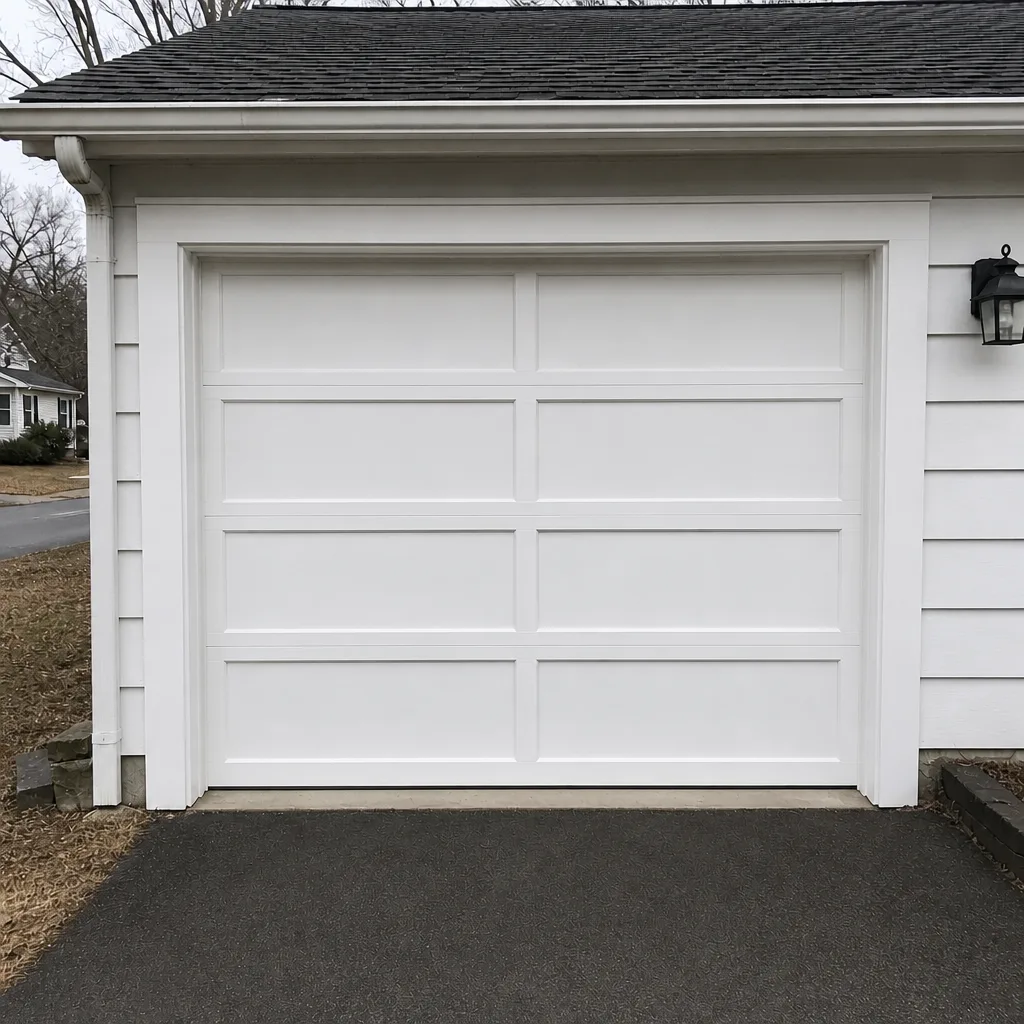 After
Common Mistakes to Avoid
- Pulling the emergency release while the door is open. The door will crash down under its own weight. Always pull the cord with the door closed or, at most, at waist height with the door under control.
- Forcing the opener when the door won’t move. Holding the button down while the motor strains burns out the motor or snaps a gear. If it doesn’t move cleanly on the first cycle, stop and diagnose.
- Attempting a spring repair yourself. Torsion springs hold lethal tension even when broken. This is the single most dangerous DIY repair in the entire garage door system, and it’s the reason generalists hand the job off.
- Using the release cord as a routine way to open the door. It’s for emergencies. If your opener is dead, get it repaired rather than pulling the cord every day. Daily manual use wears the rollers and misaligns the trolley.
- Assuming the door is fine after a storm because it looks fine. A bent track or a dented panel that still closes today will bind and fail within weeks, especially once the temperature drops.
- Ignoring one broken spring on a matched pair. In Manchester’s cold snaps, a door with one new spring and one at end-of-life is a door that will fail in the next freeze. Replace both.
- Trusting duct tape to secure a door. It doesn’t hold against wind, and it doesn’t stop a person. Use vise grips on the track or a proper manual lock.
When to Call a Professional
Some failures are safe to diagnose yourself and some are not. Call a specialist if the spring is broken, a cable is loose or snapped, the door is off its track, the opener motor is humming but the door isn’t moving, or any part of the door, track, or hardware is visibly bent or hanging. These are the situations where operating the door risks injury or turns a repair into a full panel replacement. A stuck remote, a misaligned sensor, or a door that won’t close due to a blocked photo-eye are the ones you can usually solve without a call.
Manchester Garage Door Repair Pros offers free estimates in Manchester. We work on doors, openers, and springs as a specialist, including Clopay and Amarr panels, Genie openers, and Wayne Dalton systems on older homes. Technicians have up to 11 years of experience, spring work is a core part of what we do, and we quote before any work starts so the written estimate is the price. Call (833) 509-3052 for an exact quote.
Frequently Asked Questions
Most emergency garage door repairs in Manchester fall in the $180 to $480 range depending on what failed. A spring replacement typically sits between $180 and $340 for one spring, with a matched pair costing roughly twice that. Opener repairs usually run $120 to $320. The written estimate sets the final price, and we quote before any work starts. Call (833) 509-3052 for an exact quote; estimates are free.
Emergency garage door service is available for doors that leave a home unsecured or a car trapped, and same-day service is common for those calls. When you call, tell us the brand of your opener (LiftMaster, Chamberlain, Genie, Craftsman, and Raynor are all common in Manchester) and describe the failure. That helps us arrive prepared. Call (833) 509-3052.
No, the written estimate is the price. We inspect the door, tell you what’s wrong, and quote before any work starts. If the scope turns out larger once the door is open or apart, we come back to you with a revised quote before proceeding, not after. Call (833) 509-3052 for a free estimate.
The local professional we connect you with is licensed and insured as their state requires. We can work with your insurer on storm-related damage claims, though coverage is set by your policy, not by us. Call (833) 509-3052 to talk through your situation.
Yes. Pull the emergency release cord hanging from the opener rail, then lift the door by hand. With working springs, one adult can lift a standard door. Re-engage the trolley by pulling the cord toward the opener body with the door fully closed, then run a full cycle to test. If the door won’t re-engage, that’s an opener repair issue.
Not if it’s the only thing between your house and the street. Secure it with vise grips on the vertical track below a roller or a brace against the inside of the door, keep people and pets clear, and call for spring service. Don’t cycle the opener and don’t try to force the door closed. Call (833) 509-3052 for emergency service.
The Bottom Line
The garage door is the weakest link in most Manchester homes during a storm, a freeze, or a power cut, and the failure almost always comes down to one of three things: a spring, an opener, or a track. The manual release cord is your first tool, but knowing when not to use the opener is just as important. Keep the door balanced, run the pre-storm checks, know your opener brand, and secure the door rather than force it if something breaks. When in doubt, stop pressing the button. A specialist can diagnose the whole system from the spring to the opener to the panel, and the quick call is always cheaper than the forced repair.
If your door is stuck, broken, or won’t close, Manchester Garage Door Repair Pros is here to help. Call (833) 509-3052 for a free estimate.
Written by the team at Manchester Garage Door Repair Pros.