Last updated November 23, 2026
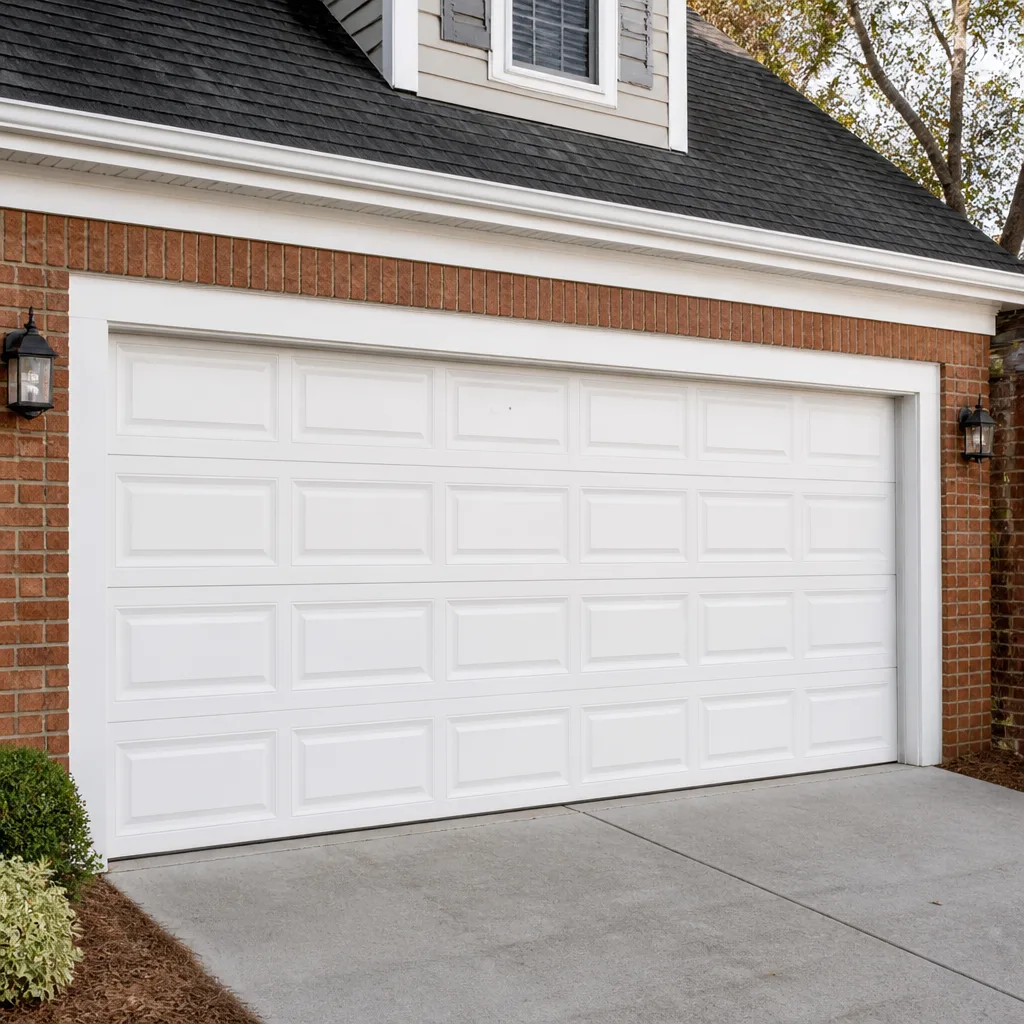 Raised-panel steel
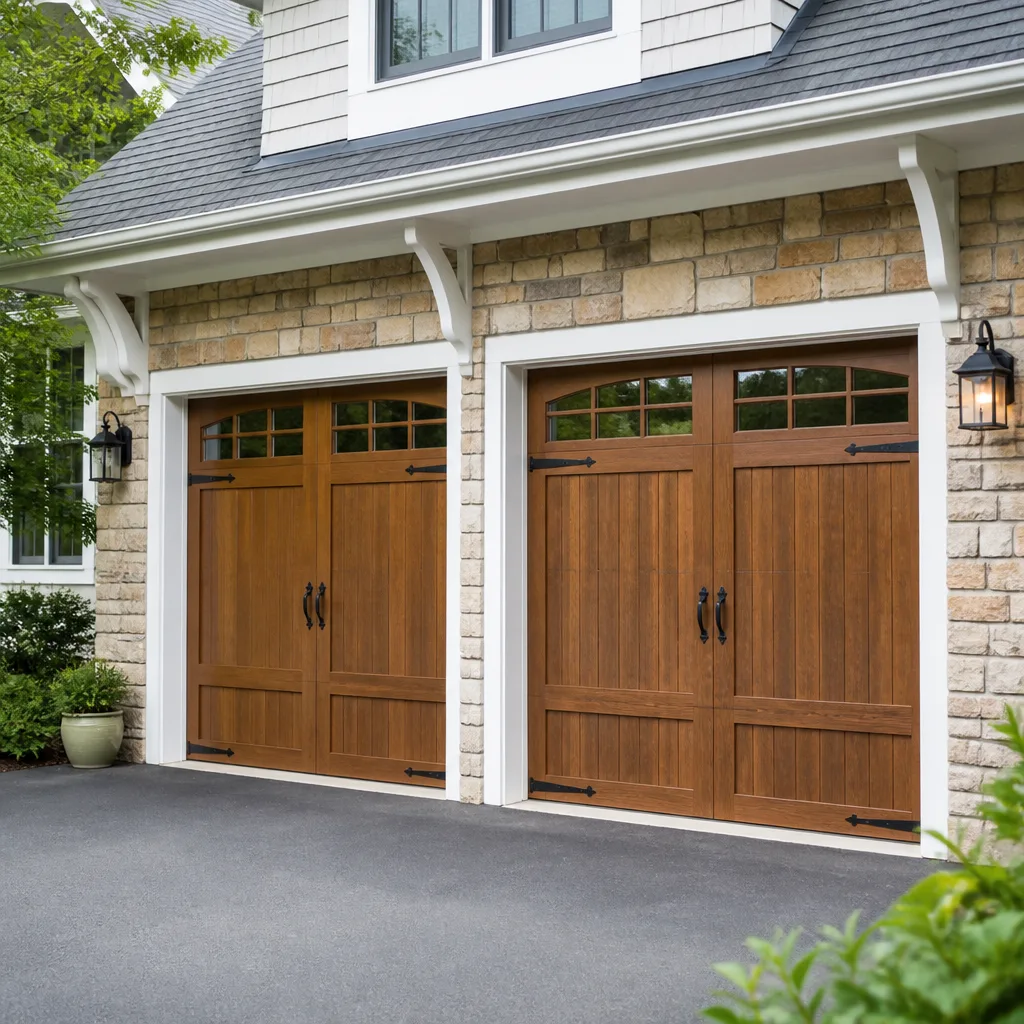 Carriage house
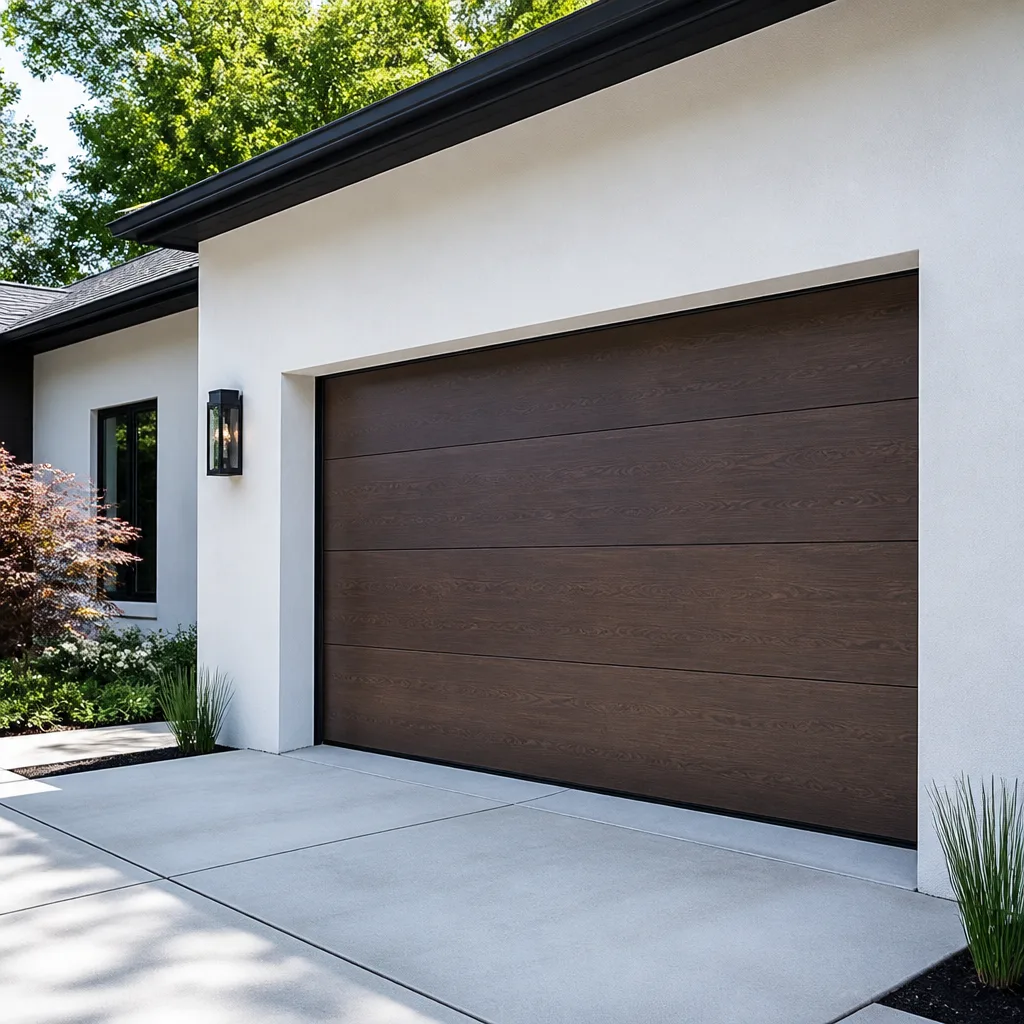 Modern flush
 Full-view glass
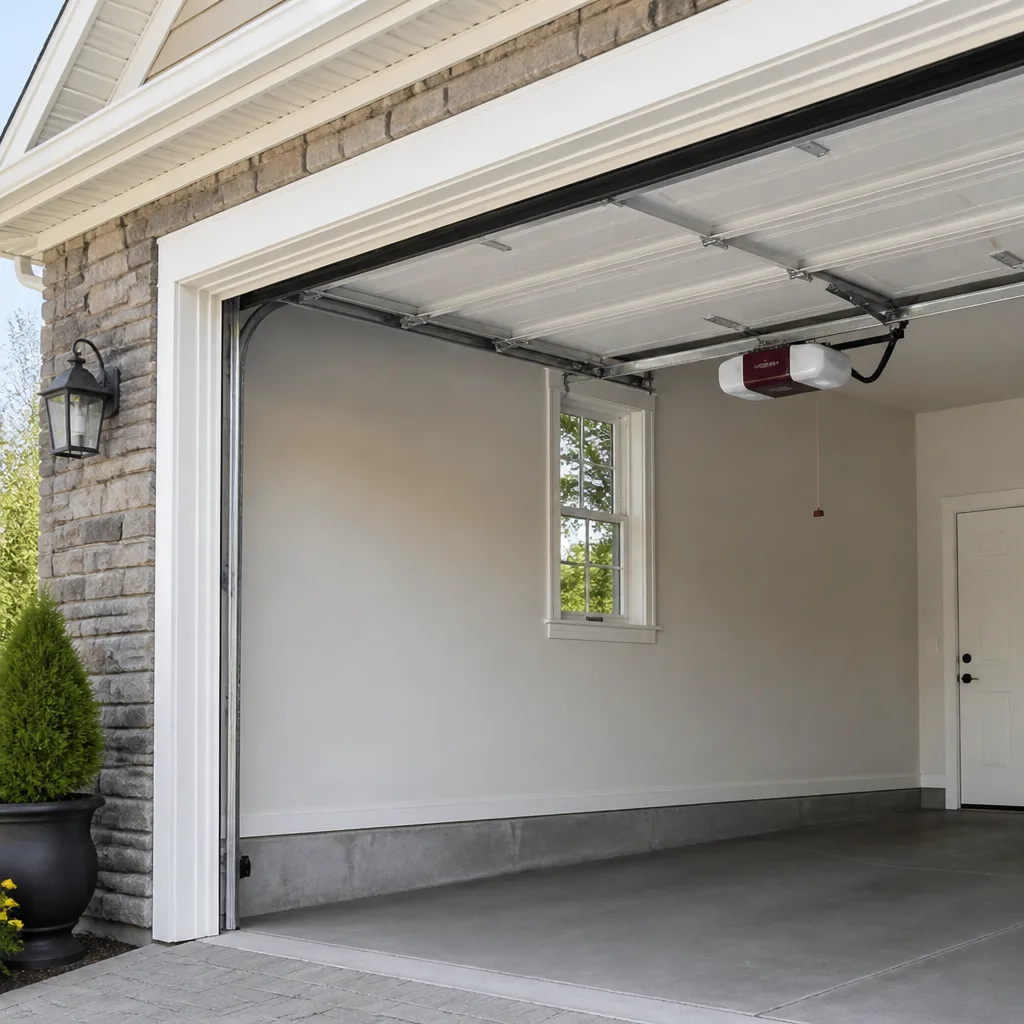 LiftMaster openers
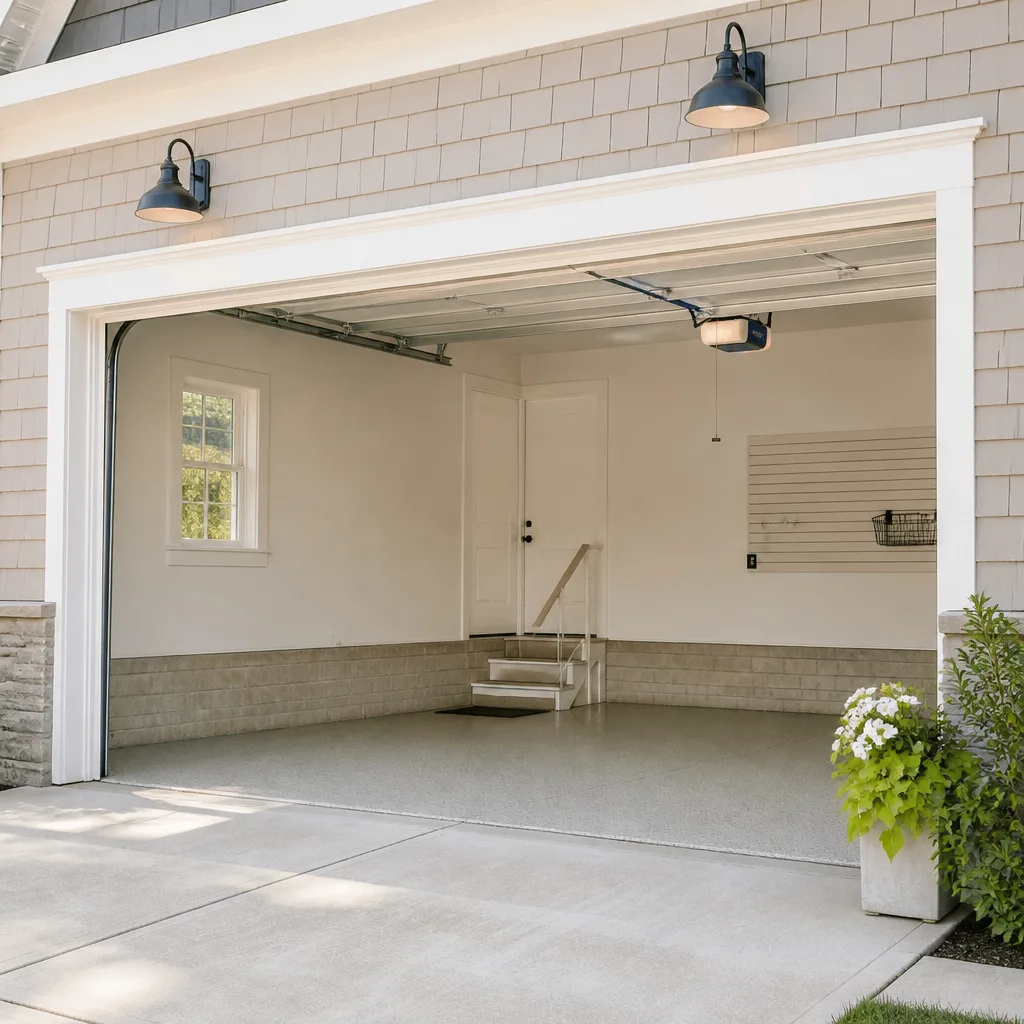 Chamberlain openers
Full 25-point door and opener safety check with every visit - springs, cables, rollers, tracks, and your LiftMaster or Chamberlain opener included
You get a price before we start. It does not change when the pro arrives.
Get your free estimateDIY vs Professional Garage Door: The Manchester Homeowner’s Decision Guide
Replacing a bottom weather seal is a legitimate DIY job. It takes about 20 minutes and around $15 in materials, and you can do it with a putty knife and a pair of pliers. Winding a torsion spring is a different category of task entirely, and homeowners who try it without the right winding bars have ended up in the emergency room. Connecticut has documented those incidents. The line between what’s safe to handle yourself and what isn’t is not vague; it just needs to be drawn task by task. This guide draws that line for Manchester homeowners, with the mechanical reasoning behind each call.
Quick Answer
Most garage door maintenance and cosmetic repairs are safe for a careful homeowner: weather seals, lubrication, tightening hardware, and photo-eye alignment. Anything that involves the springs, the cables, the torsion shaft, or the bottom brackets is professional-only work because those parts store enough energy to cause serious injury in a fraction of a second. Panel replacement, opener installs, and track realignment sit in between, doable in theory but usually not worth the risk or the tool cost. In Manchester, the practical rule we use is simple: if the repair requires releasing stored tension, call a specialist.
Styles & brands we work with
- Raised-panel steel
- Carriage house
- Modern flush
- Full-view glass
- LiftMaster openers
- Chamberlain openers
Table of Contents
- The Task-by-Task Decision Table
- Torsion vs Extension Springs: Why the DIY Calculus Is Different
- The Tool Reality Check
- When a DIY Repair Creates a Bigger Bill Down the Line
- Connecticut Liability and Insurance When You DIY
- How Manchester’s Climate Affects DIY Risk
- When DIY Actually Makes Sense
- What Each Repair Costs in Manchester
The Task-by-Task Decision Table
Most “hire a pro” articles lump every garage door repair into one bucket and warn you off all of it. That’s not useful, and it isn’t honest. Some jobs are well within reach of a homeowner with basic tools. Others are genuinely dangerous. Here’s how we sort them, and why.
- DIY-safe: Replacing the bottom weather seal ($10 – $25 in materials), lubricating rollers and hinges, tightening loose bolts on the track brackets, cleaning and aligning photo-eye sensors, adjusting the opener’s travel limits via the control panel, and replacing the opener’s remote battery.
- DIY-possible with caveats: Replacing a single hinge or roller on a door that’s fully closed and locked out at the breaker, touching up scratched paint, replacing a broken handle, swapping out a lift cable that is visibly slack with the door locked down and the spring already unloaded, and resetting a Wi-Fi opener that lost its connection.
- Professional-only: Torsion spring replacement, extension spring replacement, cable replacement on a live system, bottom bracket work, drum and cable rewinding, torsion shaft bearing replacement, track realignment after an impact, panel replacement on a sectional door, and full opener replacement where the rail must be rehung.
The mechanical reason for each classification comes down to one question: does the repair require you to interact with stored energy? A weather seal holds back nothing but rain. A torsion spring holds back hundreds of pounds of door weight, and the winding bar that releases it wants to spin 20 turns in half a second. That difference is what separates safe from dangerous, not how hard the repair looks.
If you’re unsure which bucket a repair falls into, that itself is the answer. The jobs we classify as DIY-safe are obvious once you look at them. The ones that aren’t obvious are usually the ones that need a specialist. Manchester Garage Door Repair Pros can talk through a repair over the phone and give you our read on whether it’s worth doing yourself.
Torsion vs Extension Springs: Why the DIY Calculus Is Different
Most homeowners know a garage door has springs and that they can break. Fewer know there are two distinct designs, and the two behave very differently under failure. The distinction matters for the DIY decision because one is borderline ambiguous and the other is genuinely lethal.
Torsion springs mount horizontally above the door on a steel shaft. When the door is closed, the spring is wound tight, storing the energy needed to lift the door on the way back up. The spring is loaded through a set of winding cones on the shaft. Replacing it requires two properly sized winding bars, a deliberate sequence of quarter-turn releases, and the discipline to stop if anything feels wrong. When a torsion spring fails during the repair, the bars can whip out of the winding cone with enough force to break a wrist or worse. There is no margin for a slightly wrong bar.
Extension springs mount vertically alongside the horizontal tracks and stretch, rather than twist, as the door closes. They still store serious energy, but they fail by snapping back toward the ceiling rather than unwinding along a shaft. Extension spring replacement is easier in that the springs don’t need to be wound. It’s not safe, though. A homeowner working on an extension spring without the safety cable secured can have the spring come loose with enough force to break a jaw. Many older doors around Manchester still have extension springs and no safety cables at all, which is a hazard on its own and a reason to bring a technician in even if the spring looks fine.
The practical takeaway: if you own a torsion-spring door, everything spring-related is professional-only. If you own an extension-spring door, the same applies, but the added issue is whether your existing setup has a safety cable installed. A technician checking that on the first visit is worth the call.
The Tool Reality Check
Many DIY guides gloss over the tools. A gripping wrench set and a pair of pliers will get you through maybe half of what a garage door repair actually involves. The other half requires parts you don’t own and probably won’t buy for one job.
Here’s what’s typically in a homeowner’s garage that genuinely helps:
- Adjustable wrench, socket set, and screwdriver set
- Needle-nose pliers and a utility knife
- An extension cord and a shop light for working inside the garage at night
- A step ladder tall enough to reach the opener head and the torsion shaft
- A torque or cordless driver for tightening brackets
And here’s what a proper garage door repair actually requires when you move past the surface jobs:
- Winding bars sized specifically for your torsion spring and shaft (usually sold as a matched pair)
- Safety glasses and heavy gloves rated for mechanical work, not gardening
- A C-clamp or locking pliers to hold the torsion shaft in place while the drum is worked
- Replacement cables cut and swaged to the correct length (you can’t shortcut this with generic hardware)
- Bottom bracket safety plates if the original brackets are the old style that can let go during cable work
- A second set of hands for anything above the header bracket
If any of those items are missing, the cost savings of doing it yourself evaporate the moment you buy the winding bars, cables, and safety gear for a single repair. On a garage door spring repair, the tool cost alone often matches what a specialist charges for labor.
When a DIY Repair Creates a Bigger Bill Down the Line
A repair that goes wrong doesn’t just cost you the original job. It usually adds a second, larger job on top of it. In our experience, these are the failure modes we see most often in Manchester.
- Over-wound torsion spring. A homeowner winds the spring one or two quarter-turns too far. The door lifts with visible speed and slams shut at the end of travel. The opener’s plastic drive gear strips, the door panel bows, and what started as a spring swap becomes a spring plus opener plus panel repair.
- Uneven cable tension. One side of the door is wound a little tighter than the other. The door runs crooked and wears the rollers on one side, then the track. Six months later the door is off track and needs roller and track work.
- Bottom bracket failure during cable work. A homeowner loosens the bottom bracket thinking it’s a simple bolt-off job. On older doors, the bracket holds the cable under tension, and if the spring isn’t fully unloaded first, the bracket can fling loose. That turns into a cable, spring, and bracket job with a panel replacement if the cable whips the door.
- Wrong-size spring. A homeowner buys a replacement spring online without matching the wire gauge, inside diameter, and length to the original. The door lifts and lowers, but the spring is overstressed and breaks again inside a year. A correct spring costs more than a cheap guess; two incorrect springs cost far more than one right one.
- Opener travel misadjustment. A homeowner adjusts travel limits to compensate for a sagging door. The opener now pulls the door an inch past its closed position every cycle, and the panel cracks along the top hinge. A panel replacement in Clopay or Amarr sizes is not a hardware store item.
Each of those is a real pattern we’ve seen, not a scare story. The point isn’t that every DIY repair ends in a bigger bill. It’s that when one does, the door is often harder to fix than it would have been from the start.
Connecticut Liability and Insurance When You DIY
This section isn’t a legal opinion, and it isn’t a scare tactic. It’s what we’ve learned about the practical reality of self-performed garage door work in Connecticut.
A homeowner’s insurance policy generally covers the home and its contents against accidental damage. That’s not the same as covering a repair you attempted that failed. Many policies exclude damage arising from faulty workmanship by the homeowner, so if a DIY spring install ends up damaging the door panel or the opener, that repair may fall outside your coverage. Read your own policy; it’s the only document that tells you how your insurer handles this.
Injury is the bigger concern. If someone in your household is hurt while a spring unwinds, the medical bills are what they are, and there’s no outside party to claim against. If a neighbor or a contractor working in your garage is hurt by a door you repaired incorrectly, the liability picture becomes more complicated because the injury occurred on your property due to your work. That’s a scenario a general liability policy typically doesn’t cover for homeowner-performed work.
There’s also the permit question. Most Connecticut municipalities require a permit for structural or electrical changes to a home, and opener replacement involving new wiring may fall under that. Whether a specific repair needs one depends on your town’s building department, so if you’re unsure, ask them directly. Manchester’s building department can tell you what applies to your address.
None of that means home improvement is off limits. It means the insurance side of a repair is worth a two-minute thought before you pick up a winding bar, not after.
How Manchester’s Climate Affects DIY Risk
Manchester’s winters are the biggest factor in how garage doors fail here, and they affect the DIY decision in ways that aren’t obvious in summer.
Cold weather makes steel brittle and makes torsion springs fail more often. A spring that’s been slowly weakening through fall tends to snap on the first cold morning of the season, often while the door is coming down under load. Extension and torsion springs alike are less forgiving in the cold, which is why a repair that felt manageable in July can be genuinely dangerous in January.
Ice and snow pack in the bottom seal and along the threshold, and homeowners clear it with a shovel or an ice chopper. That’s fine for the seal. It’s not fine if you’re levering on the door panel to break the ice free, which is how panel dents and bottom bracket damage start. If the door is frozen shut, run warm water along the seal to release it, or call a specialist; don’t pry on the door.
Temperature also affects the opener. A unit that works fine in warm weather can strain in cold, especially if the door’s spring tension is already marginal. If your opener has started sounding labored in the winter, that’s a sign to have the whole door and opener checked, not to bump the travel limits up.
We’ve handled enough Manchester-area jobs to know that winter is when most emergencies land. That’s the season to be honest with yourself about what’s worth doing on your own. The seasonal calendar matters here more than it does in warmer parts of the country.
When DIY Actually Makes Sense
We’re a specialist and we still tell homeowners to handle the easy jobs themselves. Here’s the honest list.
Replace the bottom seal. This is the clearest DIY win. If the seal is cracked, torn, or leaving a visible gap under the door, a replacement from any hardware store solves it in half an hour. You’ll need a putty knife and possibly pliers to remove the old seal from its track. No springs involved. No risk.
Lubricate the moving parts. A quick pass with a garage-door-specific silicone or lithium spray on the rollers, hinges, and pivot points a couple of times a year keeps everything quieter and reduces wear. Avoid heavy grease, which collects grit.
Tighten loose hardware. Brackets that have worked loose over time just need a socket wrench. Make sure the door is fully closed and the opener is off at the breaker before you put a wrench to anything.
Clean and align photo-eye sensors. If the door goes up but refuses to come down, the photo-eye is usually the reason. Wipe the lenses, check that the two sensors point at each other, and check the LED status light on each one. That’s a five-minute fix that solves most “door reverses immediately” complaints.
Replace the opener’s remote battery. Obvious, but often forgotten.
Reset a Wi-Fi-connected opener. If you have a smart opener from Genie or LiftMaster that lost its connection after a router change, the app will walk you through re-linking. No door work required.
If you stick to this list, you’ll extend the life of your door without ever putting yourself in front of a loaded spring. Anything outside the list is worth a call, even if it looks straightforward.
What Each Repair Costs in Manchester
For pricing on any repair topic, we quote per job after seeing the door. The ranges below are typical estimates for the Manchester area, based on common configurations; the written quote sets the final price. Note that spring pricing is for one spring. Most doors use a matched pair that should be replaced together, so a pair costs roughly twice the single-spring figure.
| Repair | Typical DIY Cost | Typical Professional Cost |
|---|---|---|
| Bottom weather seal replacement | $10 – $30 in materials, 20 – 40 minutes | $80 – $150 installed |
| Roller and hinge replacement (set) | $40 – $80 in materials, 1 – 2 hours | $150 – $250 installed |
| Photo-eye alignment | Free | Covered in service call |
| Torsion spring (single) | Not recommended | Typically $180 – $340 installed |
| Torsion spring (matched pair) | Not recommended | Typically $360 – $680 installed |
| Cable replacement | Not recommended | Typically $150 – $300 per side |
| Opener replacement (unit installed) | Risky for older doors; not recommended | Typically $450 – $950 installed |
| Off-track door realignment | Not recommended | Typically $150 – $400 installed |
The DIY savings on a seal or a set of rollers are real. On a spring, the tool cost, the risk, and the downstream bills wipe out any advantage. If you want a firm number for your door, our garage door repair service starts with a free estimate, and the price is quoted and agreed before any work starts. There are no surprise lines added after the fact.
Common Mistakes to Avoid
- Starting spring work without knowing which type you have. Torsion and extension springs need different tools and different techniques. Buying the wrong parts wastes the trip and the money before you even start.
- Bumping up the opener’s travel limits to compensate for a sagging door. This masks a failing spring and quietly forces the opener to drag the door harder each cycle. It usually ends with a stripped drive gear and a bigger repair.
- Clearing ice from the bottom seal with a shovel or pry bar. Manchester winters make this tempting, but prying on the door dents panels and stresses the bottom brackets. Warm water along the seal releases the ice without the risk.
- Replacing one spring of a matched pair. The two springs are matched at manufacture; replacing one leaves the door unbalanced and shortens the life of the new one. Replace them together.
- Lubricating with heavy grease or WD-40. Garage door tracks and springs need a proper silicone or lithium spray. Heavy grease traps grit that wears out rollers faster than if you’d left it alone.
- Working under a door that isn’t fully closed and locked out. Even a door supported by a failing spring can drop without warning. The opener must be off at the breaker, and the door must be fully down, before you touch anything.
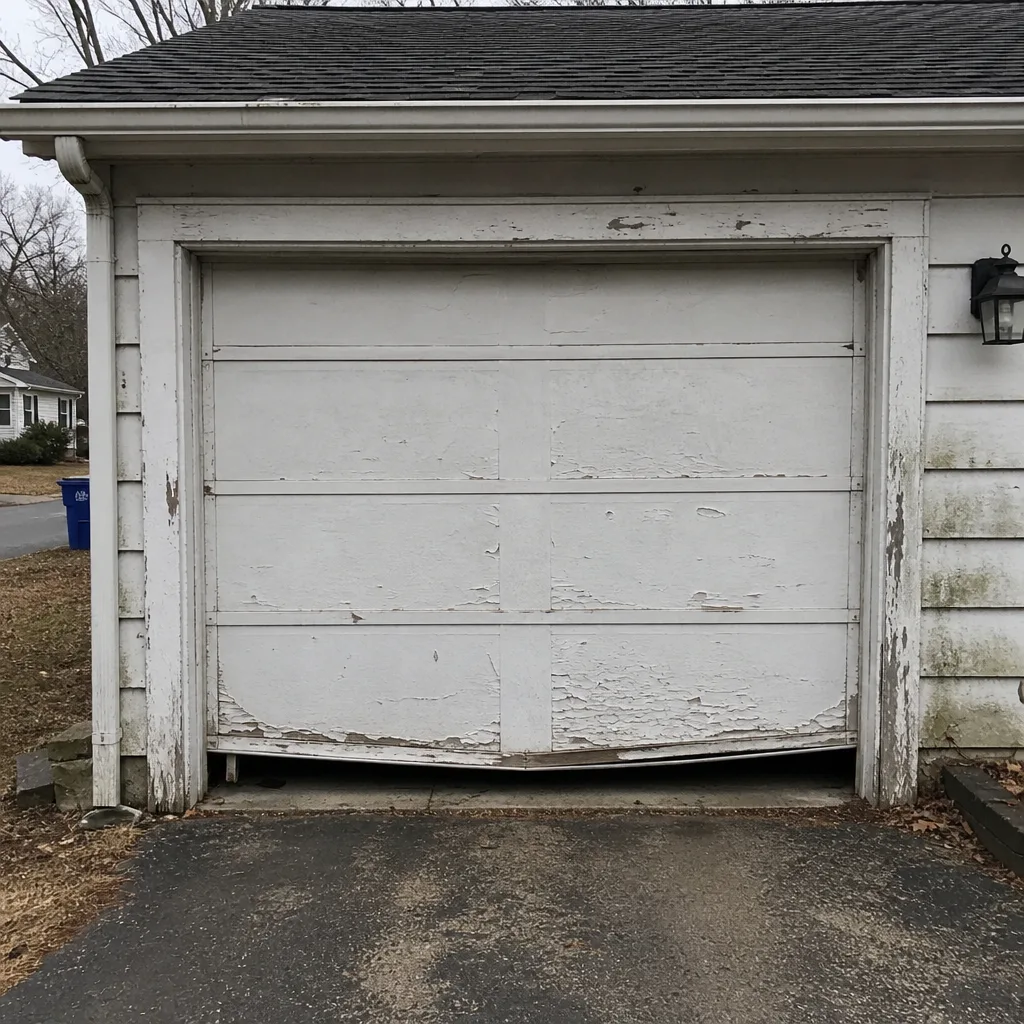
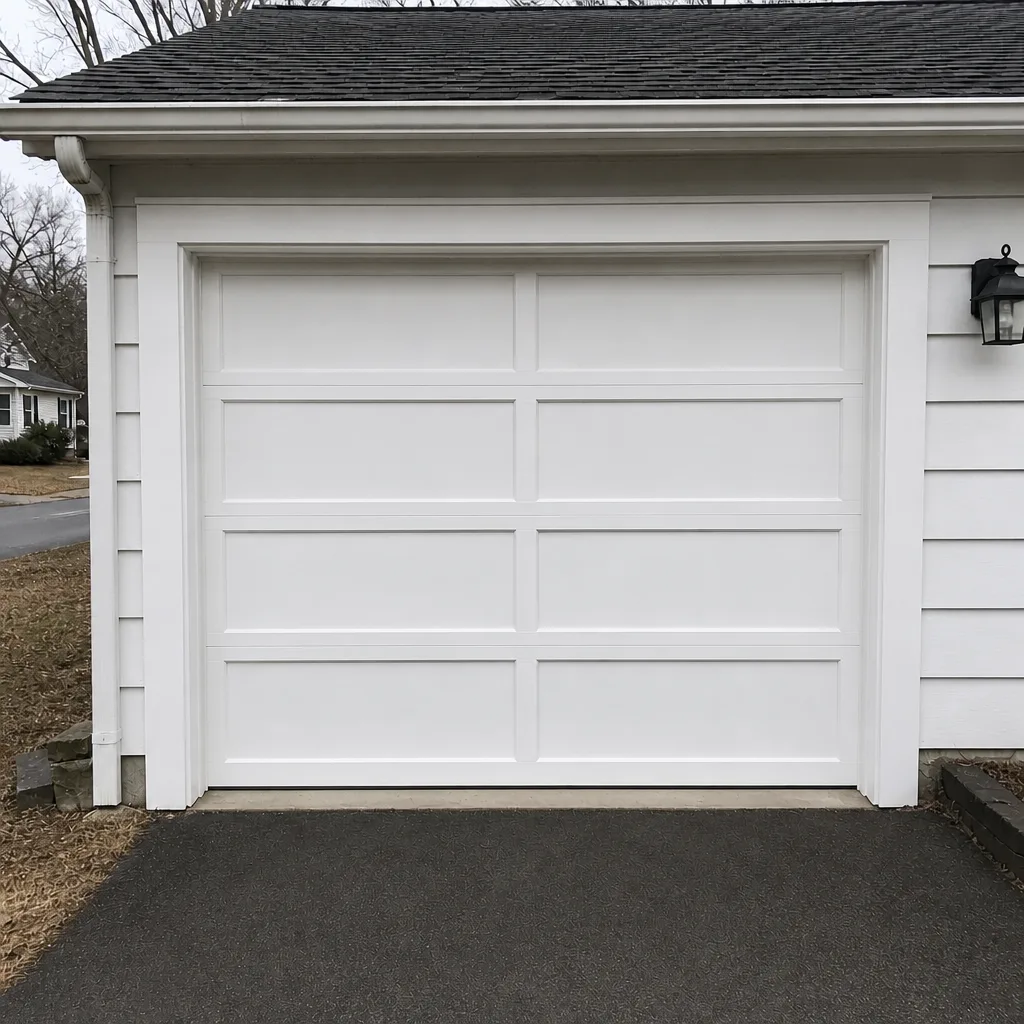
See the difference
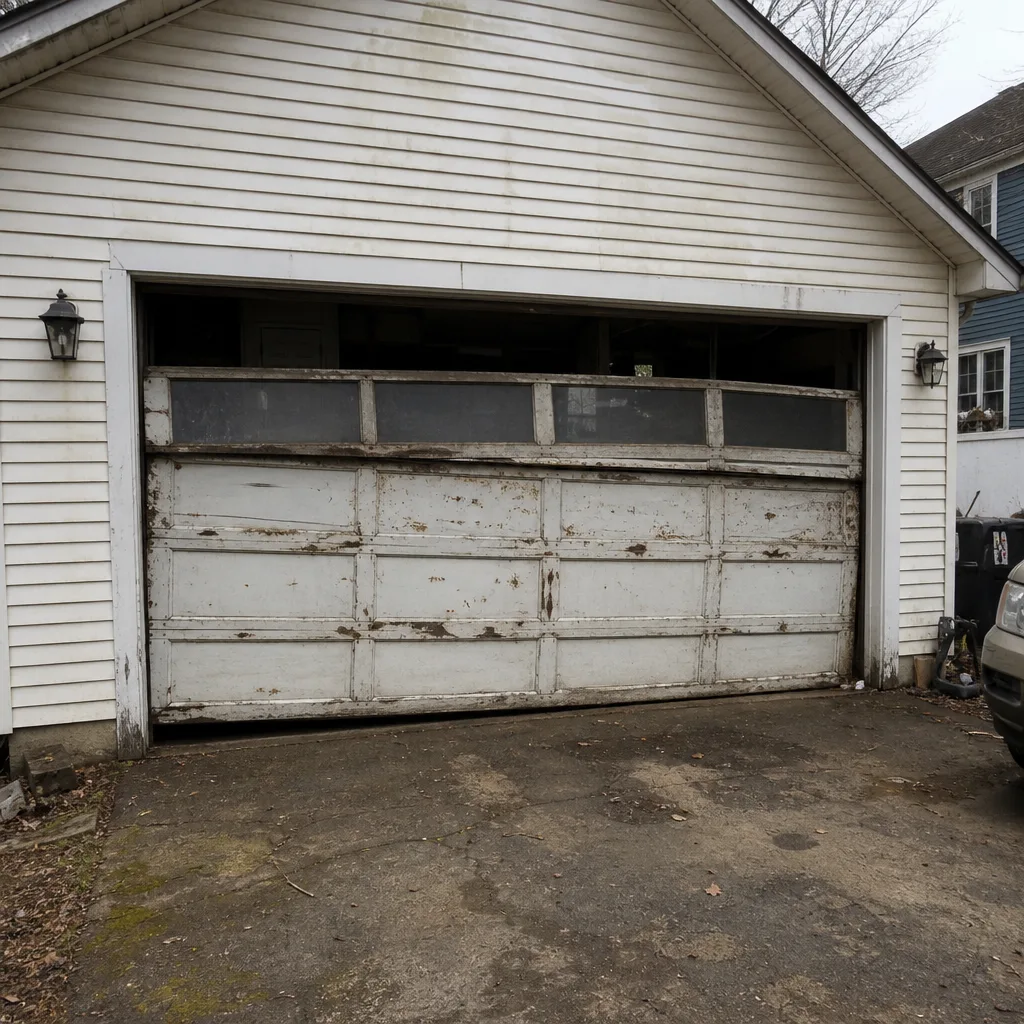 Before
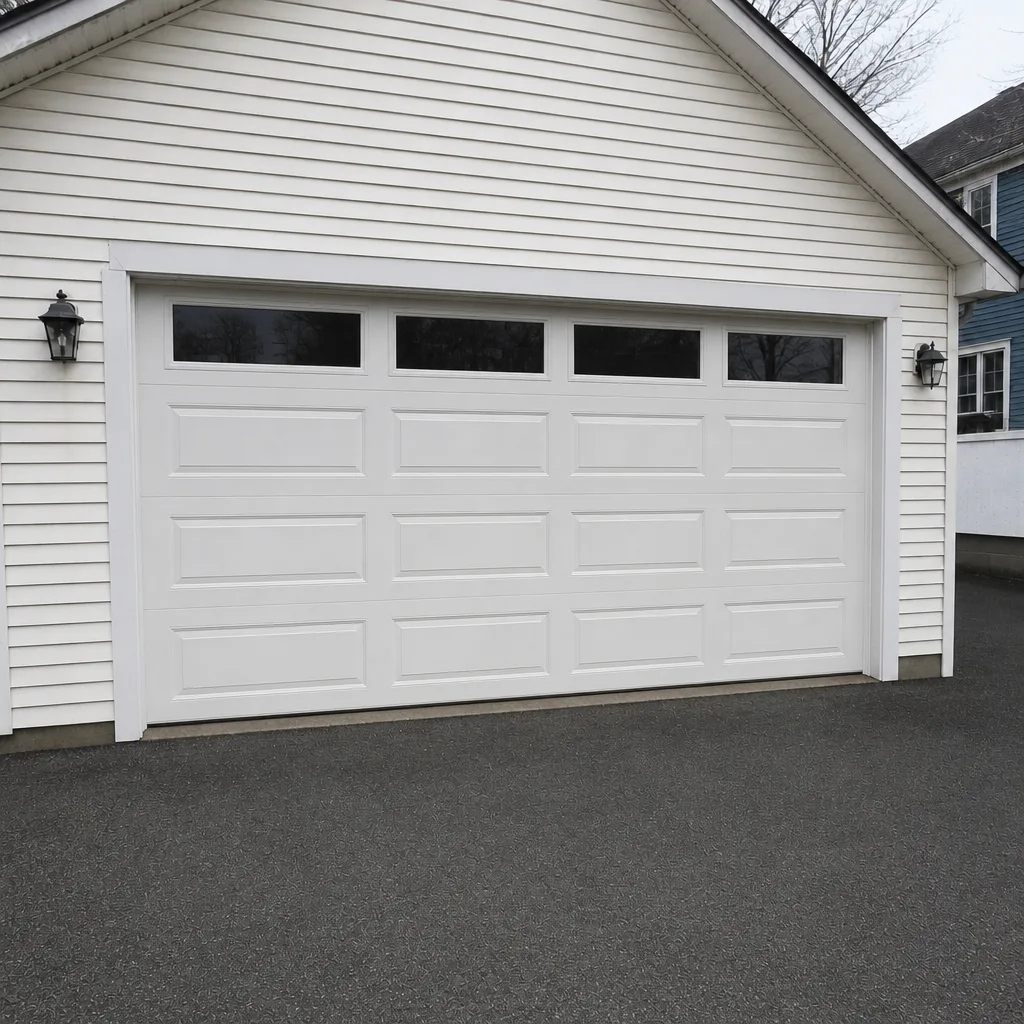 After
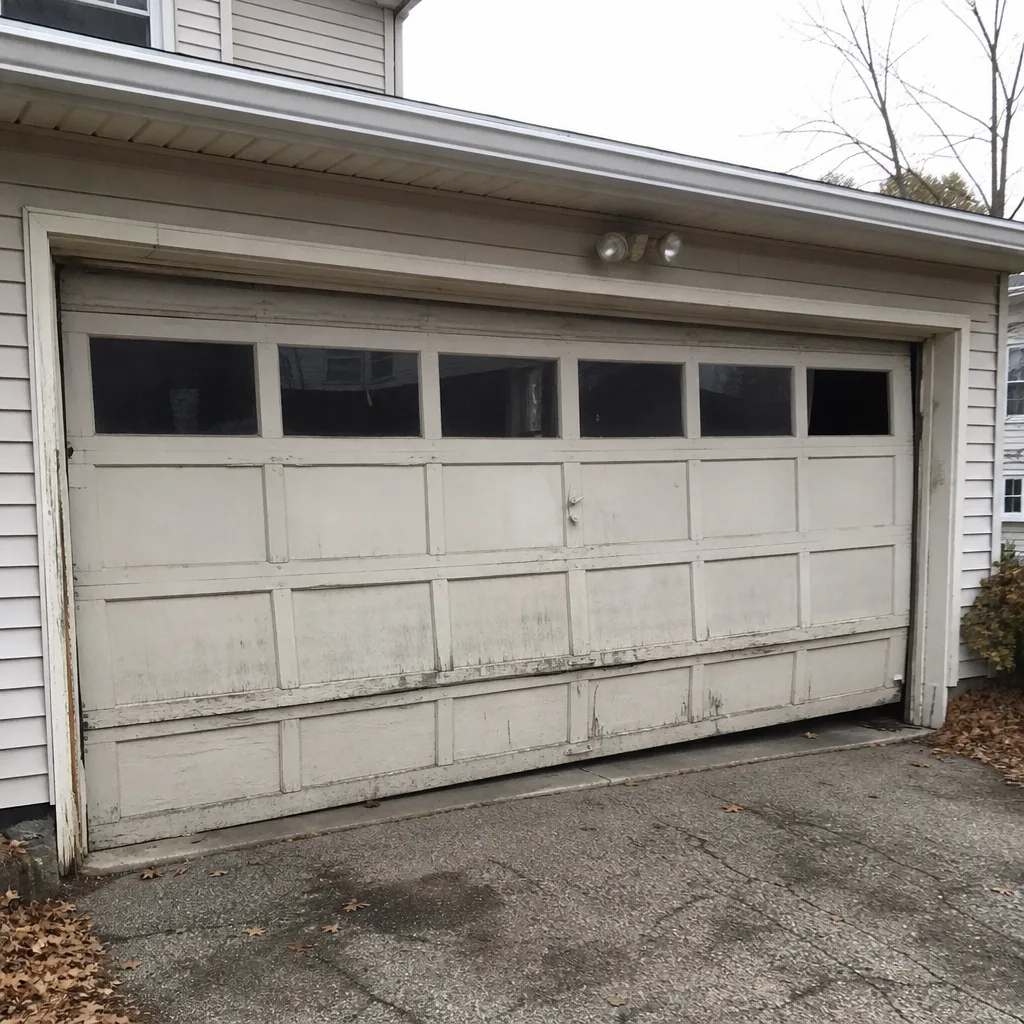 Before
 After
 Before
 After
When to Call a Professional
Some repairs are categorically a call, not a project. Here’s the list we use: any spring work (torsion or extension), any cable or bottom bracket work, any time the door is off track or visibly crooked, any panel with structural damage, any opener that has visibly failed (burning smell, blown capacitor, motor that runs but doesn’t move the door), and any door that has stopped opening or closing when you need to get a car out or secure the house. Those are the jobs where the risk is real, the tool cost doesn’t work on a one-off, and a failed attempt usually makes the next repair more expensive. If you’re inside Manchester and the door is broken right now, that’s the time to call rather than plan.
Manchester Garage Door Repair Pros offers free estimates in Manchester. We handle garage door opener repair across the major brands, spring work in-house, and full installs. Call (833) 509-3052 and tell us what the door is doing.
Frequently Asked Questions
No, we don’t recommend it, even if you’re mechanically confident. Both torsion and extension springs store enough energy to cause serious injury in an instant if anything shifts during the repair, and the specialized tools (winding bars, safety plates, cable swagers) rarely make sense for a one-time job. The statewide incident history confirms the risk is real. Call a specialist instead; the cost is typically $180 – $340 for a single torsion spring installed.
Weather seal replacement, roller and hinge tightening, lubrication, photo-eye alignment, and remote battery replacement are all safe DIY tasks. Anything that requires you to unload or release spring tension is not. If you’re unsure which side of that line a particular repair sits on, that’s a good reason to ask before you start; the safest repairs are the ones that don’t touch the spring system at all.
Typically $180 – $340 for a single torsion spring installed, and roughly twice that ($360 – $680) for a matched pair, since most doors should have both springs replaced together. The written estimate sets the final price and is quoted before any work starts. Call (833) 509-3052 for an exact quote; estimates are free.
Usually not, if the damage comes from a repair attempt gone wrong. Most policies cover accidental damage to the home but exclude faulty workmanship by the homeowner. The only reliable answer is in your own policy document; if you’re unsure how yours reads, ask your agent before you start the repair.
Look above the door. A torsion spring is a horizontal coil mounted on a steel shaft directly over the door opening. Extension springs are vertical coils running alongside the horizontal tracks on each side. Torsion springs sit on older and newer doors alike, and each type is common in Manchester homes. The type matters for what tools a repair needs, so it’s worth checking before you call.
Possibly, but it’s more risk than most homeowners want. The opener itself is manageable; the trouble is in rehanging the rail, aligning the header bracket, and wiring the safety reverse and photo-eye system to meet current code. A door that reverses on an obstruction test is not the same as one that will fail safely. Most homeowners are better served by having a specialist handle the install and the safety check together.
Ice builds up between the bottom seal and the concrete threshold when meltwater refreezes overnight. You can release it with warm water along the seal, but don’t pry under the door with a shovel. Levering on a panel breaks the bottom bracket and dents the steel. If freeze-up happens every winter, the seal is worn and replacing it usually solves the problem.
Typically $150 – $400 for a simple realignment where no parts are damaged. If a roller or hinge has failed, expect closer to the top of that range. Doors that came off track because a spring broke will need both repairs. Call (833) 509-3052 for a free estimate; we’ll quote before any work starts.
The Bottom Line
DIY makes sense for the safe list: seals, lubrication, photo-eyes, tightening, remote batteries, and resetting a smart opener. DIY stops making sense the moment stored energy is involved, and that means everything related to springs, cables, and bottom brackets. The tool cost, the downstream risk, and the insurance picture all favor a specialist for those jobs, and Manchester’s cold winters make a marginal spring even less forgiving than it would be in a milder climate. If you’re not sure which side of the line a repair is on, call us. The Manchester Garage Door Repair Pros team can talk it through over the phone and tell you honestly whether it’s worth doing yourself.
If you’re ready to have a specialist take a look, Manchester Garage Door Repair Pros is the team to call. Our technicians have up to 11 years of experience working across the leading door and opener brands, including Genie, Clopay, Amarr, and Wayne Dalton, and spring work is handled in-house by the same team. We offer free estimates in Manchester, and the written quote is agreed before any work starts, so you know what you’re paying before we pick up a tool. Call (833) 509-3052 today and let’s get your door back in service.
Written by the team at Manchester Garage Door Repair Pros.