Last updated November 23, 2026
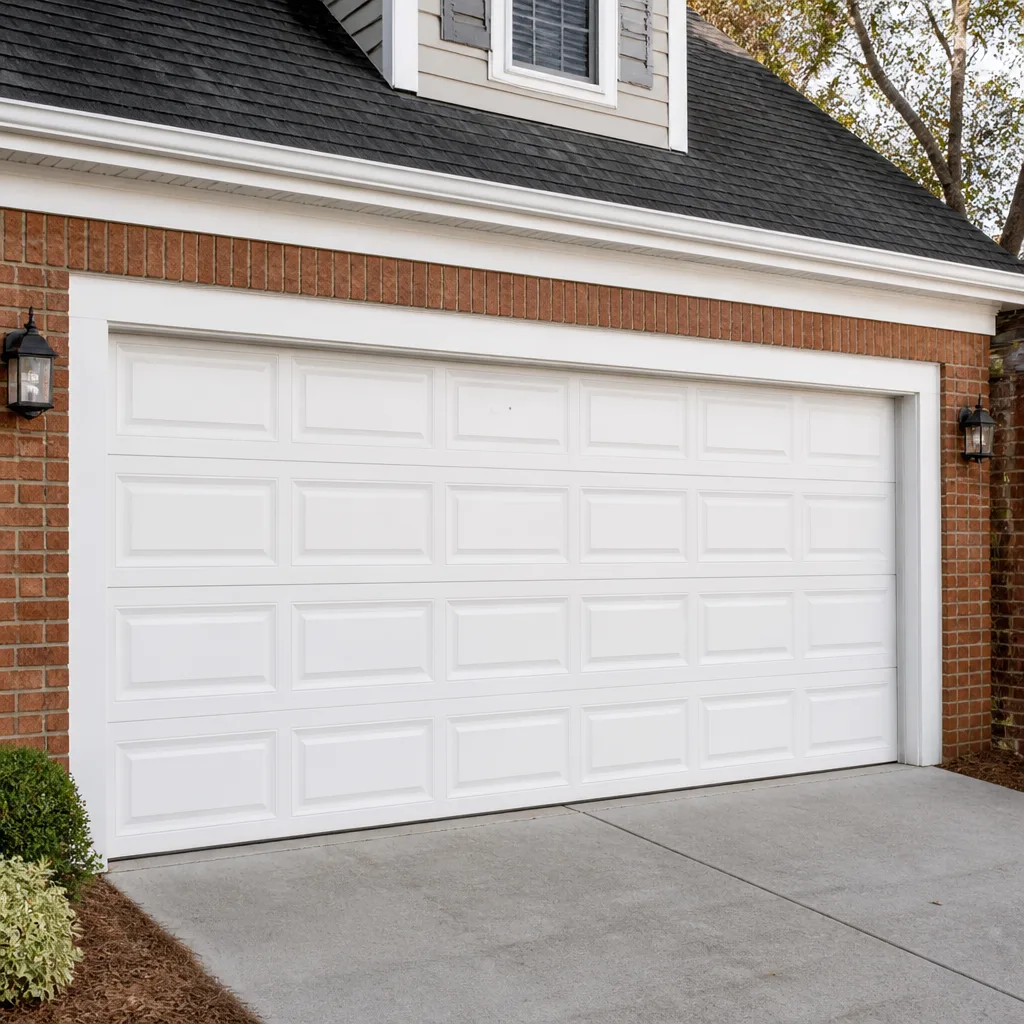 Raised-panel steel
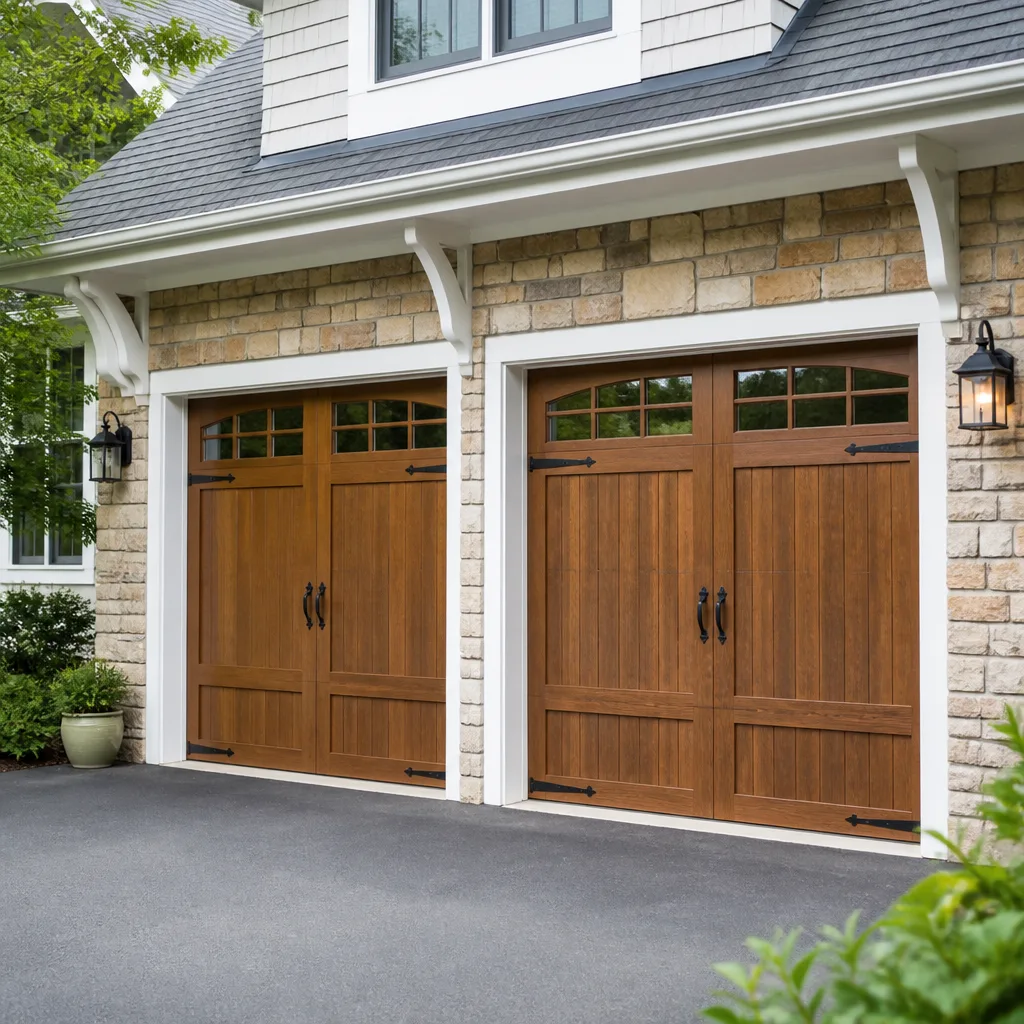 Carriage house
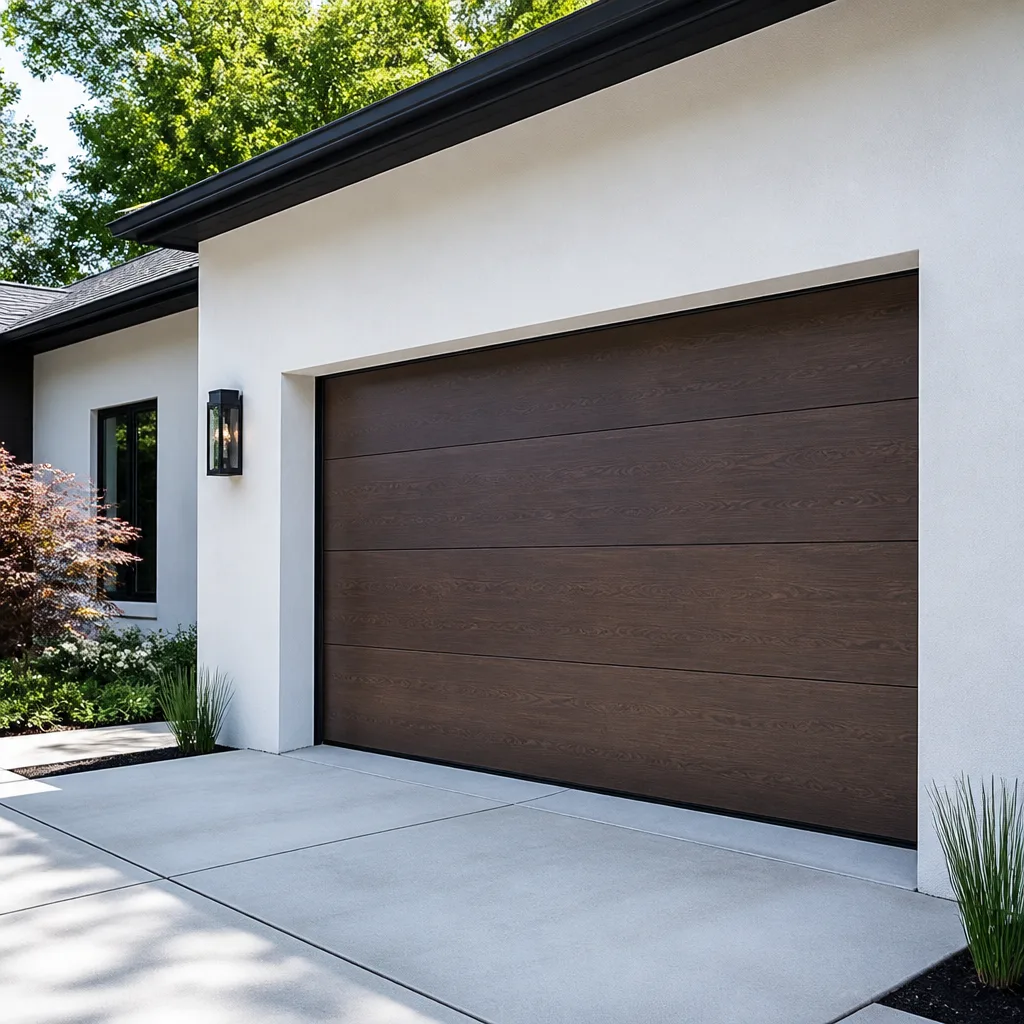 Modern flush
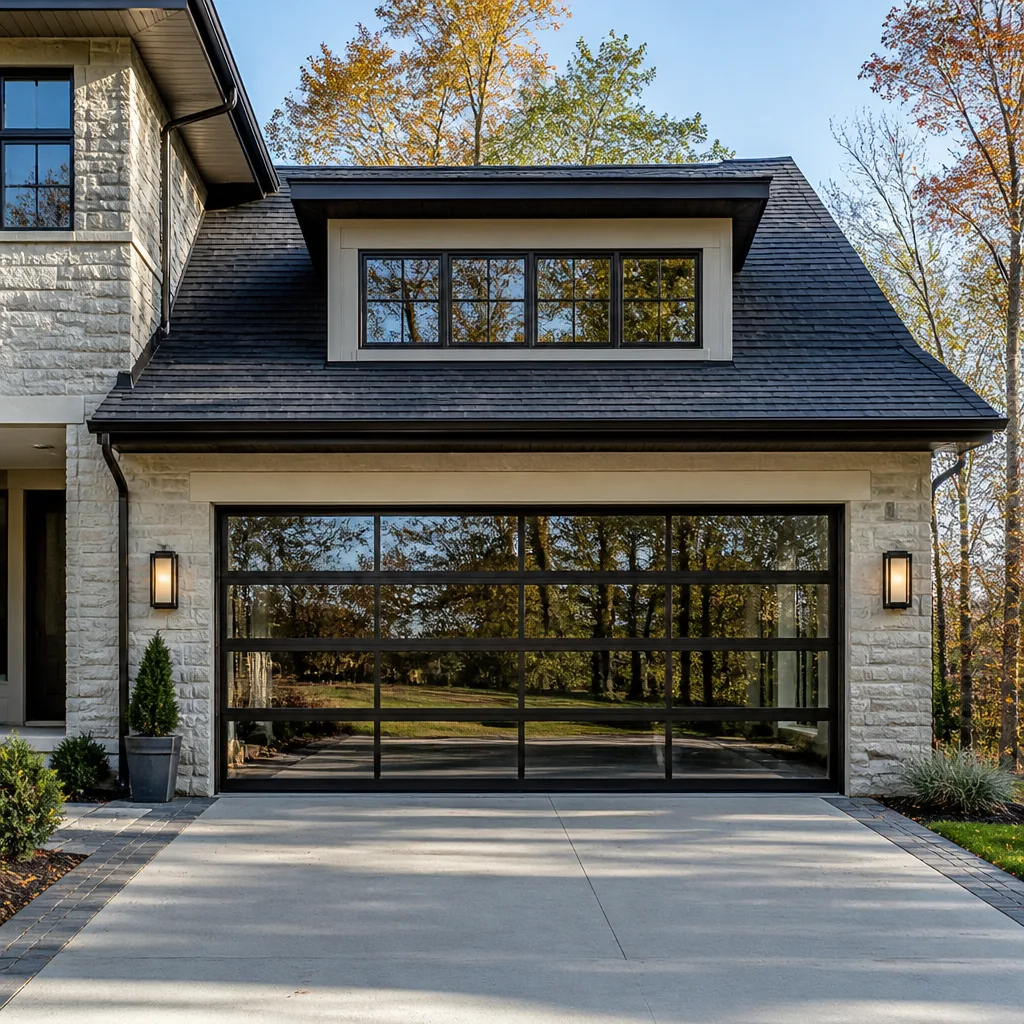 Full-view glass
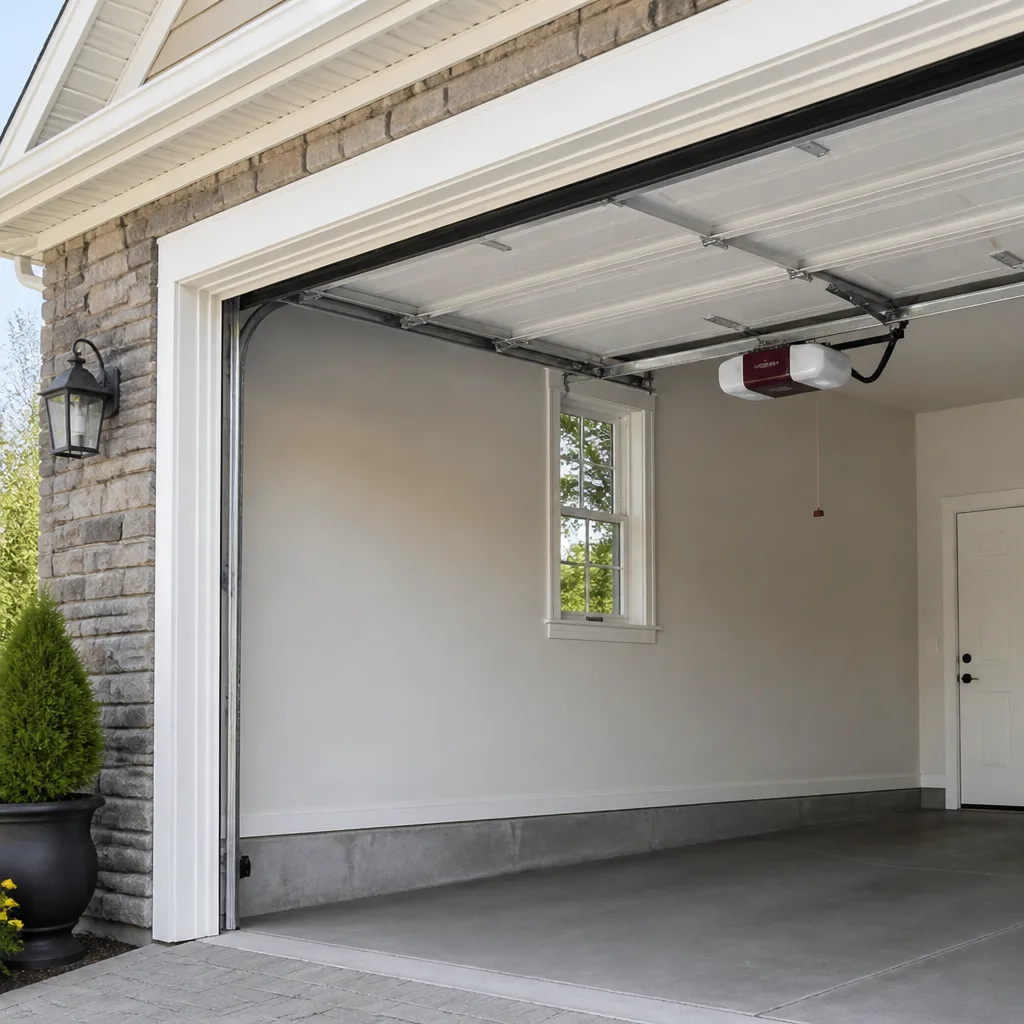 LiftMaster openers
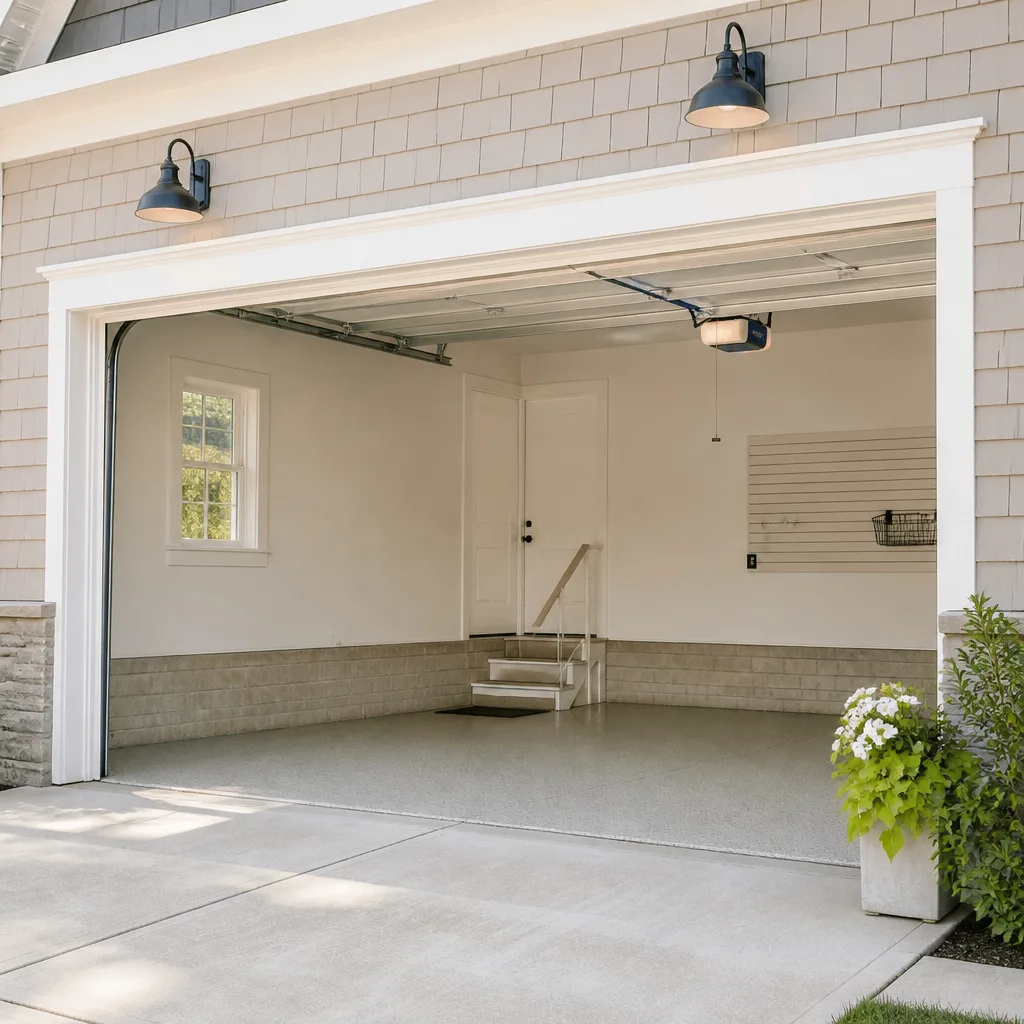 Chamberlain openers
Full 25-point door and opener safety check with every visit - springs, cables, rollers, tracks, and your LiftMaster or Chamberlain opener included
You get a price before we start. It does not change when the pro arrives.
Get your free estimateSeasonal Garage Door Care for Manchester: Year-Round Homeowner’s Guide
Most seasonal garage door advice gets written for a climate that isn’t ours. “Lubricate in spring, check the weatherstripping in fall” is fine if you live somewhere with two gentle seasons and no real winter. Manchester doesn’t work that way. We get freeze-thaw cycles that punish hardware, summer humidity that punishes wood composites, and nor’easters that hit the door broadside while you’re hoping the bottom seal holds. The result is a garage door that fails in February, not June – right when you need it most. This guide maps each Manchester season to the specific components it damages, when to intervene, and how to tell the difference between a tune-up and a call to a specialist.
Quick Answer
Seasonal garage door care in Manchester comes down to four seasonal checkpoints: a pre-winter spring and hardware inspection before the first hard freeze, a humidity watch on wood composite and steel doors through July and August, a narrow October window for weatherstripping replacement while adhesive still bonds, and a spring thaw alignment check as frost heave settles around the slab. Skipping any one of these is what turns a $15 lubricant job into a spring or opener replacement down the line.
Styles & brands we work with
- Raised-panel steel
- Carriage house
- Modern flush
- Full-view glass
- LiftMaster openers
- Chamberlain openers
Table of Contents
- Why Freeze-Thaw Cycles Drive Most Manchester Garage Door Failures
- The Pre-Winter Torsion Spring Check: Why Springs Set for Summer Fail in January
- Summer Humidity: How It Hits Wood Composite Doors Differently Than Steel
- The October Window for Weatherstripping Replacement
- Spring Thaw, Frost Heave, and Door Alignment
- Fall Gutters, Drainage, and the Garage Door Apron
- Your Manchester Garage Door Seasonal Calendar
- Opener Load Through the Seasons: What to Listen For
Why Freeze-Thaw Cycles Drive Most Manchester Garage Door Failures
Manchester averages 27 freeze-thaw cycles per year. That number matters more than any single storm, because freeze-thaw is the mechanism that quietly wears out your garage door’s moving parts. Every cycle expands and contracts metal hardware by a fraction of a millimeter. Multiply that by 27 and you get loosened fasteners, fatigued hinges, and torsion springs that lose tension in ways you won’t notice until one morning the door won’t lift.
Here’s what actually happens during one cycle. Water seeps into a crevice – a hinge pin, a roller stem, the gap under the bottom seal – then freezes overnight and expands. The expansion works the joint loose. When it thaws, water gets deeper into the new gap. Repeat all winter and you’ve got hardware that’s subtly out of tolerance by spring.
The parts most affected in a Manchester garage door:
- Torsion springs – coil contraction in cold weather changes the effective tension, and repeated cycling fatigues the metal faster than in a stable climate.
- Bottom seal and weatherstripping – constant flexing against a frozen concrete floor grinds the seal down and cracks the rubber at the corners first.
- Hinges and roller stems – micro-expansion loosens the pivot points, which then wear unevenly.
- Track fasteners – wood framing behind the track shrinks and swells, backing out lag bolts a few threads at a time.
- Opener drive components – a stiff door means the opener motor works harder on every cycle, which is why opener failures often follow a cold snap.
The good news is that all of this is predictable. If you inspect in late fall and correct what you find, most freeze-thaw damage never accumulates into a failure. If you skip it, the failure usually shows up in mid-February – the coldest, most inconvenient week of the year.
The Pre-Winter Torsion Spring Check: Why Springs Set for Summer Fail in January
This is the single most overlooked point in seasonal garage door care, and it’s the one that catches most Manchester homeowners. Torsion springs are wound to a specific tension at installation. That tension is calibrated for the door’s weight at roughly room temperature. Cold weather changes the equation: steel contracts, grease thickens, and the spring’s effective lift force drops. A spring that felt perfectly balanced in July can feel under-wound by January.
What “under-wound” actually does to your system:
- The opener motor has to work harder to lift the door on every cycle, because the spring isn’t carrying its share of the load.
- The motor draws more current, heats up faster, and its internal gear and logic board wear faster.
- A safety-reverse test may fail because the door doesn’t respond the way the opener expects at the force setting.
- If the spring was already near the end of its cycle life, it fails outright – usually on the coldest morning of the year.
The pre-winter check isn’t something you should do yourself. Torsion springs are under extreme tension, and the winding process is genuinely dangerous. What you can do is a visual and audible check: look for a visible gap in the spring coil, listen for a bang from the garage, and test whether the door feels balanced when you disengage the opener and lift it by hand. If the door is noticeably harder to lift than it was in summer, that’s the signal to call a specialist for a proper look at garage door spring repair before the first hard freeze.
Generalist handyman services often won’t touch torsion springs, because the job is high-risk and requires specific tooling and experience. It’s the one part of a garage door where “I’ll get a guy” is the wrong instinct. A door specialist handles the spring and the resulting opener load in the same visit, so you’re not chasing two problems separately.
Summer Humidity: How It Hits Wood Composite Doors Differently Than Steel
Manchester summers bring sustained humidity, and that’s where wood composite and steel doors part ways. Steel doors are largely immune to humidity – they don’t absorb moisture, and their surface finish stays stable. Wood composite doors, which have become popular for their look and their lower weight, behave very differently.
Composite panels are built from wood fibers and resin. They’re dimensionally stable under normal conditions, but sustained humidity works on the seams, the bottom rail, and the panel edges. The warning signs of delamination to watch for in July and August:
- Bubbling or lifting at the bottom edge – the first place moisture enters, because it’s closest to the wet floor.
- Panel surface that feels soft or spongy under a light press – a sign the core has taken on water.
- Visible separation between the panel skin and the core, usually starting at the corners.
- Paint or finish that cracks along the panel seams – not just cosmetic; it’s where water gets in next.
If you have a composite door from Amarr or Wayne Dalton, check the bottom rail and the panel corners in mid-summer. Catch delamination early and a reseal plus refinish will usually stop it. Catch it late and you’re looking at a panel replacement. Steel doors deserve a different check: inspect the bottom edge for bubbling paint or rust bloom, which is the one humidity-related failure that does affect steel.
The fix for composite humidity issues is largely maintenance and finish – keeping the door painted or sealed, keeping the bottom edge dry, and correcting any drainage that puts water near the apron. If the delamination has already started, that’s a repair rather than a maintenance item, and it belongs in a garage door repair visit rather than a weekend project.
The October Window for Weatherstripping Replacement
Weatherstripping replacement in Manchester has a narrow effective window: typically mid-to-late October, once the summer heat has broken but before overnight temperatures drop below the range where contact adhesive and caulk stop bonding properly. Miss that window and you’re either waiting until spring or installing a seal that will peel loose at the first cold snap.
The reason is simple. Weatherstripping adhesive and most door seal caulks are formulated to cure at moderate temperatures. When you apply them in cold weather, they don’t bond the way they should. The seal looks fine for a few weeks, then lifts at the corners. If you’ve ever seen a bottom seal flap loose in January, that’s usually the cause – installation in weather that was too cold for a proper bond.
Here’s the sequence that works in Manchester:
- Early October: inspect the bottom seal, side seals, and top seal for cracks, hardening, or gaps. Pay attention to the corners first.
- Mid-October: if replacement is needed, get it done while daytime temperatures are still reliably moderate.
- Late October: test the seal against the floor with a sheet of paper – if you can slide it under the closed door easily, the seal isn’t doing its job.
- Early November: confirm no lifting at the corners. That’s your last easy chance to fix a bad bond before winter.
The seal matters for more than drafts. It’s the barrier that keeps meltwater, road grit, and small pests out of your garage. In a Manchester winter, a compromised bottom seal lets water freeze under the door and work on the concrete apron, which is the topic of a later section. If the seal’s already gone or the door won’t close cleanly, a garage door opener repair visit is often the right call, since the opener’s travel limits and force settings need to match the new seal thickness.
Spring Thaw, Frost Heave, and Door Alignment
Spring in Manchester brings a problem most seasonal guides ignore: frost heave. When the ground freezes in winter, water in the soil expands and lifts the soil around your garage slab. When it thaws, the soil settles – but rarely back to where it started. Repeat over a few winters and the slab moves a fraction of an inch at a time. That movement is enough to throw a garage door out of alignment.
What to check as the ground thaws in March and April:
- Bottom seal contact. Close the door and look at the gap between the seal and the concrete across the full width. A gap at one end and firm contact at the other means the slab or the door has shifted.
- Track plumb. The vertical tracks on each side should be level with each other. Look at the gap between the door and the track – if it’s wider on one side, the framing has moved.
- Door travel. Watch the door close slowly. If it drifts to one side or rubs against a track, the alignment is off.
- Concrete cracking at the apron. New or widened cracks at the front lip of the slab often show where frost heave has worked.
Alignment problems aren’t just cosmetic. A door that rubs its track puts extra load on the opener, wears the rollers unevenly, and can pop a roller out of the track altogether. That’s when a garage door repair call becomes urgent rather than scheduled. The right fix is usually a track adjustment and roller inspection, not a new door – but it has to be caught before the misalignment damages the panels.
Fall Gutters, Drainage, and the Garage Door Apron
This is the seasonal check that has nothing to do with the door itself and everything to do with what the door sits in. If your gutters overflow in a fall storm, or a downspout dumps water near the garage, that water pools at the apron – the concrete lip in front of the door. In Manchester, that pooling does two things: it rots the bottom seal from the outside in, and it accelerates concrete spalling at the apron.
The specific checks to make in September and October:
- Clear the gutters above the garage. Overflowing gutters are the most common cause of water at the apron.
- Check downspout discharge points. Any downspout that empties within a few feet of the garage should be extended to carry water away from the slab.
- Look at the ground slope. The grade should fall away from the garage. If it’s flat or reversed, water sits at the apron.
- Inspect the apron for cracks and spalling. Small cracks widen over winter as water freezes in them. Sealing them in fall is far cheaper than repairing a spalled apron in spring.
A bottom seal that’s been sitting in pooled water through a fall and winter will be dry-rotted by spring, even if it was fine in August. This is why weatherstripping replacement and drainage work belong in the same seasonal window – you can’t protect a new seal if water’s still pooling against it.
Your Manchester Garage Door Seasonal Calendar
Put these items in your calendar and you’ll catch most problems before they become repairs. The dates are approximate – use the weather as your real guide – but the sequence holds every year in Manchester.
- September: clear gutters, check downspout discharge, inspect the apron for cracks.
- Early October: inspect weatherstripping for cracks and gaps; check the bottom seal contact along the full width of the door.
- Mid-October: replace weatherstripping and bottom seal if needed, while adhesive still bonds.
- Late October to early November: pre-winter hardware inspection – tighten fasteners, lubricate hinges and rollers, listen for the tell-tale signs of a spring under load.
- Late November: spring tension check by a specialist; test the safety reverse; check the opener’s force settings.
- December through February: monthly listen-and-look check; keep the door clear of snow and ice at the apron.
- March to April: spring thaw alignment check; inspect the bottom seal contact and track plumb; test the door travel.
- July to August: humidity check on composite doors; look for delamination at the bottom rail and panel corners.
If you have a LiftMaster or Chamberlain opener with a smart-home app, use the app’s force or obstruction alerts as an early-warning system. If the app starts flagging increased force on the down cycle, that’s usually the door telling you the alignment or the seal has changed. Same applies to Craftsman and Genie openers with diagnostic displays. The opener is often the first thing to notice a problem the door hasn’t visibly shown yet.
Opener Load Through the Seasons: What to Listen For
Every garage door opener is a load meter, whether it knows it or not. When the door gets heavier – because a spring has lost tension, because a roller is binding, or because the temperature has dropped – the opener works harder. That extra work shows up as sound, and it’s the cheapest diagnostic you have. Here’s what to listen for in a Manchester garage through the year.
A grunt or strain on the up cycle. Most common in cold weather. This usually means the spring isn’t doing its share of the lift. If the same door lifted smoothly in October, listen again in January. A new grunt is a spring tension signal.
A rattle or clank from the tracks. Usually a loosened track fastener or a worn roller. In Manchester, freeze-thaw cycles loosen these faster than in stable climates, so a rattling door in February is often a fastener that needed tightening in November.
A high-pitched squeal. A dry hinge or roller. Lubricate it with a proper door lubricant – not WD-40, which is a solvent, not a lubricant.
A beam or logic alert. On LiftMaster, Chamberlain, Craftsman, and Genie openers, the safety beam or logic board can throw an alert if the door doesn’t close as expected. That’s not always a beam problem. It can be a physical obstruction from a misaligned door or a swollen bottom seal.
If you hear a bang from the garage and the door won’t lift, stop pressing the opener. That’s a broken spring, and continuing to run the opener will burn out the motor and damage the drive. Call a specialist – a broken spring in Manchester is a same-day problem worth solving immediately. We work on your brand across the full range, from current LiftMaster and Chamberlain systems to older Craftsman and Raynor drives, so diagnosis starts from what you actually have.
Common Mistakes to Avoid
We see the same handful of seasonal missteps over and over in Manchester. Each one turns a routine maintenance item into a repair.
- Lubricating with the wrong product. Spraying WD-40 or a generic silicone on hinges and rollers does more harm than good. It’s a solvent, not a door lubricant. Use a dedicated garage door lubricant and skip the tracks entirely – they’re meant to run dry.
- Adjusting the spring tension yourself. Torsion springs are under extreme tension, and the winding bars and technique required are not a homeowner tool. This is the one seasonal task that belongs to a specialist.
- Replacing weatherstripping in cold weather. A common mistake in Manchester. If you install a bottom seal below the adhesive’s bonding range, it will lift at the corners within weeks. October is the window.
- Ignoring a small gap at the bottom seal. A gap along one edge of the seal usually means frost heave has shifted the slab or the door. Left alone, the misalignment wears the rollers and loads the opener.
- Painting over delamination on a composite door. A fresh coat hides the problem for one season, but water is already in the core. Sand back to sound material before refinishing.
- Running the opener after a broken spring. The motor will strain against the full weight of the door. What would have been a spring repair becomes a spring plus opener replacement.
- Skipping the fall gutter check because “it’s not a garage door task.” It is, in Manchester. Water pooling at the apron is one of the most reliable predictors of a rotten bottom seal by spring.
See the difference
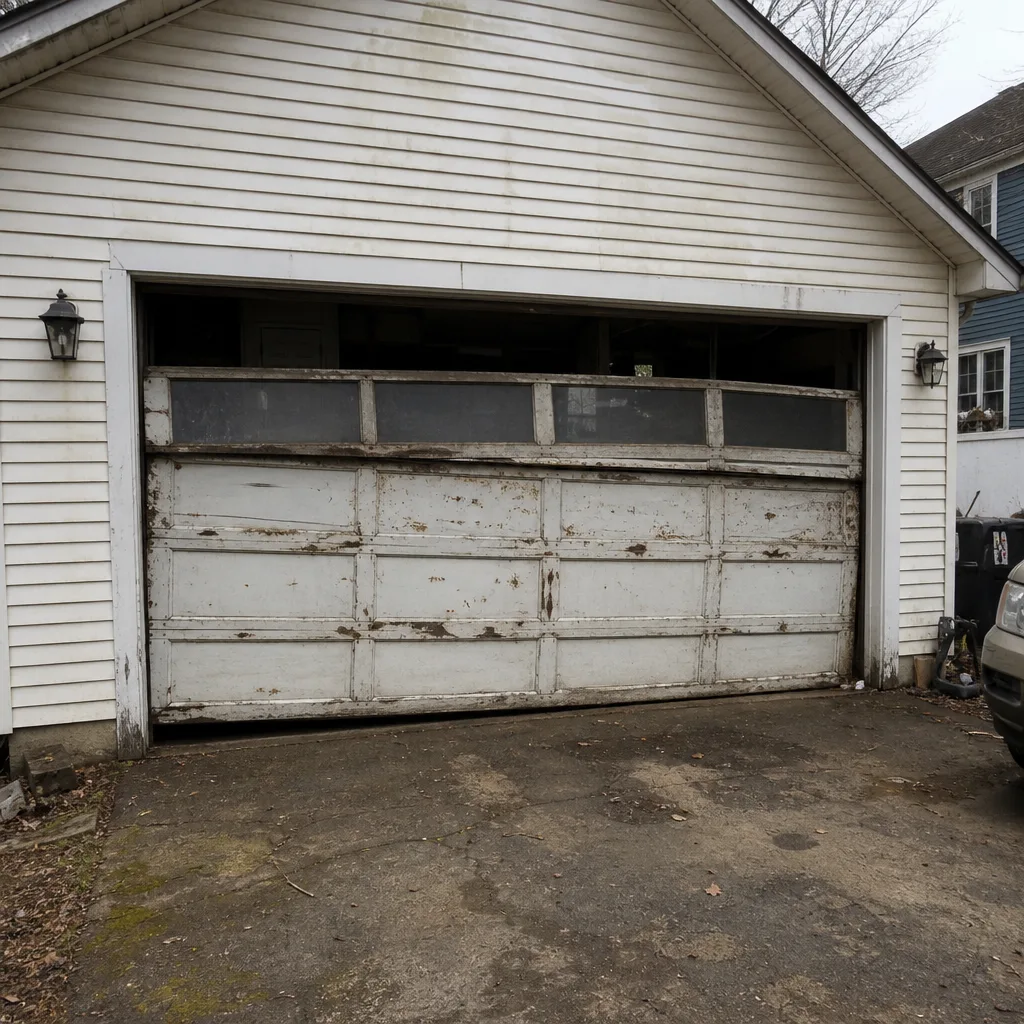 Before
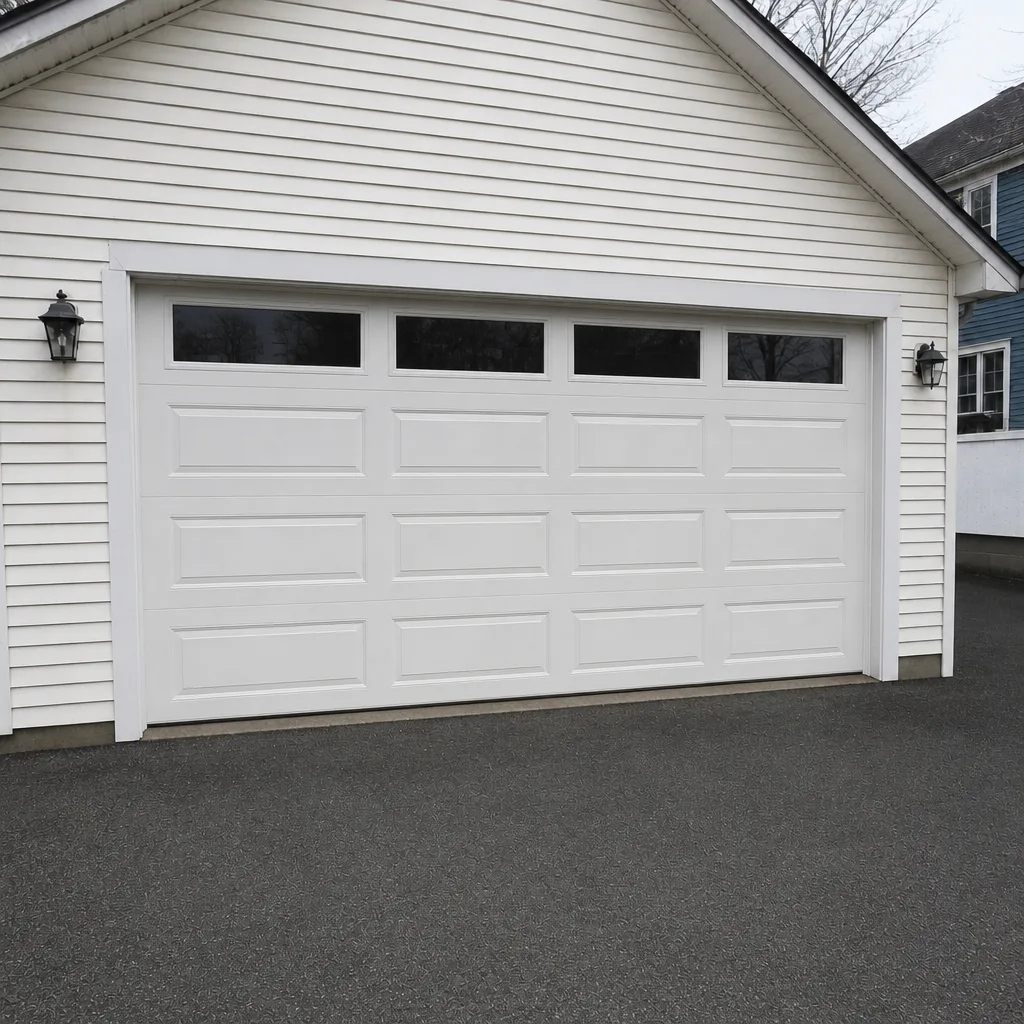 After
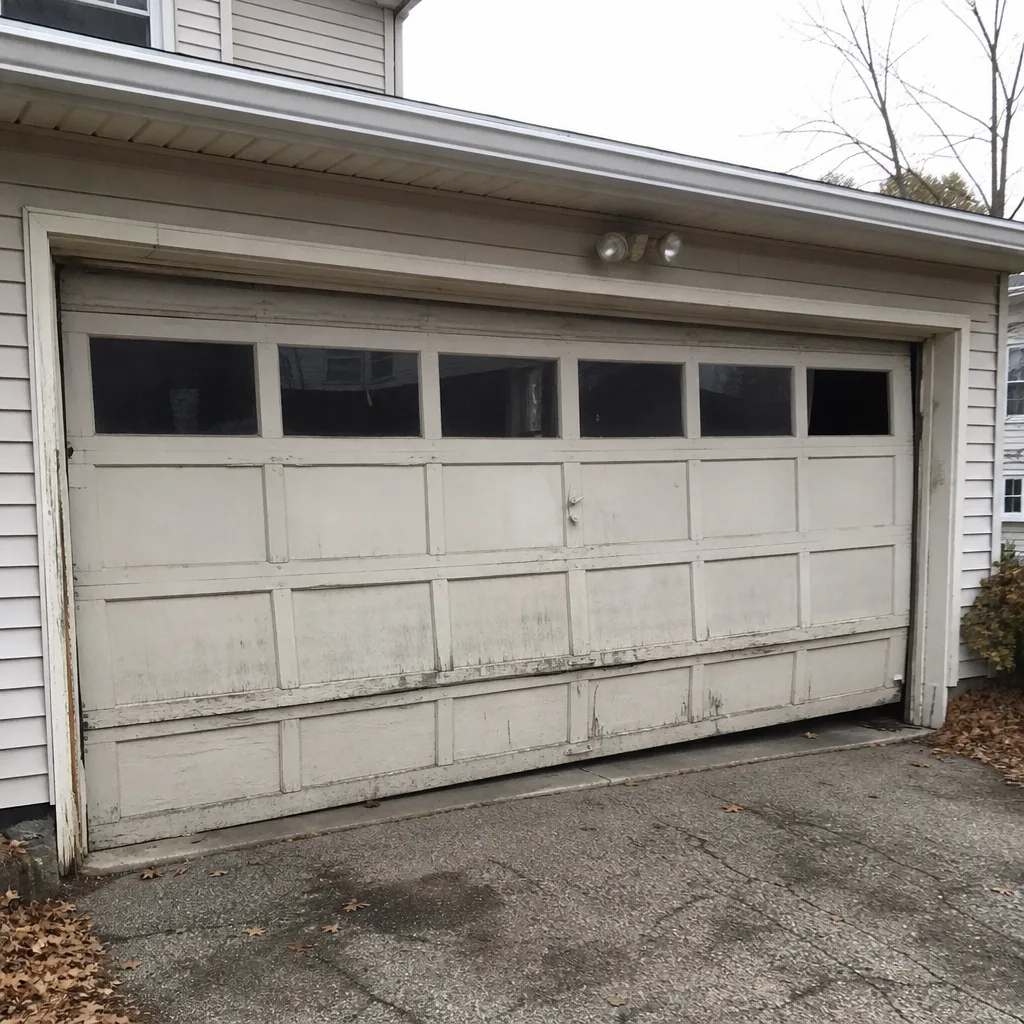 Before
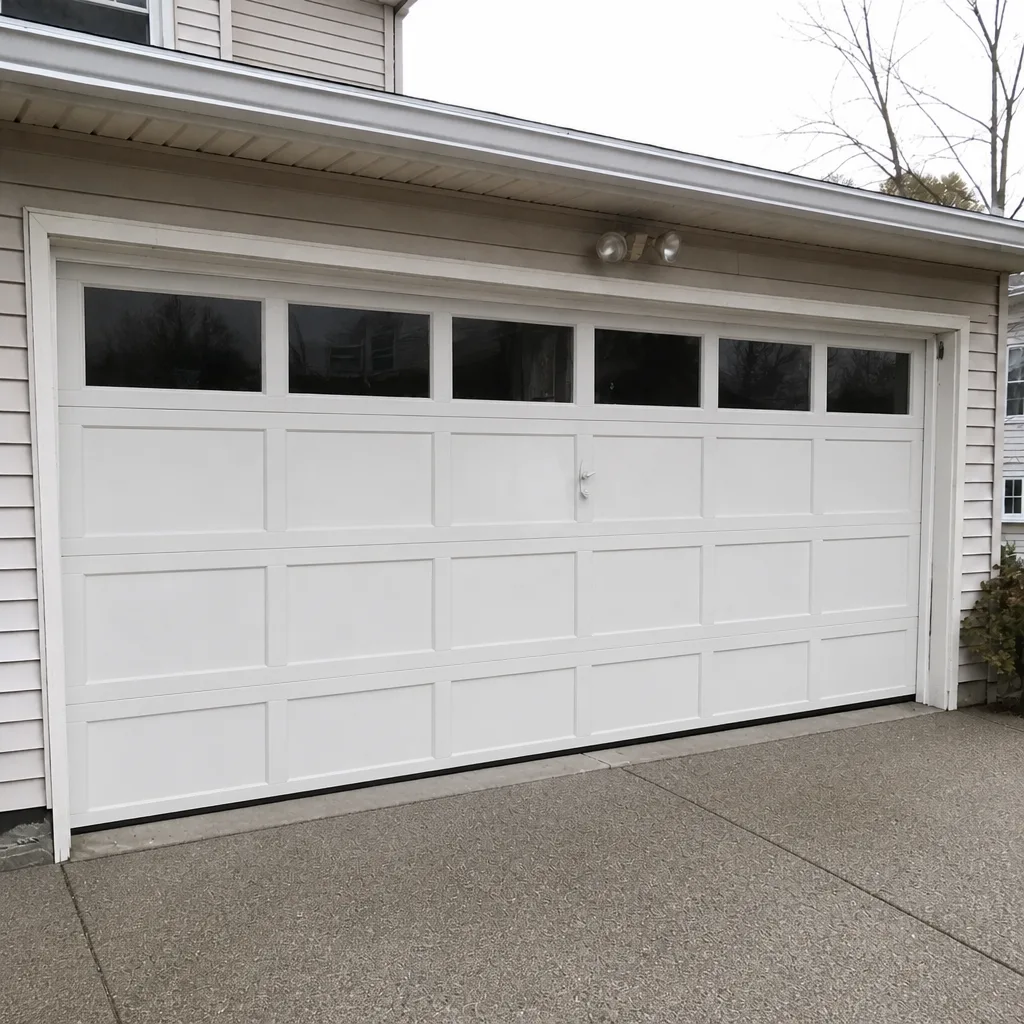 After
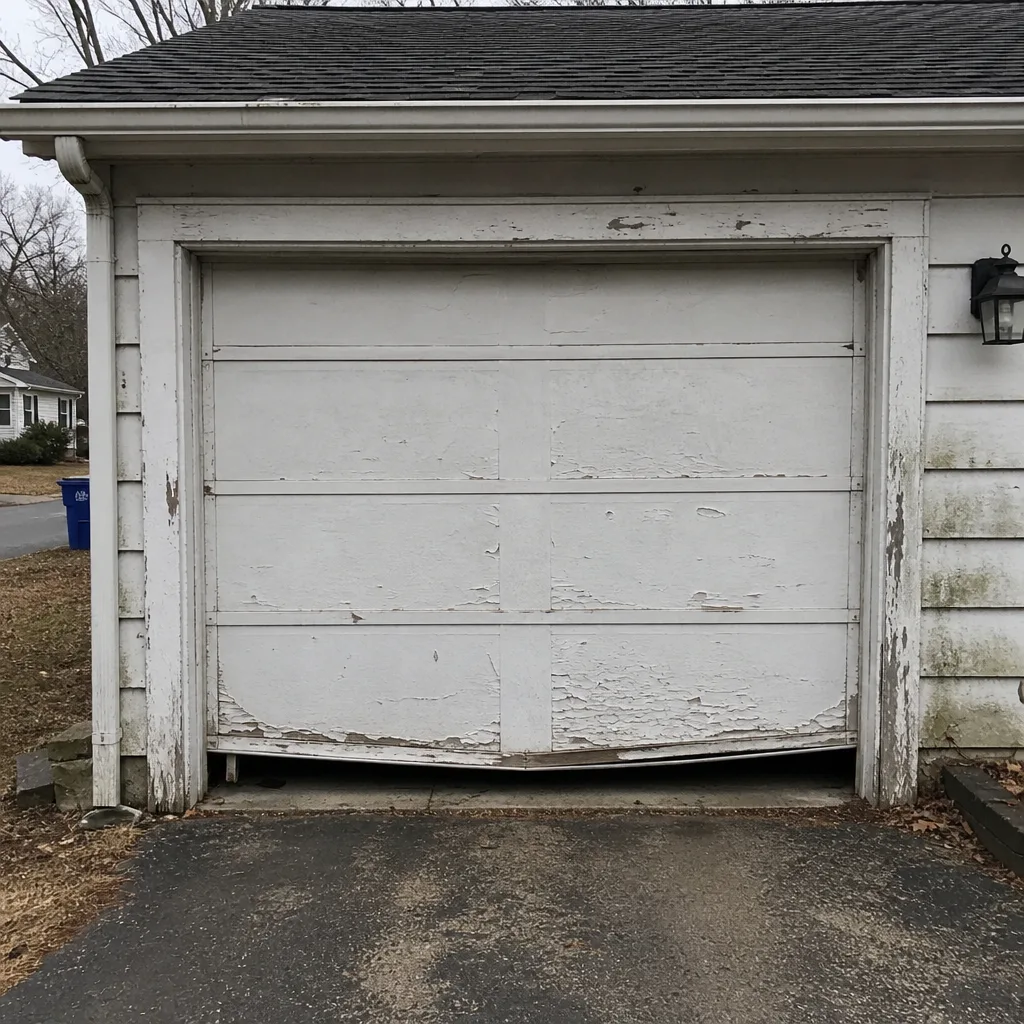 Before
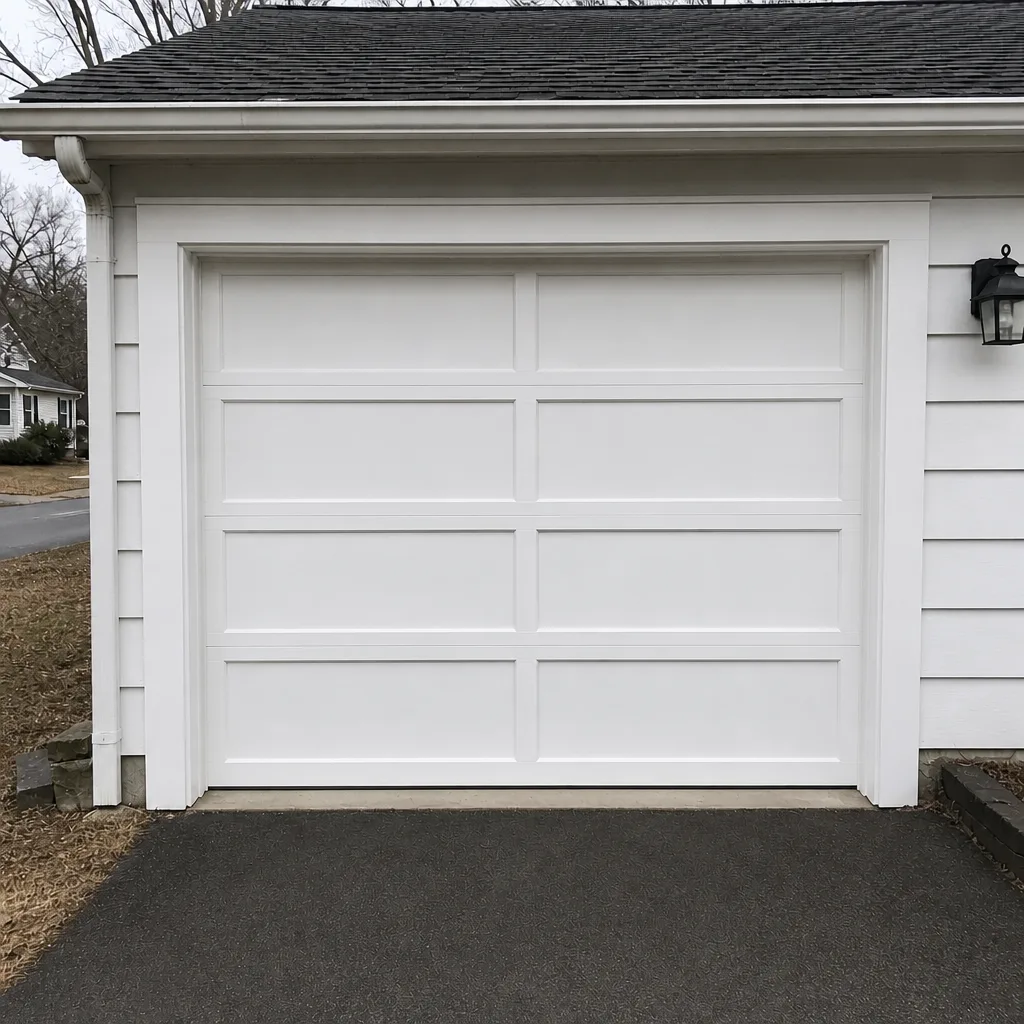 After
When to Call a Professional
Most seasonal garage door care is inspection and lubrication, and that’s fine as a homeowner. The line where a specialist is needed is sharper than most people think. Call us when: the door is noticeably harder to lift than it was in summer, the spring has a visible gap or has made a bang, the door drifts or rubs against a track, the opener grunts or throws a force alert, the bottom seal has a gap you can’t fix by adjustment, or a composite panel shows soft spots or lifting at the seams. Those are all signals that the problem has moved past maintenance and into repair – and in a Manchester winter, waiting usually costs more than fixing it early.
Manchester Garage Door Repair Pros offers free estimates in Manchester. Call (833) 509-3052 for an inspection, a repair quote, or advice on whether what you’re hearing is normal. Our technicians have up to 11 years of experience, and the price is quoted and agreed before any work starts. Estimates are free, and we’ll tell you honestly if the fix can wait until spring.
Frequently Asked Questions
Twice a year is the right cadence for Manchester: once in late fall before the freeze-thaw cycles start, and once in spring after the thaw settles. Focus the lubricant on the hinges, the roller stems, and the pivot points, not the tracks. The tracks run dry by design. Use a dedicated garage door lubricant, not a solvent spray. If the door has been through a lot of winters and the hinges are visibly worn, ask a specialist to check them during the fall visit – lubrication won’t fix hardware that’s already out of tolerance.
A garage door feels heavier in winter because the torsion spring loses effective lift force as the temperature drops. Steel contracts, grease thickens, and the spring is wound for room-temperature balance, not January balance. The door itself hasn’t changed weight, but the spring is doing less of the work. That’s why the opener strains more in the cold. If the difference is dramatic – the door barely lifts by hand – it’s worth a tension check before the spring fails outright. Call (833) 509-3052 for an assessment; a broken spring in February is a much bigger problem than a check in November.
Fall is better in Manchester, specifically mid-to-late October. Adhesives and caulks bond properly at moderate temperatures, and the new seal is in place before the first hard freeze. Spring works too, but you’ll spend a winter with the compromised seal, which lets meltwater and grit reach the apron and accelerates rot. If the seal has already failed and it’s now January, don’t try to install a new one in the cold – wait for a moderate stretch or call a specialist who can advise on a temporary measure.
Yes, but indirectly rather than dramatically. Frost heave moves the slab a fraction of an inch at a time, which throws the door out of alignment with the tracks and creates gaps at the bottom seal. The door then rubs the track, wears the rollers, and loads the opener. The damage isn’t from the heave itself but from the months of misalignment before anyone notices. That’s why the spring thaw check matters – a track adjustment in March prevents panel and opener damage by summer. If the door is visibly rubbing, call for garage door repair rather than waiting for it to pop a roller.
A reversing opener in cold weather is usually a safety-reverse system reacting to increased resistance. The door is heavier, the bottom seal is stiffer, or the track has tightened with the cold, and the opener interprets the resistance as an obstruction. Don’t disable the safety reverse – it’s a critical safety feature. The fix is to identify why the door is stiffer: spring tension, seal hardness, or track alignment. A specialist can diagnose it in a single visit and adjust the force settings correctly if the door itself is sound. Call (833) 509-3052 to book an inspection.
Press the bottom rail and the panel corners with your thumb. Sound composite feels firm and consistent; delaminating composite feels soft or spongy, and the skin may lift slightly from the core. Look for bubbling at the bottom edge, cracks along the panel seams, or a finish that’s starting to lift in patches. Early delamination can often be stopped with a dry-out, reseal, and refinish. By the time the panel is visibly swollen, you’re usually looking at a panel replacement. Check composite doors from Amarr and Wayne Dalton in mid-summer, when humidity is highest and the warning signs are clearest.
The Bottom Line
Seasonal garage door care in Manchester is less about a calendar and more about understanding what each season actually does to the door. Freeze-thaw cycles loosen hardware and load the opener. Summer humidity attacks composite panels and the bottom edge of steel doors. The October window is the only reliable time to install new weatherstripping. Frost heave realigns the door every spring, and fall drainage problems rot the bottom seal before you notice. Handle those four seasonal checkpoints and most repair calls never happen. Skip them and February becomes expensive.
The parts you can do yourself are inspection, lubrication, and cleaning – worth doing properly. The parts that need a specialist are spring tension, track alignment, opener diagnostics, and any composite delamination. When you get to those, call a garage door specialist rather than a general contractor. We work on your brand across LiftMaster, Chamberlain, Genie, Clopay, Amarr, Wayne Dalton, Craftsman, and Raynor, and we handle the whole system – from the spring to the opener to the panel – in one visit. That’s the advantage of a focused specialist over a generalist.
Whether you’re planning ahead for the fall or already hearing something you don’t like from the garage, call (833) 509-3052 for a free estimate. Manchester Garage Door Repair Pros can inspect the door, quote the fix, and get it handled before the next freeze. If you need an emergency visit because the door won’t close or the car is trapped, tell us that on the call and we’ll prioritize it. For background on the range of work we handle, start at Manchester Garage Door Repair Pros, or go straight to garage door spring repair if you suspect the spring is failing. Free estimates, upfront pricing, quoted and agreed before any work starts.
Written by the team at Manchester Garage Door Repair Pros.