Last updated November 23, 2026
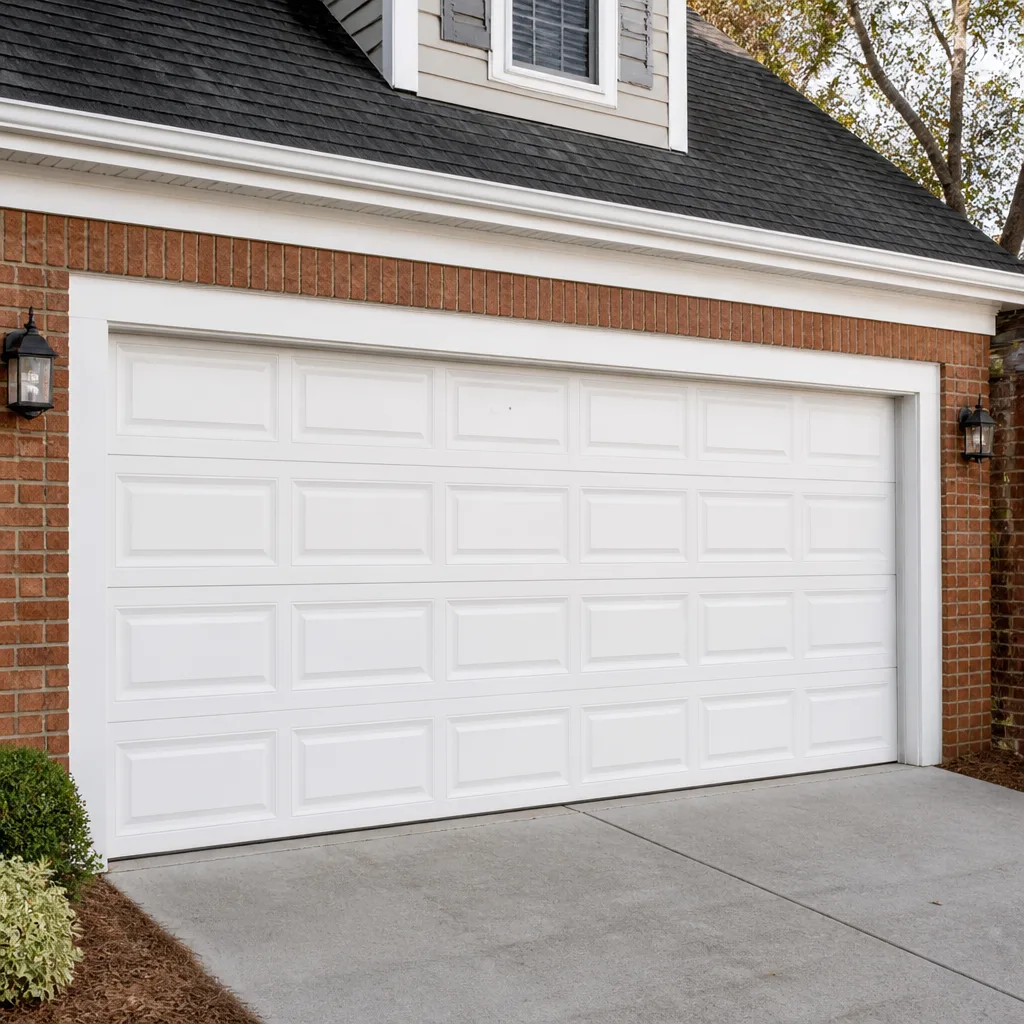 Raised-panel steel
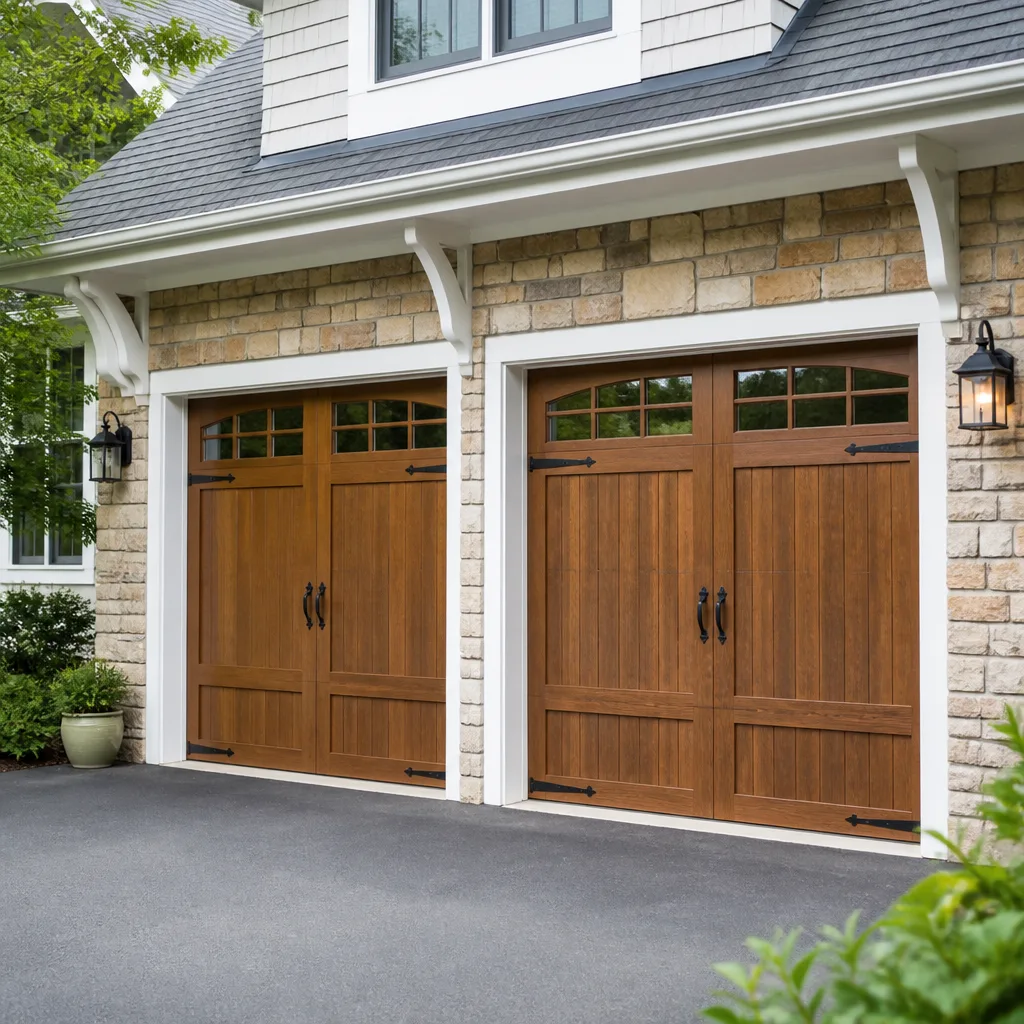 Carriage house
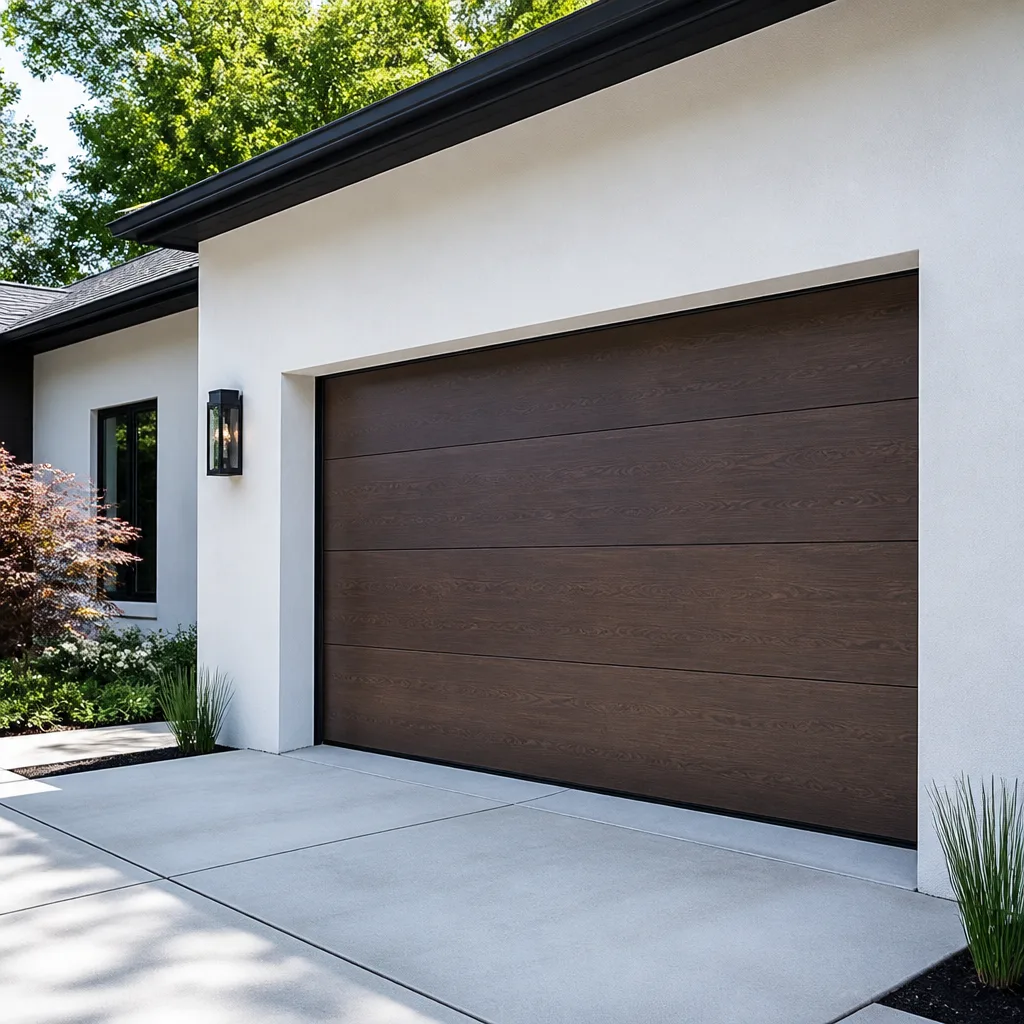 Modern flush
 Full-view glass
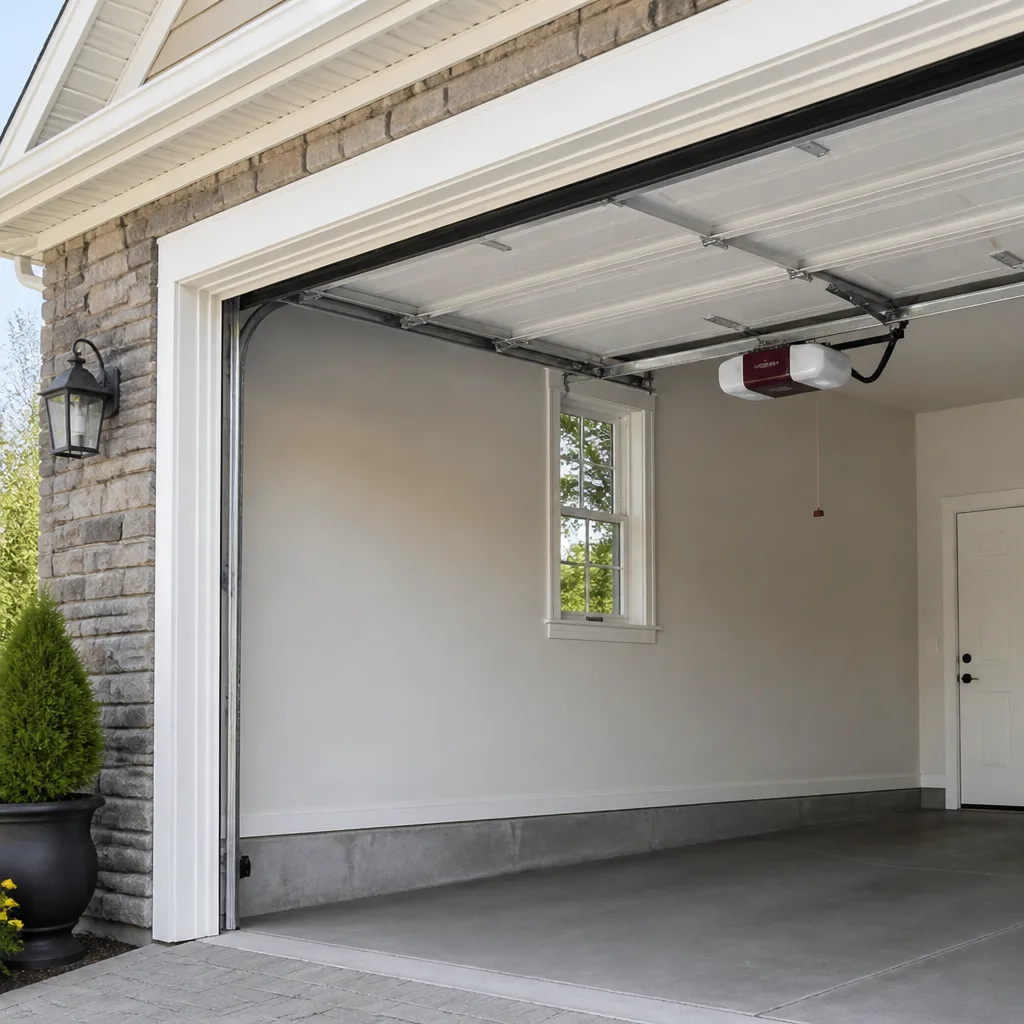 LiftMaster openers
 Chamberlain openers
Full 25-point door and opener safety check with every visit - springs, cables, rollers, tracks, and your LiftMaster or Chamberlain opener included
You get a price before we start. It does not change when the pro arrives.
Get your free estimateHow to Hire a Garage Door Contractor in Manchester: A Step-by-Step Guide
Connecticut doesn’t issue a garage door license. Any person with a truck, a business card and a willingness to say yes can legally show up at your Manchester home and take apart a torsion system holding 150 to 300 lbs of stored tension. That’s not a scare tactic – it’s the credential gap, and it’s the single most important thing to understand before you hire anyone. The barrier to entry in this trade is close to zero, which means the vetting burden lands entirely on you. This guide walks through exactly how to close that gap: what registration to verify, what a quote should show line by line, which warranty questions expose builder-grade parts, and how to tell a specialist from someone who added garage doors to a handyman list last month.
Quick Answer
To hire a garage door contractor in Manchester, verify the contractor’s Connecticut Home Improvement Contractor (HIC) registration with the state Department of Consumer Protection before anything else, then request a written line-item estimate, confirm they handle springs and openers in-house rather than subbing them out, and ask directly what brand of spring and cable they install. A legitimate specialist answers all four without hesitation. A generalist with a truck usually can’t.
Styles & brands we work with
- Raised-panel steel
- Carriage house
- Modern flush
- Full-view glass
- LiftMaster openers
- Chamberlain openers
Table of Contents
- Why Garage Door Hiring Is Different in Manchester
- Step 1: Verify the Connecticut HIC Registration
- Step 2: Understand What “Authorized Dealer” Actually Means
- Step 3: Read the Quote Like a Contractor Would
- Step 4: Find Out Whether Parts Are Actually Available
- Step 5: Ask the Warranty Questions That Reveal Component Grade
- Springs and Cables: The Job That Filters the Field
- Common Mistakes to Avoid
- When to Call a Professional
- Frequently Asked Questions
Why Garage Door Hiring Is Different in Manchester
Manchester sits in a part of Connecticut where the housing stock does a lot of the deciding for you. The town has a deep bench of mid-century ranches and capes alongside newer construction, and the garage doors on those older homes are frequently original equipment or one replacement removed from it. That matters because an opener and door pairing that’s been in place for a few decades often has legacy drive systems and discontinued hardware. A contractor who only knows current smart-home openers will look at a Craftsman belt drive from the 1990s and start suggesting replacement before diagnosing the actual failure.
Then there’s the seasonal swing. Hartford County winters drive road salt and grit into door tracks, and the freeze-thaw cycle works on the bottom seal and the panel seams. By spring, a lot of Manchester doors are binding, hesitating, or coming down harder than they should. That pattern means local technicians see a specific mix of problems – rollers worn from grit, weather seals cracked from ice, torsion springs that were already at the end of their cycle when the cold hit. A contractor who works in this climate every week knows that pattern. Someone passing through from out of state usually doesn’t.
The regulatory picture adds the last layer. Connecticut regulates home improvement contractors at the state level rather than through a dedicated garage door license, so there’s no single trade credential that proves competence with a torsion system. That’s not a reason to skip hiring. It’s a reason to hire the way you’d hire an electrician – by verifying what can be verified and asking the questions that separate specialists from everyone else.
For a deeper look at what repair work in this market actually involves, our garage door repair page covers the common failure points on Manchester doors in detail.
Step 1: Verify the Connecticut HIC Registration
Connecticut requires home improvement contractors to register with the state Department of Consumer Protection as Home Improvement Contractors, and garage door work falls under that umbrella. Registration isn’t the same as a trade license – it doesn’t test anyone’s ability to set spring tension – but it does create a paper trail, a complaint process, and a minimum standard for doing business legally in the state. Before you sign anything, verify the registration.
The process takes about five minutes:
- Ask the contractor for their HIC registration number in writing – not verbally over the phone, but in the estimate or a follow-up email.
- Look up the number through the Connecticut Department of Consumer Protection’s online license lookup.
- Confirm the name on the registration matches the name on the estimate and the name on the vehicle that shows up.
- Check whether the registration is current and in good standing, not expired or suspended.
- Ask whether the individuals doing the work are covered under the registration or whether any portion is subcontracted, and to whom.
A contractor who hesitates here, or who says the number isn’t handy, is telling you something. Anyone operating legitimately in Manchester has that number memorized or on their paperwork. If you get a blank look, end the conversation politely and move on. You haven’t lost anything.
One more note on this step: registration is not insurance. Ask separately whether the contractor carries general liability coverage and workers’ compensation, and ask for a certificate. You’re not being difficult. You’re doing what the state expects you to do, because the state has deliberately left the verification to you.
Step 2: Understand What “Authorized Dealer” Actually Means
“Authorized dealer” gets used loosely in this trade, so it’s worth knowing what the term is supposed to signal. When a manufacturer like LiftMaster, Clopay, Amarr, or Wayne Dalton designates a dealer, that relationship typically comes with training requirements, access to technical documentation, warranty support channels, and accountability if the work is done wrong. It’s not a guarantee of quality on its own, but it does mean someone at the manufacturer knows who installed the product and can trace a problem back to them.
Compare that to a generalist who buys the same brand off a shelf and installs it with no relationship to the manufacturer. The product may be identical. The support behind it isn’t. If a Clopay panel arrives with a factory defect, an authorized dealer can pursue a warranty claim through channels a one-off installer doesn’t have access to. If a LiftMaster opener has a firmware issue, a dealer with training on that line has a path to a fix.
That’s why we work across eight major brands – LiftMaster, Chamberlain, Genie, Clopay, Amarr, Wayne Dalton, Craftsman, and Raynor – rather than pushing homeowners toward whichever line happens to be in stock. The brand on your door is the brand we need to know, whether it’s a current Clopay carriage-house model or a twenty-year-old Wayne Dalton that’s still going.
Ask the question directly when you’re vetting: “Are you an authorized dealer for the brand on my door, and what does that get me?” A specialist answers with specifics about training, warranty support, and parts access. A generalist changes the subject.
Step 3: Read the Quote Like a Contractor Would
A single lump-sum number on a piece of paper is the least useful quote you can receive, and it’s also the most common. Here’s what a proper estimate looks like broken out, using typical Manchester-area ranges as a reference point:
- Spring replacement (one torsion spring): typically estimated around $180 to $340 depending on spring size, cycle rating, and door weight. A matched pair is usually replaced together, so budget roughly twice the single-spring figure – don’t accept a single number quoted for “the springs” without asking whether that’s one or both.
- Opener replacement: typically estimated in the $300 to $650 range for the unit and installation, depending on drive type and whether the existing wiring and safety sensors can be reused.
- Cable replacement: typically estimated around $150 to $300 per side, and cables should generally be replaced in pairs.
- Roller and hinge replacement: typically estimated around $100 to $250 depending on door size and hardware grade.
- Off-track or panel repair: varies widely with the extent of damage, so a good estimate lists what’s being inspected and what the likely scenarios are.
- Full door installation: priced per job after a measure, because door size, insulation rating, and brand determine the material cost.
Line-item pricing does two things for you. It tells you what’s actually being replaced versus what’s being “adjusted,” and it gives you a fair basis for comparison if you want a second quote. That second part matters more than most homeowners realize. Two lump sums of $450 tell you nothing. Two line-item estimates side by side tell you whether one contractor is replacing the springs and the other is rewinding them.
The critical question on any estimate: is this the price, and will it change once the work starts? We quote the price and agree it with you before any work begins, and if we discover something the estimate couldn’t reasonably have covered, that conversation happens before the tools come out. Ask any contractor you’re considering to commit to the same thing in writing. If they won’t, that’s your answer.
For a closer look at opener-specific pricing and diagnosis, our garage door opener repair page breaks down what different failure modes typically cost to fix.
Step 4: Find Out Whether Parts Are Actually Available
Here’s the scenario that frustrates homeowners more than almost anything else in this trade. A contractor arrives, diagnoses a broken spring or a failed opener, takes the door apart or leaves it inoperable, then tells you the part has to be ordered and it’ll be a few days. Now you have a non-functional garage with your car either trapped inside or exposed outside, and you have no leverage because the door is already disassembled.
That failure mode comes from a contractor who carries no inventory and orders per job. It’s not always avoidable – some doors need a specific panel from a specific manufacturer, and nobody stocks every color and size. But there’s a big difference between “we need to order this panel, it’ll be in Thursday, and we’ll leave the door secured in the meantime” and “we’ll get back to you.”
Ask before the job starts:
- Do you carry common springs, cables, rollers, and hinges in your vehicle, or do you order them per job?
- If a part needs ordering, how long is the typical lead time, and what’s the plan for the door in the interim?
- Can you confirm the specific manufacturer and model of what you’re installing, in writing, before I agree to the work?
- If the brand on my door is discontinued, what’s the equivalent replacement you’d recommend?
A technician working out of a properly stocked vehicle can complete most standard repairs and return the door to service the same visit. That’s a real difference in how the day goes for you, and it’s worth asking about directly rather than discovering it later.
Step 5: Ask the Warranty Questions That Reveal Component Grade
Warranty terms are where builders reveal their component grade, whether they mean to or not. A commercial-grade torsion spring rated for high cycle counts supports a longer warranty than a builder-grade spring of the same size. A contractor installing builder-grade parts will offer a shorter warranty or a general “we stand behind our work” statement. A contractor installing proper components can offer something specific.
Ask these exact questions:
- “What cycle rating is the spring you’re installing, and what warranty covers it?” Cycle rating is the number of open-close cycles the spring is rated for, and it’s the single best predictor of how long it will last.
- “Are you replacing this with the same spring size and wire gauge, or a different one? Why?”
- “Does the spring warranty cover the part only, or the labor to replace it if it fails?”
- “Are you replacing both springs if one fails? If not, why not?”
- “What’s the warranty on the cables, rollers, and hinges, separately from the spring?”
- “What’s the opener warranty, and who handles it if there’s a problem?”
The answers separate specialists from installers in about two minutes of conversation. A specialist will explain that a matched pair of springs shares the load and generally should be replaced together, that the wire gauge and cycle rating determine the part you’re buying, and that the warranty terms differ by component. If the response is vague, assume builder-grade and price accordingly.
For the full picture on this specific job and what it involves in Manchester homes, see our garage door spring repair page. It covers spring types, cycle ratings, and what a proper replacement involves.
Springs and Cables: The Job That Filters the Field
If you want to know in one question whether you’re dealing with a specialist, ask them what happens when a torsion spring is under load. A trained technician will tell you it’s storing 150 to 300 lbs of tension, that releasing it improperly can cause serious injury or death, and that this is not work to attempt without proper winding bars and training. A generalist will likely start describing how they’d do it.
This is the single most common job where homeowners get hurt because a contractor who shouldn’t have taken the call did take it. Torsion springs are under constant stored tension, and a failure during replacement – or during an attempt by someone without the right tools – is genuinely dangerous. Extension springs under load carry the same risk, plus the additional hazard of the cable running through them. Cables themselves are also under tension and can whip if released.
None of this is a reason to avoid repairing your door. It’s a reason to hire someone who treats the job with the respect it demands. When we look at a spring repair, we’re checking spring size, wire gauge, cycle rating, whether the pair is matched, whether the cables and drums show wear that will cause the new spring to fail prematurely, and whether the bottom seal and rollers need replacement while the door is apart. That’s the difference between a repair and a fix.
If anything about your spring system looks wrong – a visible gap in the coil, the door going up a few inches and stopping, a loud bang from the garage, a cable that’s come off the drum – stop using the door. Don’t attempt to open it manually, don’t prop it, and don’t cut anything. Call a specialist. The door is not going to fix itself, and using it in that condition can cause further damage or bring it down on someone.
Common Mistakes to Avoid
- Hiring without verifying the HIC registration. In Connecticut, that registration is the minimum legal standard, and it’s the only paper trail you have if the work goes wrong. Skip it and you’re relying entirely on the contractor’s word.
- Accepting a lump-sum quote with no line items. You can’t compare what you can’t see. A lump sum of $550 for “spring repair” doesn’t tell you whether you’re getting one spring or two, what cycle rating, or whether the cables are being checked. Ask for the breakdown before you agree to anything.
- Assuming the cheapest quote is the best value. A quote that’s noticeably below the others usually reflects builder-grade parts or a shortcut in the diagnosis. Sometimes the price difference is a different spring. Sometimes it’s a different contractor.
- Letting a generalist “take a look” at a spring problem. This is the job most likely to cause injury when handled by someone without specialized training. If the contractor says they can handle it but can’t describe a cycle rating or explain winding bar procedure, put the phone down.
- Skipping the second spring. Torsion springs are usually installed as a matched pair, and replacing only the broken one is a common shortcut that will bring you back to the same problem soon. Ask whether both are being replaced and why.
- Ignoring the warranty terms until something fails. A warranty that covers the part but not the labor is worth less than it looks. Ask what’s covered, what’s excluded, and how long the coverage runs for each component before you sign.
- Not asking about parts availability up front. If your door ends up disassembled and waiting on a supplier, you’ve lost the use of your garage for days. Ask how the door will be secured if parts need to be ordered.
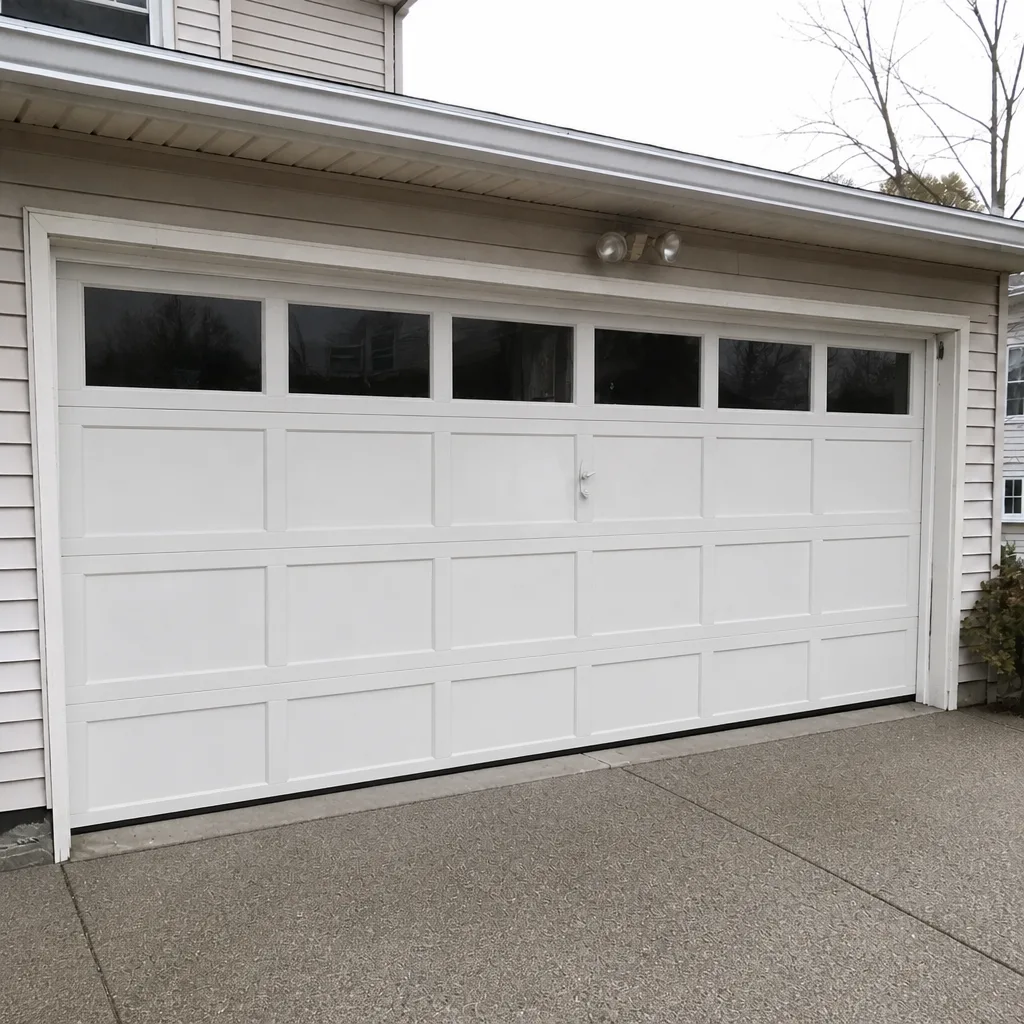
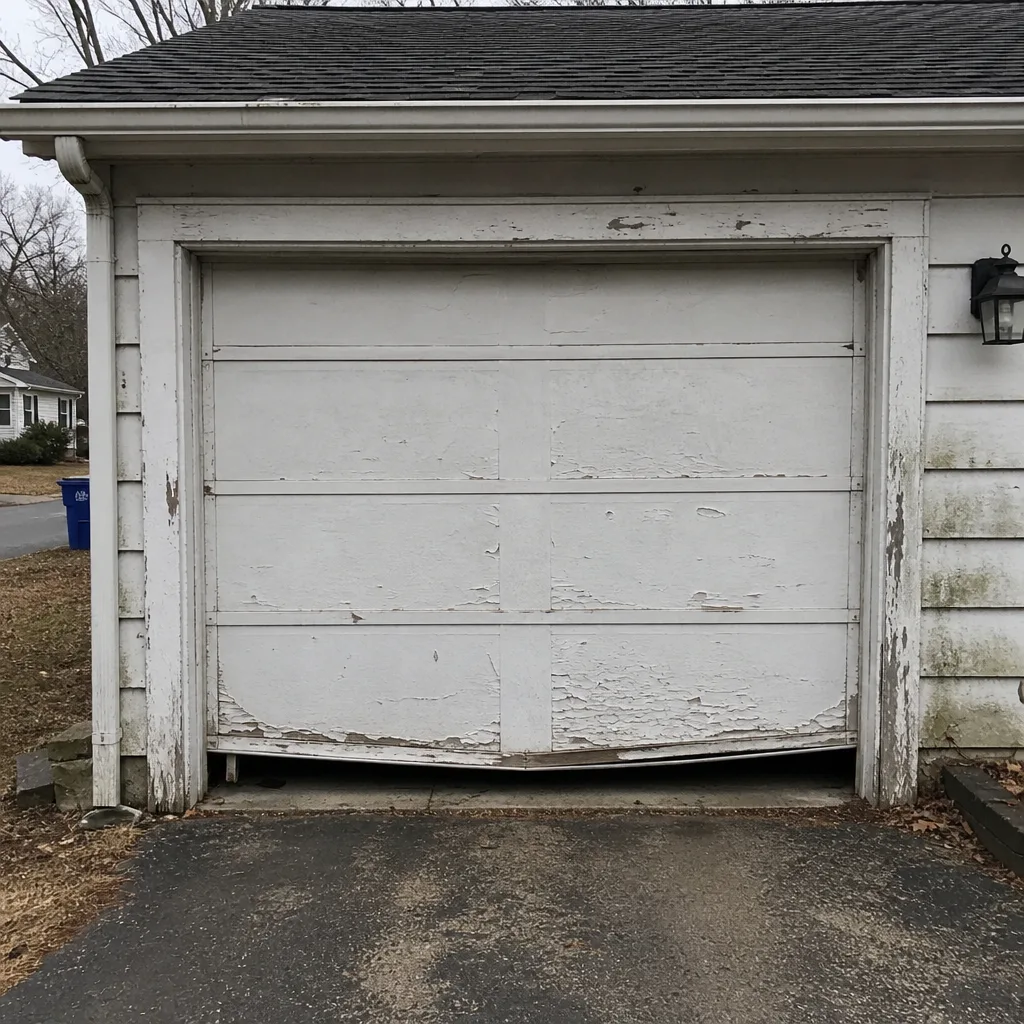
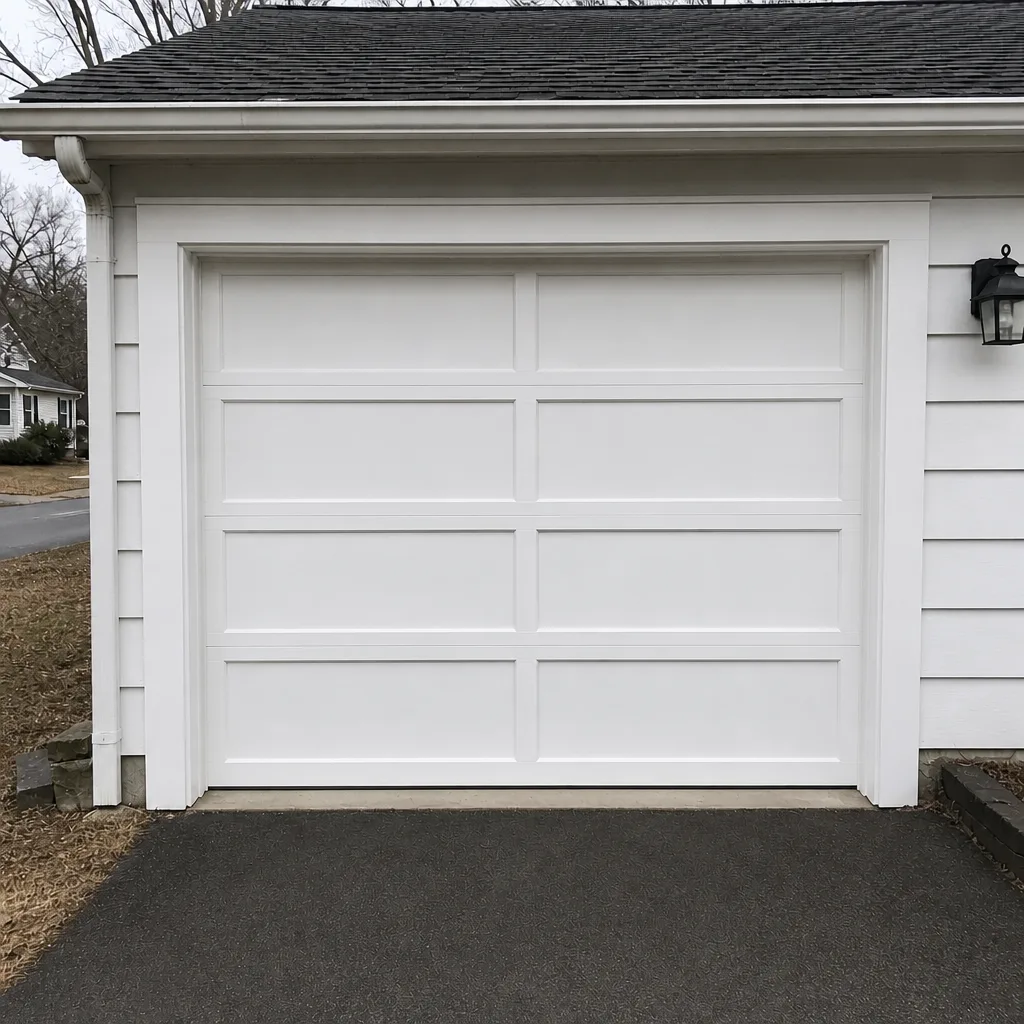
See the difference
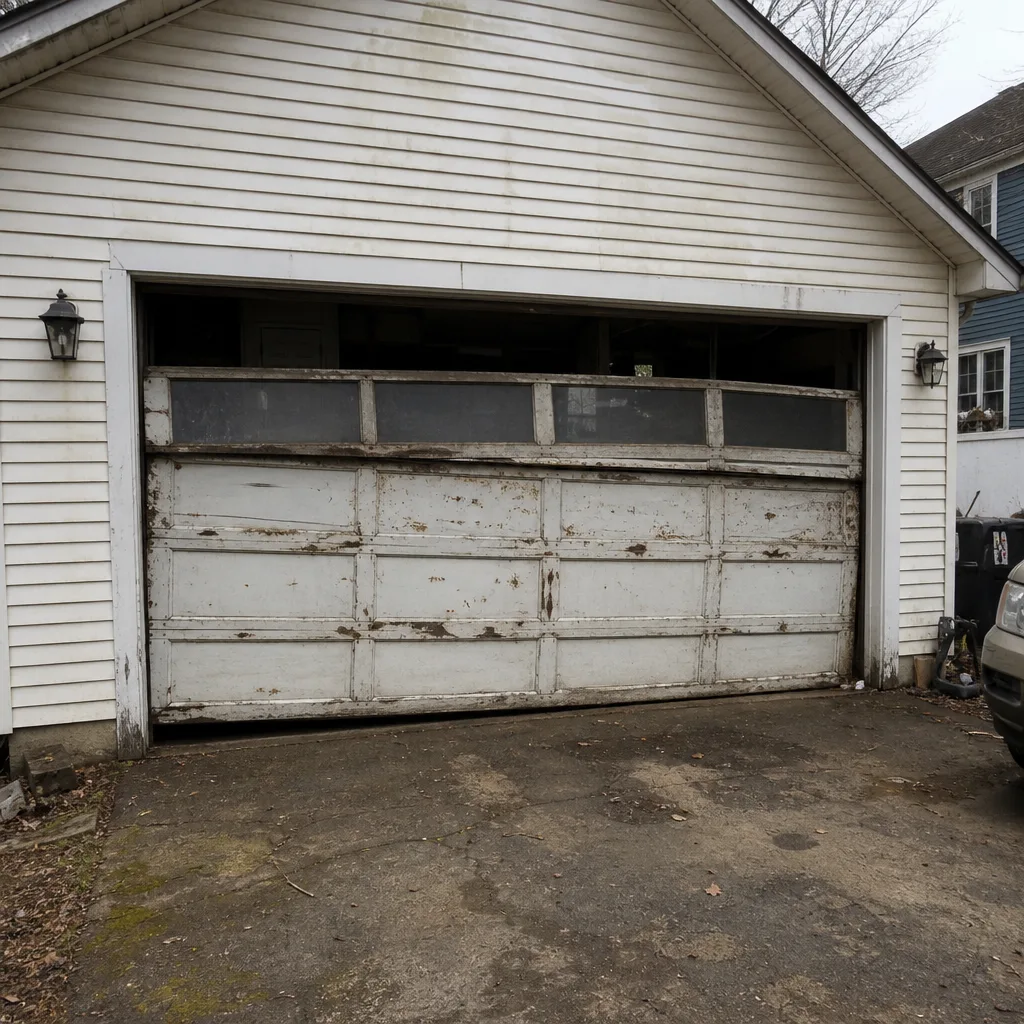 Before
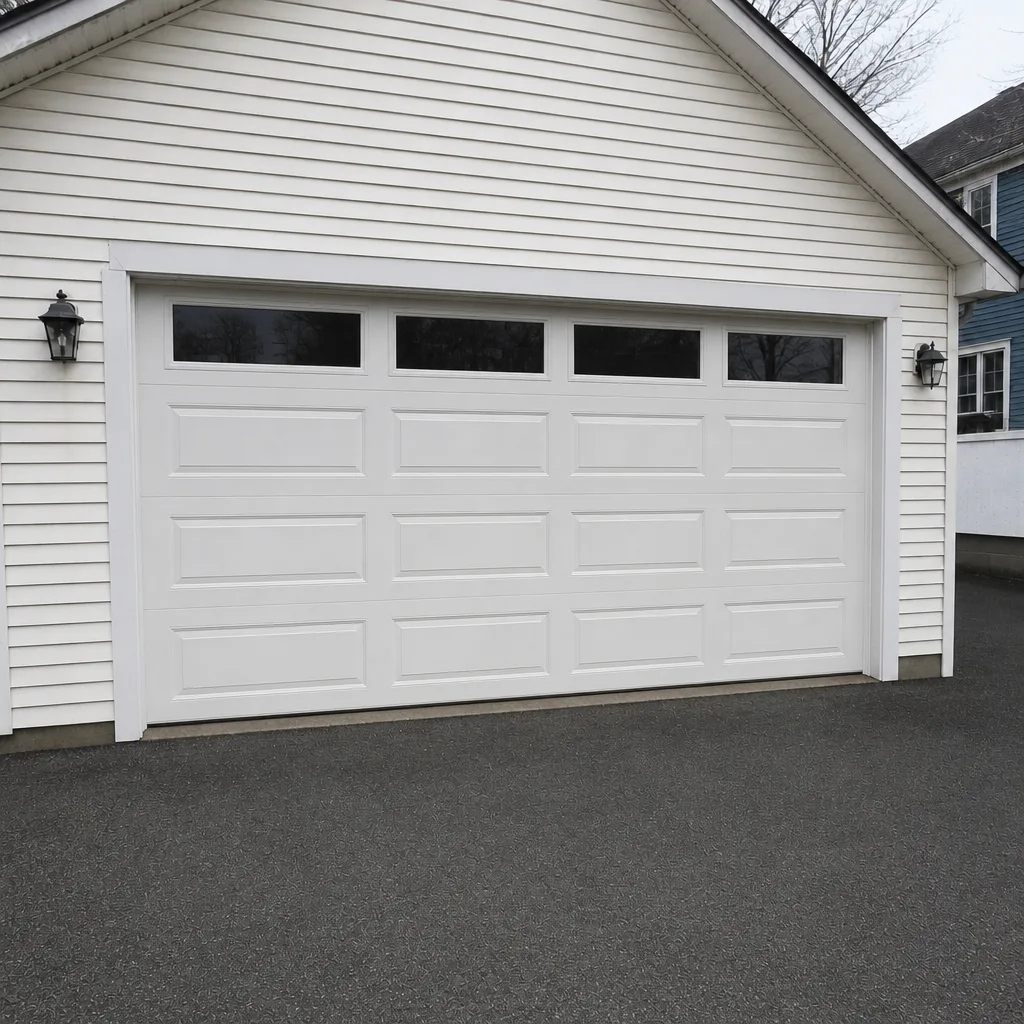 After
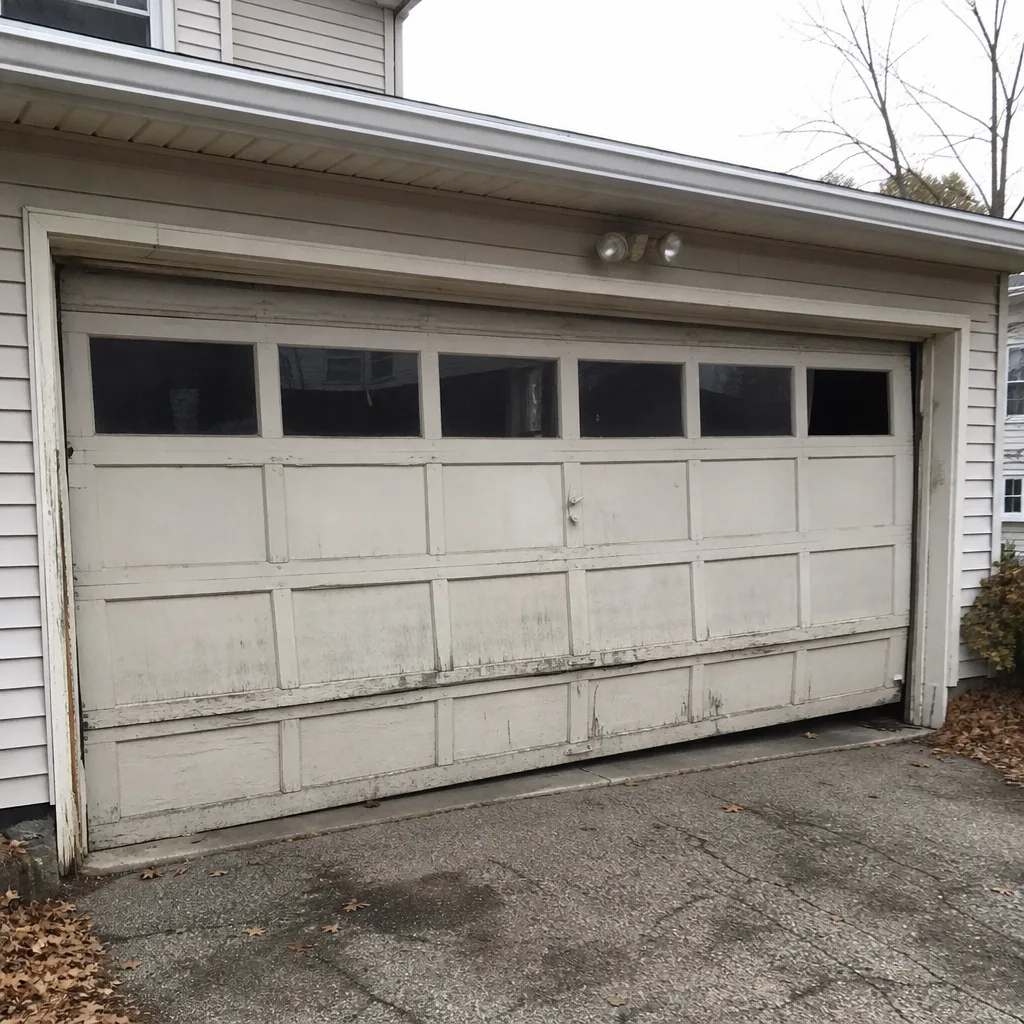 Before
 After
 Before
 After
When to Call a Professional
Some garage door problems can wait a day or two. Others can’t. Call a professional immediately if a spring has broken – you’ll usually hear a sharp bang and the door will stop working, and using it after that point is dangerous. Call if the door is off its tracks, if a cable has come off the drum or looks slack, if the opener runs but the door doesn’t move, if the door reverses unexpectedly, or if the safety sensors aren’t stopping the door when something is in the way. Any of those situations creates a genuine safety or security risk.
For non-emergencies – a noisy door, a slow opener, a remote that’s stopped working, a bottom seal that’s tearing – you have time to vet the contractor properly. Use that time. Read the quotes carefully, ask the warranty questions, and verify the registration. Those five minutes of checking are what this whole guide is about.
Manchester Garage Door Repair Pros offers free estimates in Manchester – call (833) 509-3052 for a written quote on repair, replacement, or a new installation.
Frequently Asked Questions
Connecticut does not issue a separate garage door license, but it does require home improvement contractors to register with the state Department of Consumer Protection as Home Improvement Contractors. Verify that HIC registration through the state’s online lookup before signing anything. Registration doesn’t test skill, but it creates a record and a complaint process, which is what you need if the job goes wrong. Call (833) 509-3052 to ask us about our registration and insurance details.
Torsion spring replacement in the Manchester area typically runs around $180 to $340 for a single spring, and since springs are usually replaced as a matched pair, budget roughly twice that for both. The final price depends on spring size, cycle rating, and door weight, and it’s set by the written estimate before any work begins. Call (833) 509-3052 for an exact quote – estimates are free.
For repair and emergency calls, yes – same-day service is the standard on most repair jobs, and we respond fast from 7am to 7pm for situations where a broken door leaves your home exposed or your car trapped. Installation and full door replacement are different: those require a measure, a written quote, and the door to be ordered, so they’re scheduled rather than same-day. Call (833) 509-3052 and we’ll tell you what’s realistic for your situation.
No – the price is quoted and agreed before any work starts, and that agreement holds. If we find something the original estimate couldn’t reasonably have covered, we’ll explain it and get your approval before we proceed. You won’t get an invoice that’s higher than the quote without warning. Call (833) 509-3052 to get a written estimate.
The technicians who perform the work are experienced specialists, and the local pro is licensed and insured as their state requires, including the Connecticut HIC registration for home improvement work. Our technicians have up to 11 years of experience. Ask for the registration and insurance certificate before any work begins, and we’ll provide it. Call (833) 509-3052 to discuss your job.
Replace both as a matched pair unless the second spring is unusually new. Torsion springs are installed in pairs that share the load evenly, and they typically wear at roughly the same rate. Replacing one while leaving the other in place means the new spring is doing half the work of a worn partner, which shortens its life and usually brings you to the same repair a second time. A specialist will tell you this before you ask.
Manchester Garage Door Repair Pros is the team behind this guide. You can read more about our Manchester Garage Door Repair Pros services, including emergency service, opener repair, spring repair, and installation across LiftMaster, Chamberlain, Genie, Clopay, Amarr, Wayne Dalton, Craftsman, and Raynor equipment.
The Bottom Line
Connecticut’s garage door market has almost no entry barrier, so the credential gap has to be closed by you, not by the state. Verify the HIC registration through the Department of Consumer Protection. Insist on a line-item written estimate and confirm the price won’t change once the work starts. Ask whether parts are on the vehicle or ordered per job. Ask what cycle rating and warranty the spring you’re buying carries. And ask every contractor what happens when a torsion spring is under load – the answer will tell you in about thirty seconds whether you’re dealing with a specialist or a generalist. Do those five things and you’ll hire well. Skip them and you’re rolling dice on the most dangerous system in your home.
Written by the team at Manchester Garage Door Repair Pros.