Last updated November 23, 2026
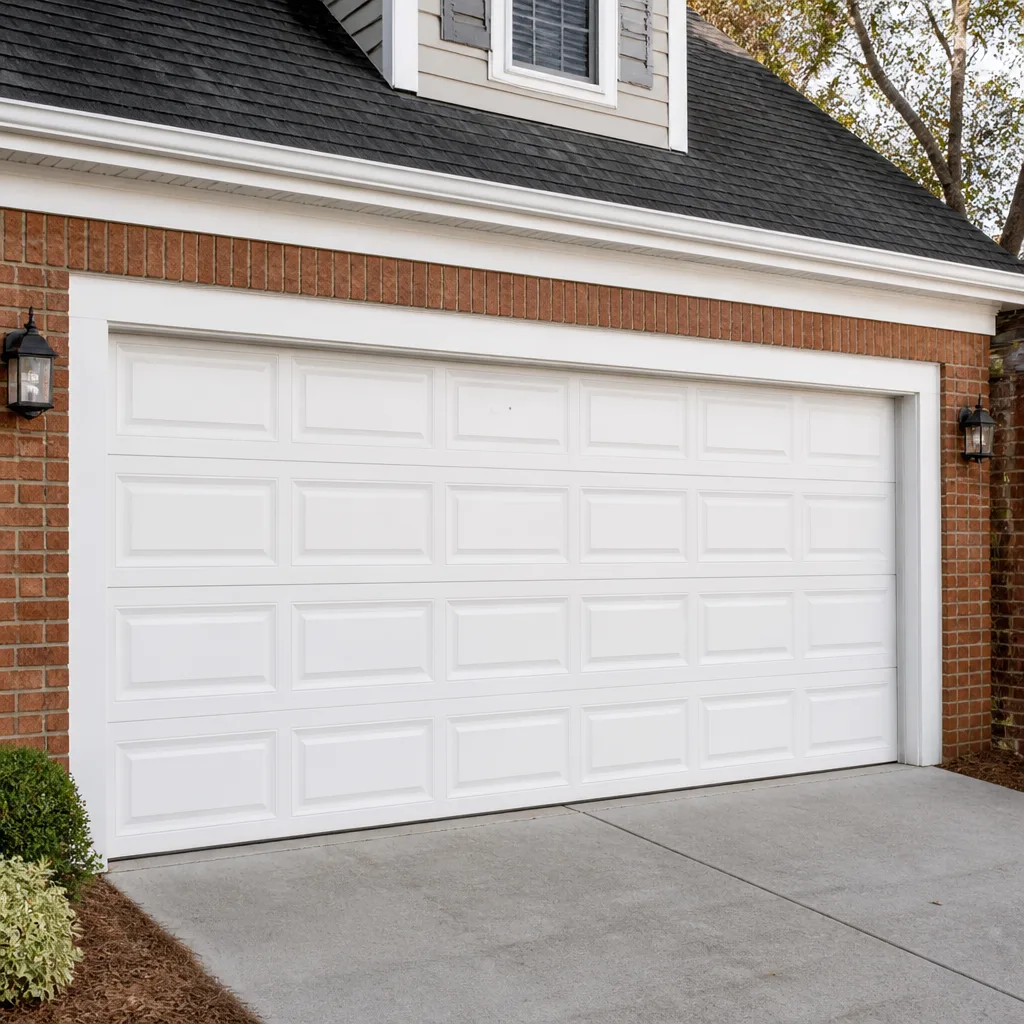 Raised-panel steel
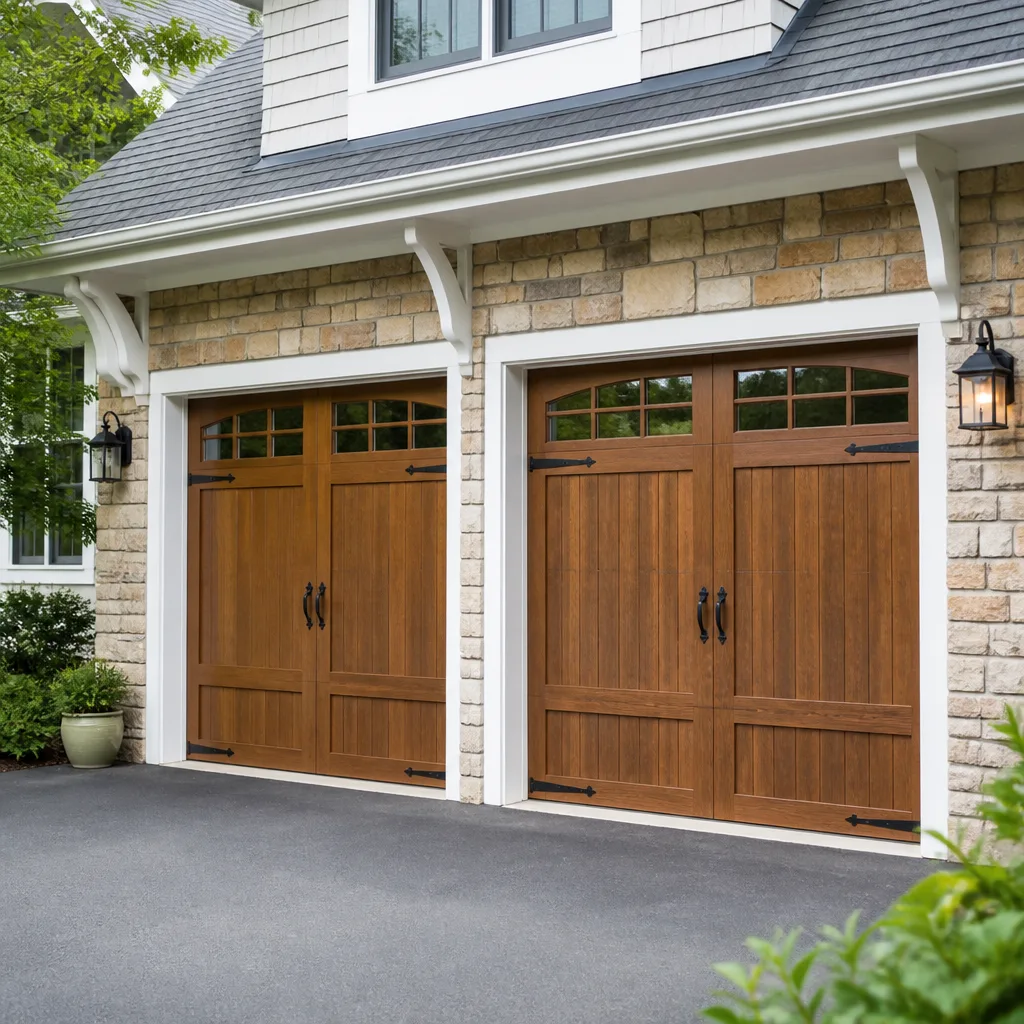 Carriage house
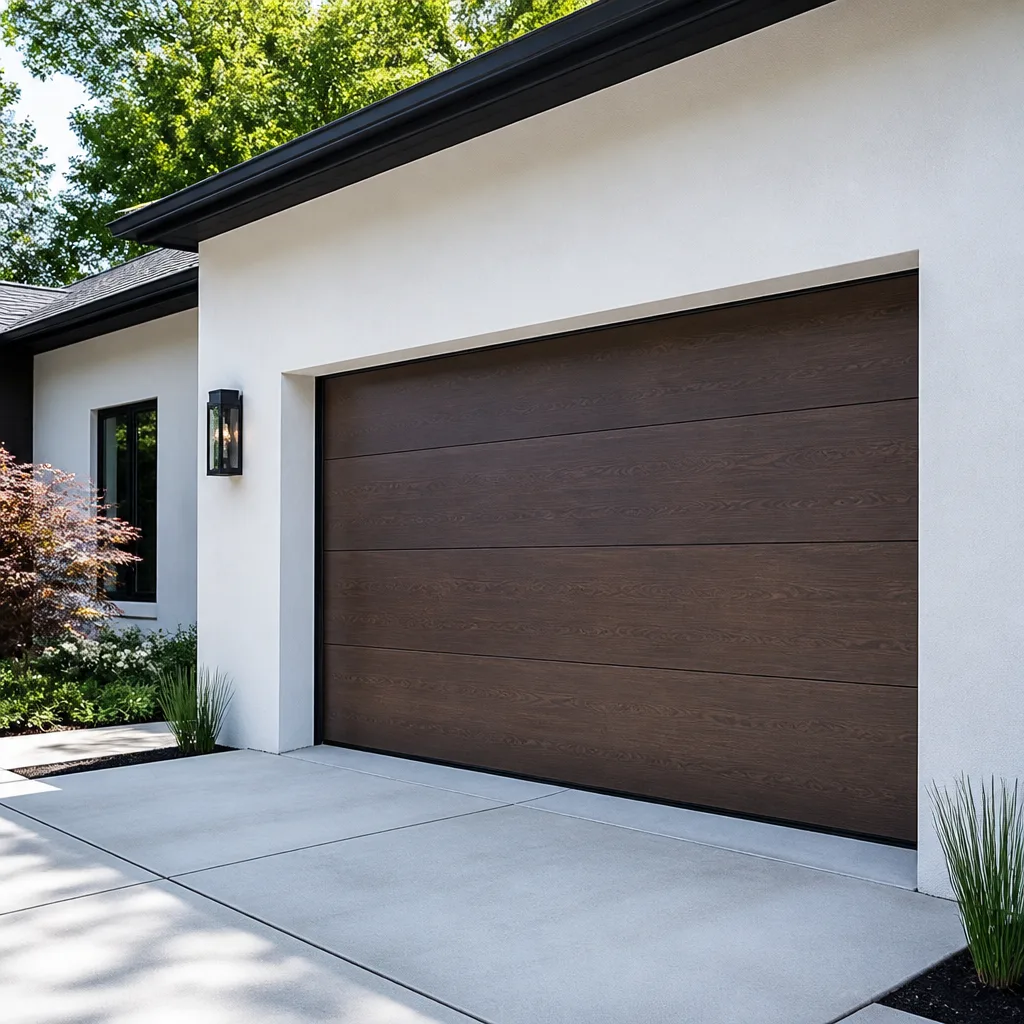 Modern flush
 Full-view glass
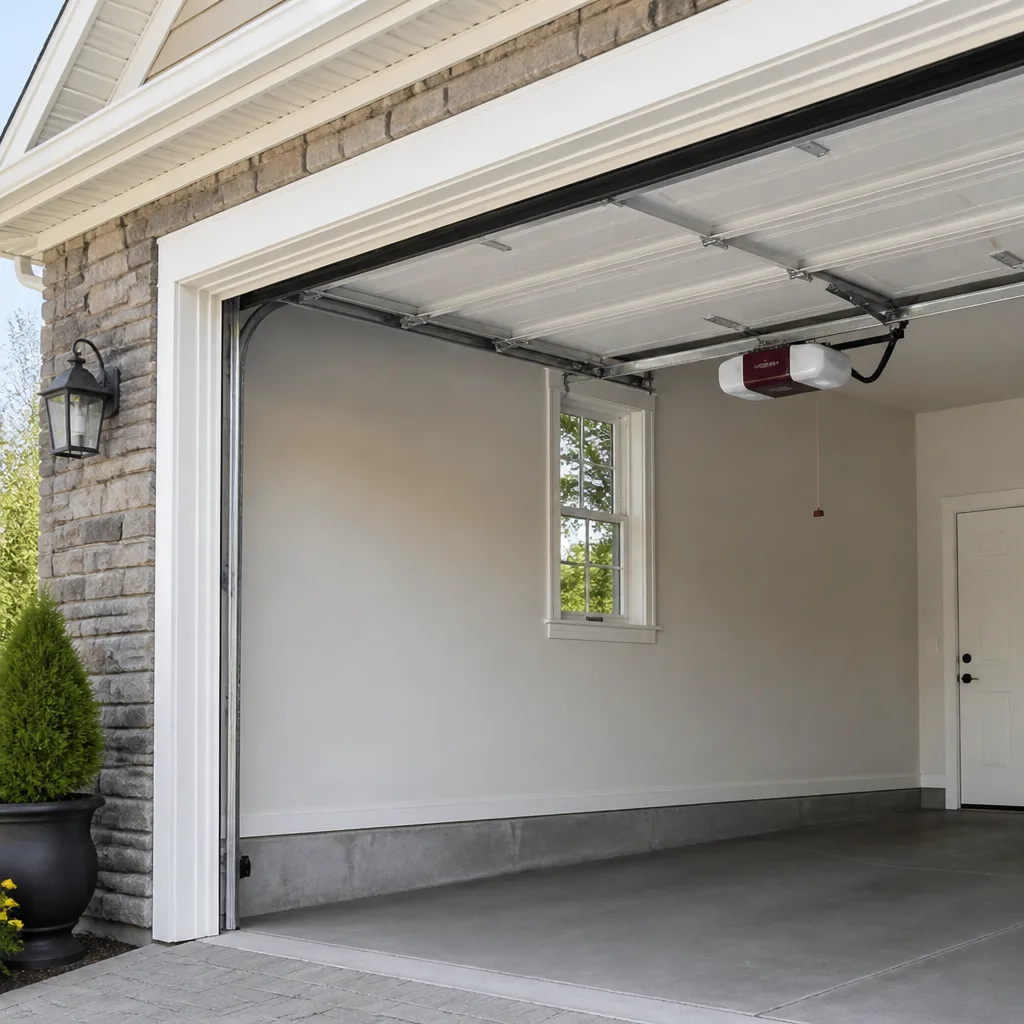 LiftMaster openers
 Chamberlain openers
Full 25-point door and opener safety check with every visit - springs, cables, rollers, tracks, and your LiftMaster or Chamberlain opener included
You get a price before we start. It does not change when the pro arrives.
Get your free estimateGarage Door Warning Signs: A Manchester Homeowner’s Reference Guide
A garage door that’s slow to open and a garage door with a fraying cable are both called “warning signs,” but they don’t belong in the same category. One will inconvenience you for a few days. The other can send a 150-pound door down in a fraction of a second, and the spring or cable at the center of it holds enough stored tension to break bones. Treating every symptom with the same mild concern is just as risky as ignoring them all. This guide sorts the signs a Manchester garage door gives you into three honest buckets: what you can monitor, what needs a scheduled visit soon, and what means you stop using the door right now.
Quick Answer
Garage door warning signs fall into three categories: monitor (slow movement, light squeaking), schedule within a week (grinding, a door that fails the balance test, opener hesitation), and stop using the door immediately (a snapped spring, a frayed or hanging cable, a bent track, or a door that reverses or jerks unevenly). Any noise or movement that started suddenly and got worse fast is the sign to call first. When in doubt, leave the door down and get a specialist to look at it.
Styles & brands we work with
- Raised-panel steel
- Carriage house
- Modern flush
- Full-view glass
- LiftMaster openers
- Chamberlain openers
Table of Contents
- The Three-Tier Severity System: Monitor, Schedule, Stop
- Spring Warning Signs: Reading Cracks and Gaps Before They Fail
- Noise Diagnosis: Mapping Grinding, Squeaking, Rattling and Popping to Their Source
- Opener Behavior: What Hesitation, Reversal and Remote Lag Actually Mean
- The Balance Test: The Warning Sign Most Homeowners Never Catch
- Visual Wiring, Cables and Tracks: What To Check and What Never To Touch
- How Manchester Weather and Housing Shape Door Wear
- Common Mistakes to Avoid
The Three-Tier Severity System: Monitor, Schedule, Stop
The single most useful thing you can do as a Manchester homeowner is stop thinking in terms of “symptoms” and start thinking in terms of severity. A door tells you what it needs, but it doesn’t rank the urgency for you. That ranking is your job, and it’s the difference between a small repair and a dangerous one.
Here’s how we sort every sign a door gives us.
Tier 1 – Monitor. These are the early signals that something is starting to wear but nothing is compromised yet. Slight squeaking on a cold morning. A door that feels a touch heavier than it used to. A light rattle as the door travels. Note the change, watch whether it’s getting worse, and bring it up at your next service visit.
Tier 2 – Schedule within the week. These signs mean a component is working beyond its intended wear and the fix is getting more expensive the longer you wait. Steady grinding through the whole cycle. An opener that hesitates before it lifts. A door that fails the balance test. A remote that needs to be pressed more than once. None of these are emergencies, but none of them should sit for a month either.
Tier 3 – Stop using the door immediately. These are the safety-critical signs. A snapped torsion or extension spring. A cable that’s frayed, hanging or loose. A bent or detached track. A door that comes down crooked or slams closed. A door that reverses without a clear obstruction. When these show up, close the door (carefully, if it will still close) and call a specialist. Don’t run the opener again to see what happens.
We work on doors across Manchester, from the older housing stock near the center to newer construction on the edges, and the pattern holds: the doors that cause the biggest problems are the ones where a Tier 3 sign sat unaddressed because it got classified as a Tier 2.
Spring Warning Signs: Reading Cracks and Gaps Before They Fail
Springs are the part of a garage door that homeowners notice last and should worry about most. There are two kinds. Torsion springs mount on a shaft above the door and twist as the door closes. Extension springs run along the sides, stretching as the door goes down. Both store the energy that lifts a door weighing well over 100 pounds. When they fail, they release that energy all at once.
You can inspect both visually, from a safe distance, without touching anything. Here’s what to look for.
- A visible gap in a torsion spring. Look along the coil. A spring that’s intact looks like one continuous spiral. A gap – even a hairline one – means the coil has cracked and is already partway to failure. A small gap grows. It doesn’t heal.
- A torsion spring that has gone slack. If the spring looks loose on the shaft with no tension wound into it, it’s broken. The door will feel extremely heavy to lift by hand. Don’t lift it. It’s a sign to call.
- Cracked or stretched extension springs. On extension springs, look at the coil and the ends where the spring attaches. Cracks, rust pitting or a spring that’s visibly longer than it should be are signs the spring is losing tension and getting close to failure.
- Missing safety cables on extension springs. Extension springs should have a cable running through the center of the coil to contain it if the spring lets go. If the cable is missing or has come loose, that spring is unsafe and the door is not safe to operate.
Here’s the part most homeowners miss. A spring can look completely fine from a distance and still be at the end of its life. Springs are rated in cycles – one open and close is a cycle – and once a spring is past its rating it can fail without any visible warning at all. That’s why we recommend a proper spring inspection for any door you don’t have service records for, especially in a house you’ve recently moved into. We treat spring work as our specialty, not something to pass off, because it’s the repair where “close enough” is genuinely dangerous. If you suspect a spring has broken, or you’ve spotted a gap, don’t wind the door by hand to test it. That is the specific situation our garage door spring repair service exists for, and it’s a call we’re set up to handle quickly.
Noise Diagnosis: Mapping Grinding, Squeaking, Rattling and Popping to Their Source
Sound is information. A garage door is a mechanical system with dozens of wear points, and each kind of noise points to a specific source. If you know the map, you stop guessing. Here’s the map we use.
- Squeaking. Almost always a lubrication issue at the rollers, hinges or the torsion shaft. Squeaking is usually a Tier 1 sign, but if it’s sharp and constant through the whole cycle, the hinge or roller is worn rather than dry and needs a look.
- Grinding. Grinding usually means metal moving against metal with no lubrication, or a roller that has flat-spotted and is skidding rather than rolling. Grinding is a Tier 2 sign. Left alone it eats into the track and turns a small repair into a bigger one.
- Rattling. Rattling during travel is usually loose hardware – hinges, brackets or roller stems that have worked loose. It’s mostly a Tier 1 sign, but a rattle that comes from the top of the door near the springs should be checked, because a loose spring anchor or shaft collar is not a hardware-level issue.
- Popping or a loud bang. A single, sharp pop while the door is moving is a Tier 3 sign. That’s the sound of a cable slipping on its drum or a spring letting go. A dual-torsion door will bang once for each spring that breaks. Stop operating the door, and don’t run the opener to confirm.
- A continuous hum with no movement. The opener motor is running but the door isn’t moving. That’s a stripped gear, a broken drive belt or a dead logic board. It’s Tier 2 mechanically, but if the door is stuck open, treat the security side of it as Tier 3 for your home.
One local note. Manchester winters make noise diagnosis trickier because the cold thickens grease and stiffens everything. A squeak in January that goes away in April is usually dry lubrication, not a worn component. A squeak that stays through spring is the one to have looked at.
Opener Behavior: What Hesitation, Reversal and Remote Lag Actually Mean
The opener is the part of the system with the most complex electronics, which means its symptoms can look confusing. A hesitation, a reversal or a remote that doesn’t work on the first press could be a sensor, a circuit board issue or a mechanical drag that the opener is compensating for. Here’s how to tell them apart.
- Reversal after the door starts to close, with no obstruction. On a door that has safety sensors, this is almost always a sensor issue – a misaligned sensor, a dirty lens, a spider’s nest in front of the beam, or a sun reflection that confuses the sensor. It’s a Tier 2 sign, and it’s the single most common opener complaint we see.
- Hesitation before the door lifts. The opener pauses for a beat and then starts. This usually means the opener is fighting extra load – worn torsion springs, a dry torsion shaft, or rollers that have seized. The opener shows the symptom; the door is the cause. Hesitation is a Tier 2 sign, and if it’s paired with a heavy-feeling door, treat it as a sign that the springs are nearing the end of their life.
- A door that reverses immediately after touching the floor. That’s a travel-limit setting or a force-sensitivity issue. If the door bounces back up, it’s a Tier 2 sign that should be adjusted before it starts reversing mid-travel.
- Remote lag or a remote that works from one angle only. This is usually a radio or battery issue, not the door. Replace the battery, then swap in a fresh remote. If the problem lingers, the opener’s radio board or antenna is the likely source. Not safety-critical, but it’s a Tier 2 quality-of-life sign.
- Wall control works but the remote doesn’t, or vice versa. If the wall button runs the door but the remote doesn’t, you’ve confirmed the opener and door are fine and the problem is in the radio path. If neither works, the issue is in the opener or the wall wiring.
We diagnose openers across the major manufacturers, and we’ve found the brand-specific behavior genuinely matters – a LiftMaster logic board flashes a different diagnostic code than a Craftsman unit, and a Genie chain drive hesitates under load in its own way. That brand knowledge is the reason we keep certified service on LiftMaster, Chamberlain, Genie, Clopay, Amarr, Wayne Dalton, Craftsman and Raynor. Your garage door opener repair shouldn’t start with a tech learning your system on the spot.
The Balance Test: The Warning Sign Most Homeowners Never Catch
Here’s the sign most homeowners will never catch because no one tells them to look for it. A door can “work fine” every day and still fail the balance test. A failing balance test means the springs are no longer carrying the door’s weight, and the opener is doing work it wasn’t built for. Left alone, it wears out the opener motor long before the opener’s service life should be over.
The test is simple, and you can do it with the opener disconnected. Here’s the step-by-step.
- Close the door completely. Make sure no one is under it.
- Disconnect the opener. For most openers, this is the red release cord hanging from the trolley. Pull it straight down, then clear the area.
- Lift the door by hand about halfway. Open it to roughly waist height, not all the way.
- Let go. A balanced door stays put or drifts down slowly. If it drops, falls fast, or needs to be forced up by hand, the springs are not carrying the load and the door is unbalanced.
- Re-engage the opener. Pull the release cord again to re-engage the trolley and run the door with the opener to confirm it’s still operating normally.
A door that fails the balance test is a Tier 2 sign. It’s not an emergency while the door still runs, but it’s the sign that most often precedes spring failure and opener burnout. A Manchester door that fails the balance test in cold weather is telling you it can’t be relied on through the rest of the season. If your door fails, or you’re not comfortable testing it, that’s the point to bring in someone who sees it every week.
Visual Cables and Tracks: What To Check and What Never To Touch
Cables and tracks are the other safety-critical parts, and they’re the ones where the wrong instinct can hurt you. There’s a safe way to inspect them and a way that isn’t. Here’s the distinction.
What to check, from a distance:
- Cables. Look at the cables running from the bottom corner of the door up along the track to the drum above. They should be taut and look like intact braided steel. A cable that’s frayed, hanging loose, kinked or visibly thinner in one spot is a Tier 3 sign. Stop using the door.
- Tracks. A track should be straight and parallel to the door. A track that’s bent, bowed outward or detached from its bracket is a Tier 3 sign. The door is no longer traveling on a safe path and can come down unevenly.
- Hinges and brackets. Hinges should be flat against the door with no cracks. Brackets should be tight to the wall with no gap. A bent hinge is cosmetic until it isn’t, but a bracket that’s pulled loose is a Tier 2 sign that should be fixed within the week.
- The door panels themselves. A panel that’s cracked, bowing or separated from its hinge is a Tier 2 sign – it’s not usually a collapse risk, but it means the door’s structural integrity is compromised and stresses everything else.
What never to touch, under any circumstances: the torsion springs on the shaft, the cables themselves, and the drums at each end of the torsion shaft. These components hold stored energy that is released instantly when they’re moved, cut or loosened. There is no safe way for a homeowner to adjust or remove them. Even a cable that has already snapped can hold enough tension to be dangerous. When you see a frayed cable or a snapped spring, that’s the call-a-specialist moment. For everything else on this page, an inspection and a plan is a reasonable response. For these specific components, it’s not.
How Manchester Weather and Housing Shape Door Wear
Manchester isn’t the harshest climate for garage doors, but it’s far from the easiest. The freeze-thaw cycle matters more than any single season. Every cold snap tightens the door’s metal, stiffens the grease in every roller and hinge, and puts extra load on springs that were already near their cycle limit. Every warm spell loosens it all back up. Over the course of a few years, that cycle does more wear than steady cold would.
The housing stock around Manchester splits into two distinct groups, and each wears its door differently.
- Older homes near the town center. Many of these have single-bay garages with extension-spring doors that are decades into their life. Extension springs with missing safety cables are a common sight in this housing stock, and a snapped extension spring in an old uncontained setup is the scenario that sends a spring through drywall. If your home has an extension-spring door, check the safety cable before you check anything else.
- Newer construction on the outskirts. These homes tend to have double-bay doors with torsion springs on a single shaft. The springs are usually well matched to the door weight at install, which means when one spring goes, the door still opens a few inches under the second spring’s power – which is exactly the scenario that makes a broken spring easy to miss. If your door starts opening only a little way and stopping, don’t assume the opener is failing. Assume the spring is.
We also see the seals – the rubber strip between the door and the concrete – wear faster in Manchester than in warmer climates, because ice forms along the threshold and peels the seal back every winter. A torn bottom seal lets water under the door and, more importantly, lets cold air in. It’s a Tier 1 sign most homeowners never think to check. Run a foot along the bottom of the door at the seal a couple times a year and look for daylight.
Common Mistakes to Avoid
- Treating every warning sign with the same level of alarm. Panic-calling over a squeak wastes a service visit and can make you ignore the sign that actually matters. Sorting signs into the three tiers keeps your attention on the right one.
- Operating a door with a snapped spring “just to get the car out.” Running the opener on a broken spring burns the motor out and drops a heavy door with less control. Don’t do it, even once.
- Greasing the tracks. Tracks are meant to stay clean and dry. Greasing them makes the rollers skid and the door operate unevenly. Lubricate the rollers, hinges and torsion shaft, and leave the tracks themselves alone.
- Disconnecting the opener and leaving it disconnected. After a balance test, re-engage the trolley. A door running by hand for weeks is a door that’s being operated outside the safety features the opener provides.
- Assuming a quiet door is a healthy door. A spring near the end of its cycle usually makes no noise at all before it snaps. Noise is a sign of trouble, but silence is not proof of a healthy door.
- Letting a Manchester door go without a seasonal check. A quick inspection in late fall – before the first freeze – is the single most effective way to catch the signs that turn into winter problems.
- Trying to adjust a torsion spring yourself. This one deserves to be in every list because it’s the mistake with no safe outcome. Stored torsion energy is not a homeowner repair.
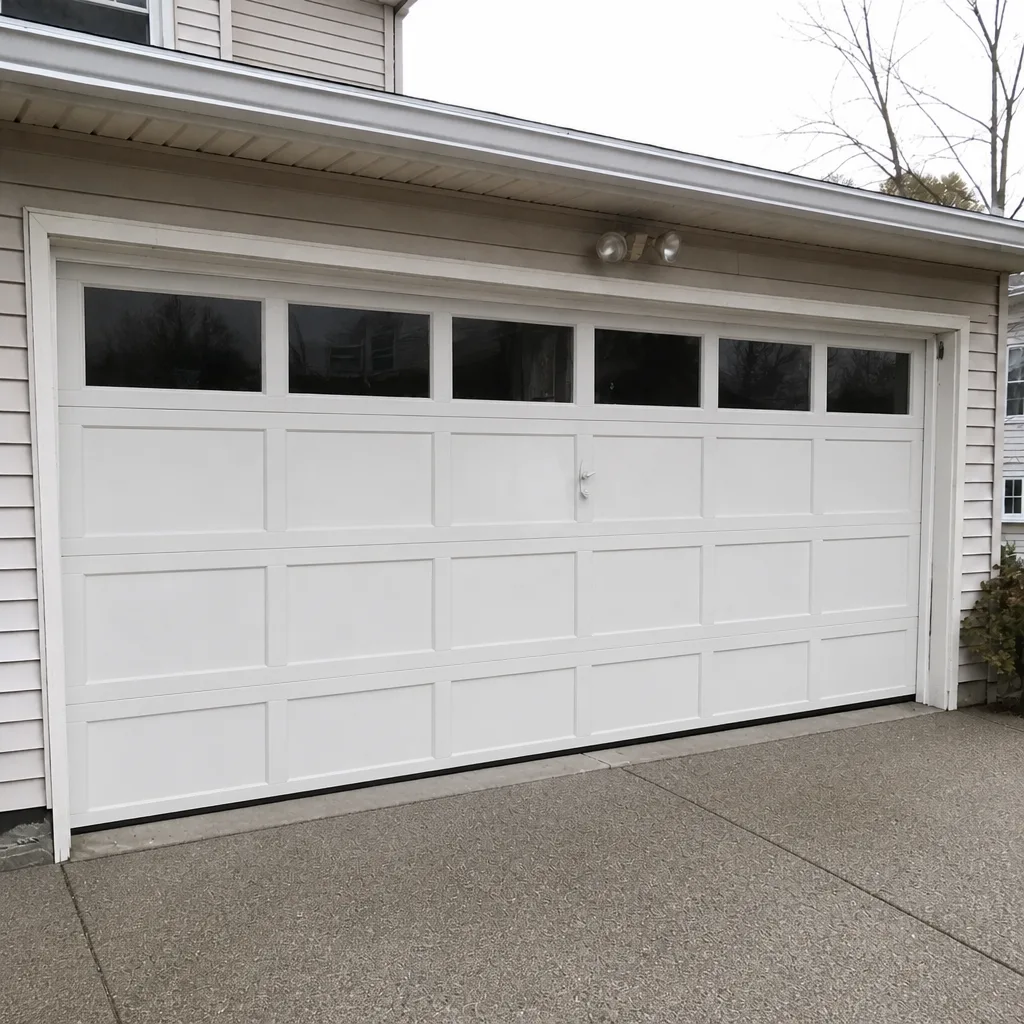
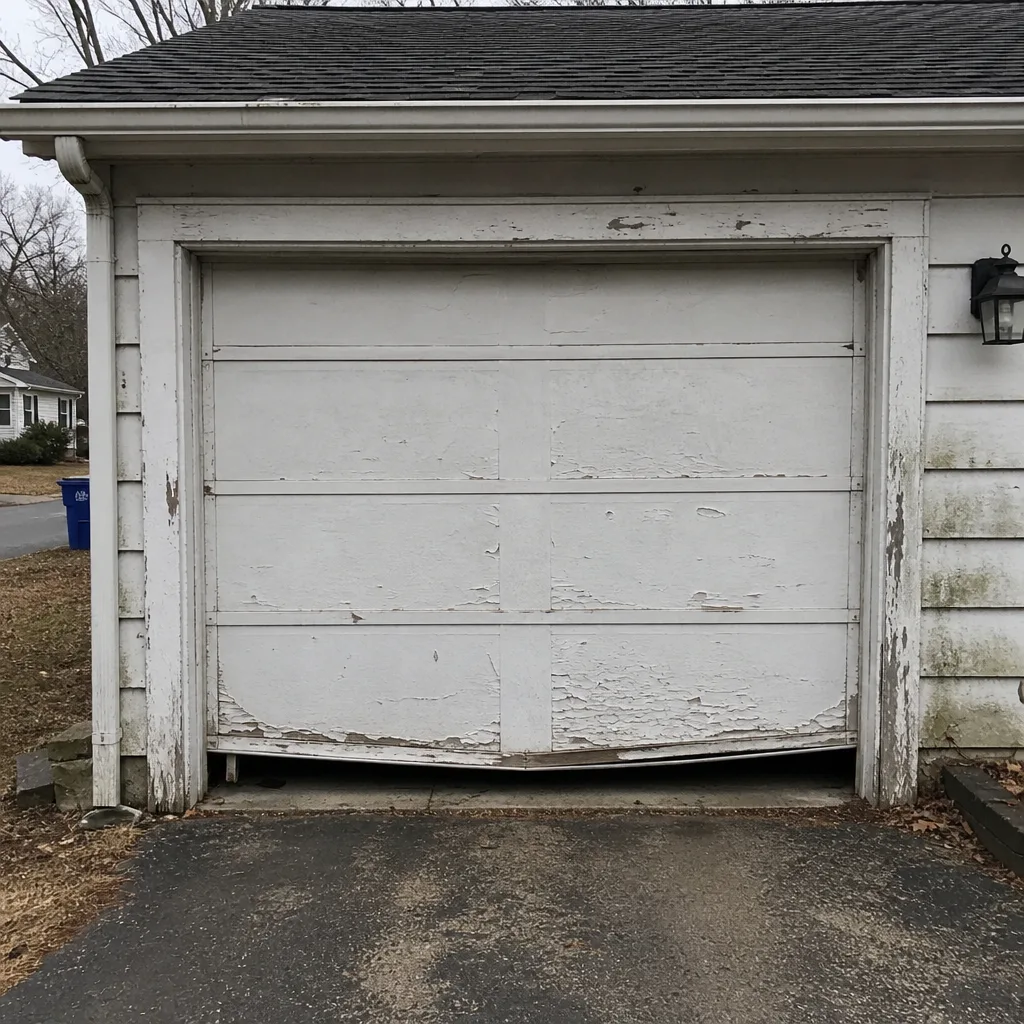
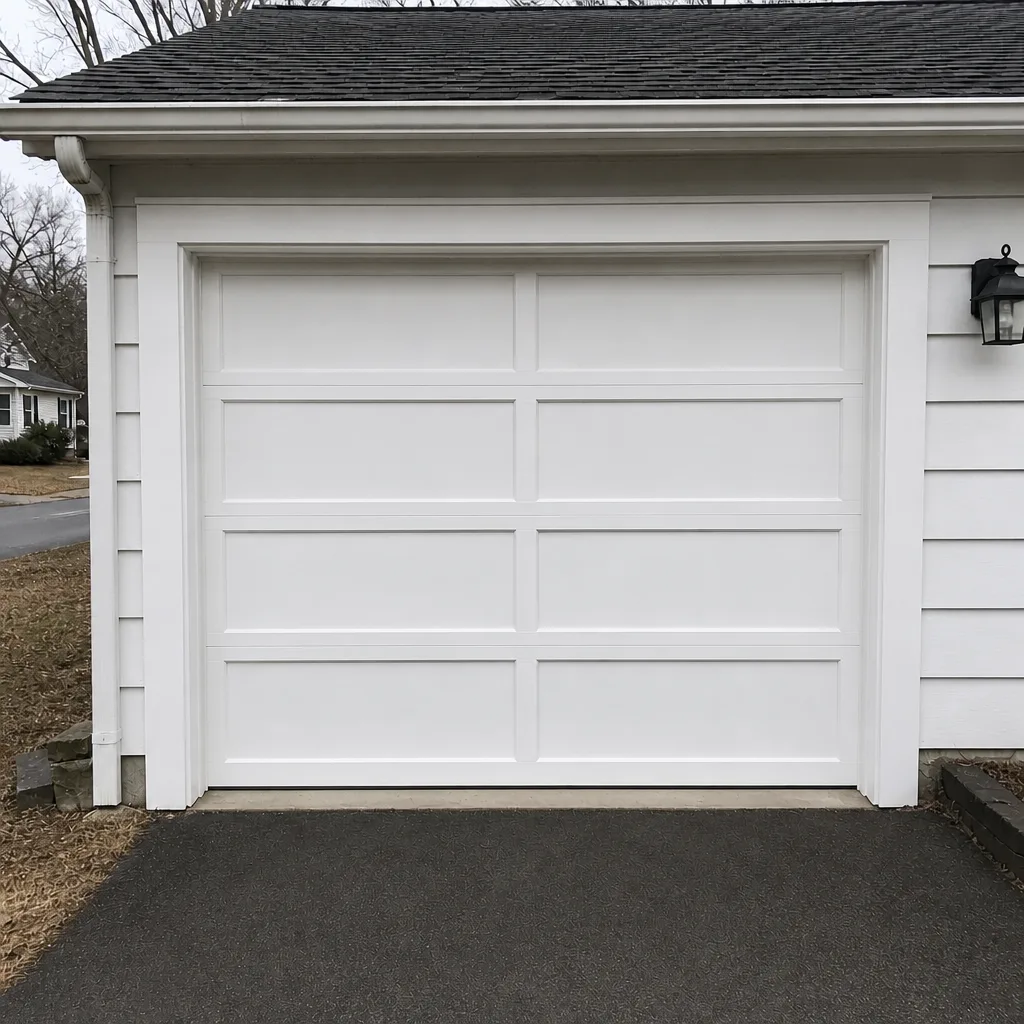
See the difference
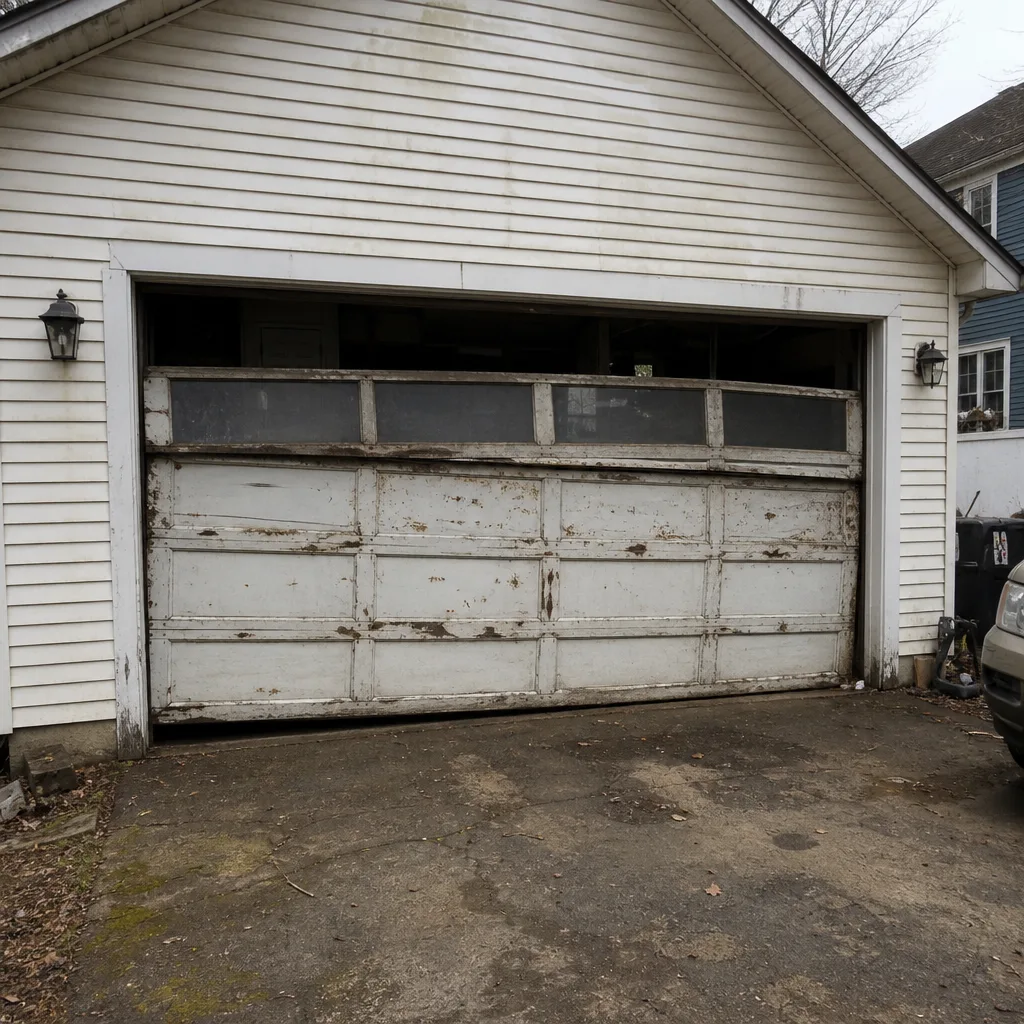 Before
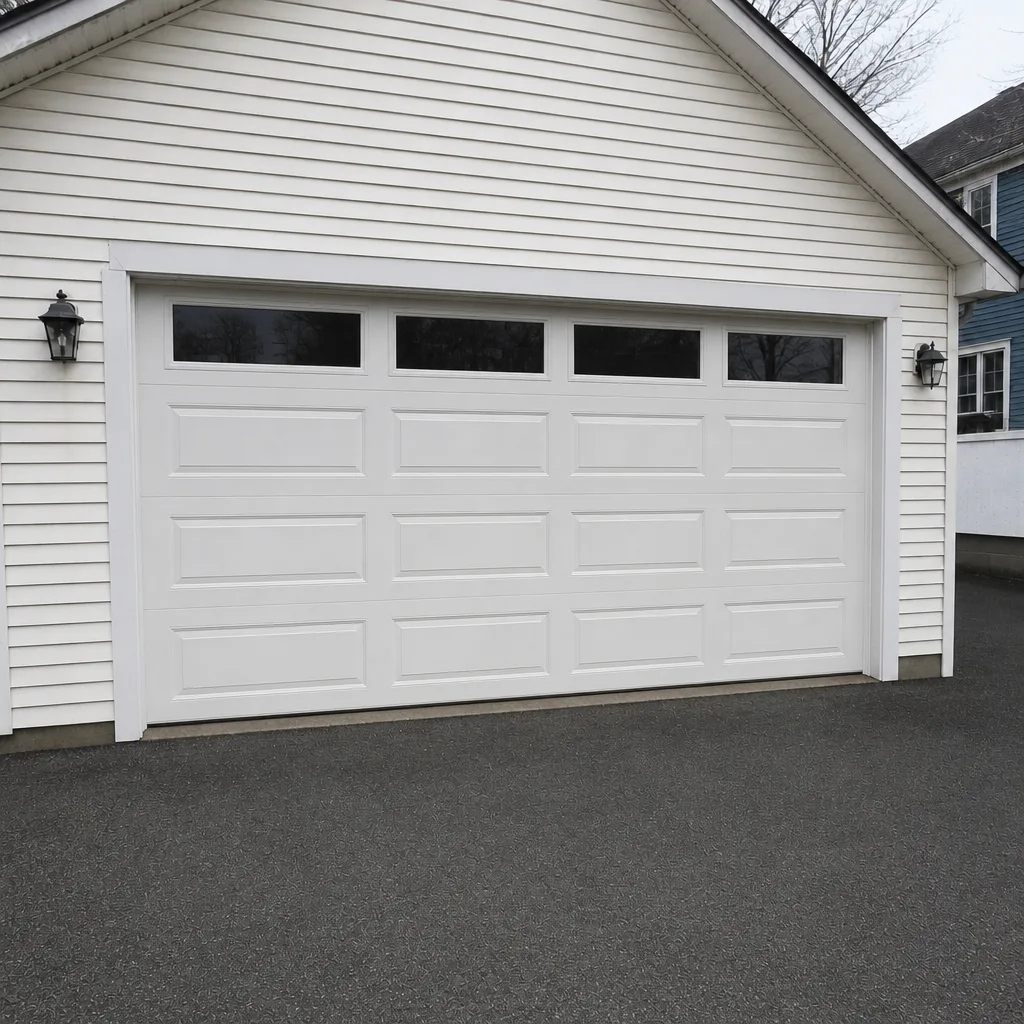 After
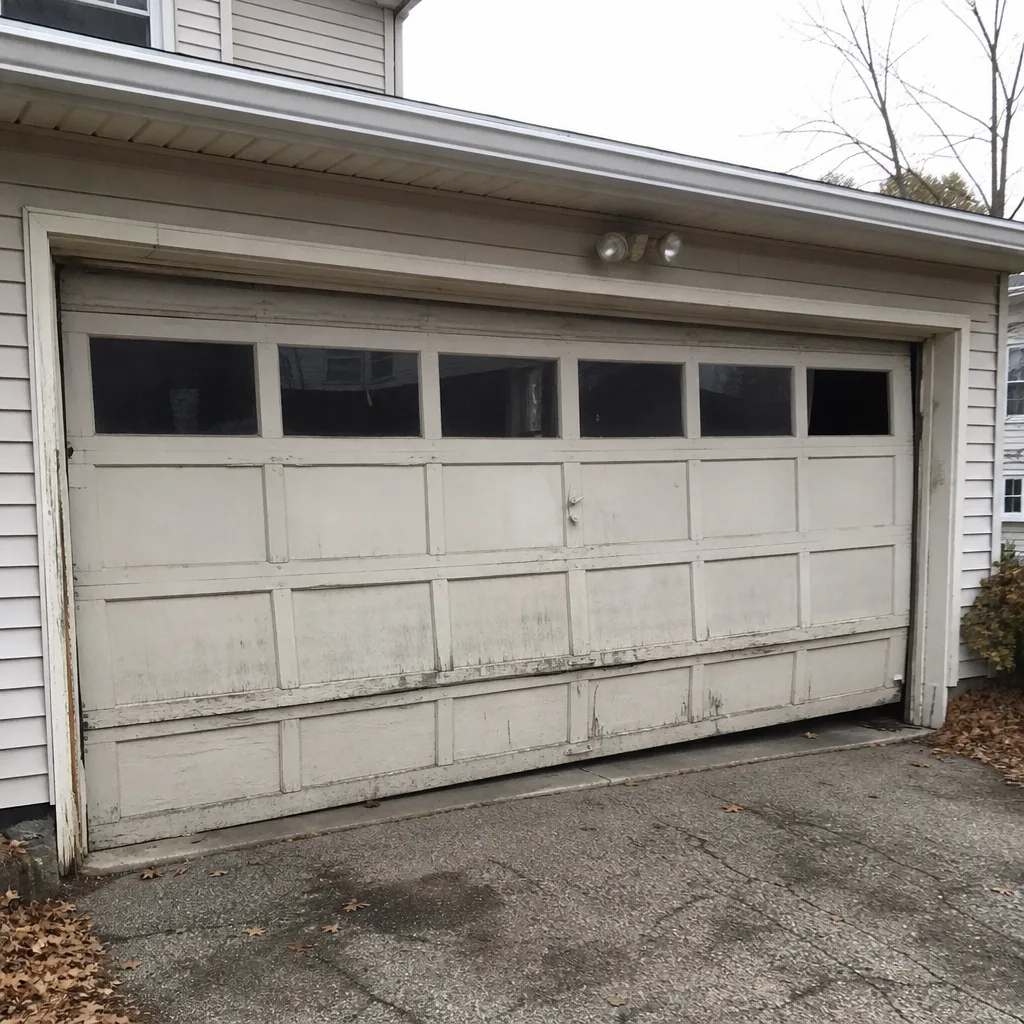 Before
 After
 Before
 After
When to Call a Professional
Some signs are worth a call. A snapped spring, a frayed or hanging cable, a bent track, a door that reverses on every close, or a door that slams down without control are calls to make today. A closed door that won’t open and is trapping your car, or a door stuck open and leaving your home unsecured, is an emergency call. And any sign that’s been sitting in the “monitor” bucket for a month and hasn’t gone away belongs in a scheduled visit.
For everything else, a free estimate is the right next step. Manchester Garage Door Repair Pros works on the door panel, the opener and the springs as one system, so the right diagnosis doesn’t depend on which component happens to be making noise this week. We handle repair, opener repair, spring repair and installation, and we’ll show you what we found before we recommend anything. Manchester Garage Door Repair Pros offers free estimates in Manchester: call (833) 509-3052.
Frequently Asked Questions
A snapped spring, a frayed or hanging cable, or a bent track is the most serious sign – any of these means stop using the door immediately. These components hold stored energy or guide a door that weighs over 100 pounds, so a failure can happen without warning. Call a specialist and leave the door where it is until someone looks at it.
No, don’t keep using it – even once with the opener is enough to cause damage or a dangerous drop. A broken spring means the door has lost the counterbalance that makes it safe to lift. Running the opener on it burns the motor and puts the door on a path toward uncontrolled closing. Treat it as a stop-use sign.
You can spot some spring failure signs from a safe distance, but not all of them. Look for a visible gap in a torsion spring, a spring that’s gone slack on the shaft, cracks or heavy rust on extension springs, or an extension spring with no safety cable running through it. A door that suddenly feels much heavier to lift by hand is another indicator. If you see any of these, don’t test the door further – have a torsion or extension spring inspected before the next cold snap.
A grinding noise usually means a dry roller, a seized hinge or metal-on-metal contact – not a broken spring. It’s a sign of wear that will get worse and wear the track if left alone. It’s typically safe to keep using the door briefly while you schedule a visit, but the fix belongs within the week.
Hesitation usually means the opener is fighting extra load from worn springs or dry rollers, not that the opener is failing. The motor is doing more work than it was built for because the door has become heavier than the springs can balance. The fix is almost always on the door side, not the motor.
Yes, if you don’t have service records for the door. The balance test is the check most homeowners never run, and a door can pass the daily “it opens and closes” test while failing it every day. A quick inspection is the only way to know whether the springs, cables and tracks are actually carrying their share. Call (833) 509-3052 to book one.
The Bottom Line
Every warning sign a garage door gives you belongs in one of three buckets: monitor, schedule soon, or stop using the door. The skill isn’t in memorizing the list – it’s in sorting each sign into the right bucket and matching your response to it. Slow movement and light squeaking can wait for a scheduled visit. Grinding, opener hesitation, a door that fails the balance test and a remote that won’t respond should be looked at within the week. A snapped spring, a frayed cable or a bent track means stop. If you’re not sure which bucket a sign belongs in, that’s the moment to bring in a specialist. For Manchester homeowners, a quick seasonal check before the first hard freeze is the cheapest insurance against the damage a cold snap can cause to a door that was already showing signs of trouble. Our technicians have up to 11 years of experience, and the right fix starts with getting the tier right.
Read more about our Manchester Garage Door Repair Pros, and how we handle garage door repair across Manchester. If your door is stuck, the fastest way to get back in service today is a call to (833) 509-3052 – estimates are free.
Written by the team at Manchester Garage Door Repair Pros.